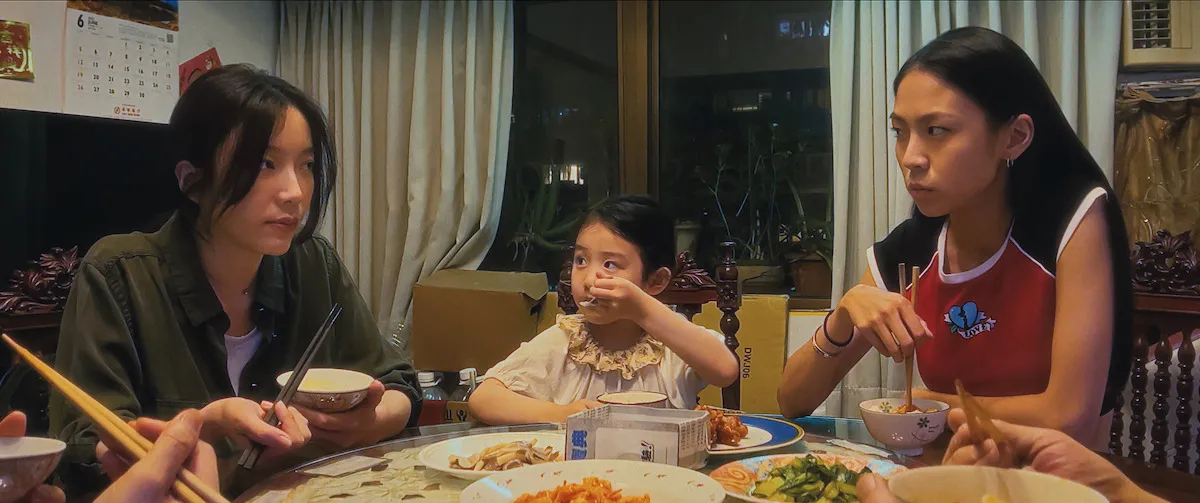
"Why do you use your left hand?"
Grandfather turned to ask grandmother at the dining table while watching their granddaughter scoop rice with her left hand. This simple question perhaps best encapsulates the film's story.
One might think Left-Handed Girl is simply about a left-handed girl, but in fact, the film explores a broader story of a family newly settled in the big city of Taipei, opening a small noodle shop in a night market.
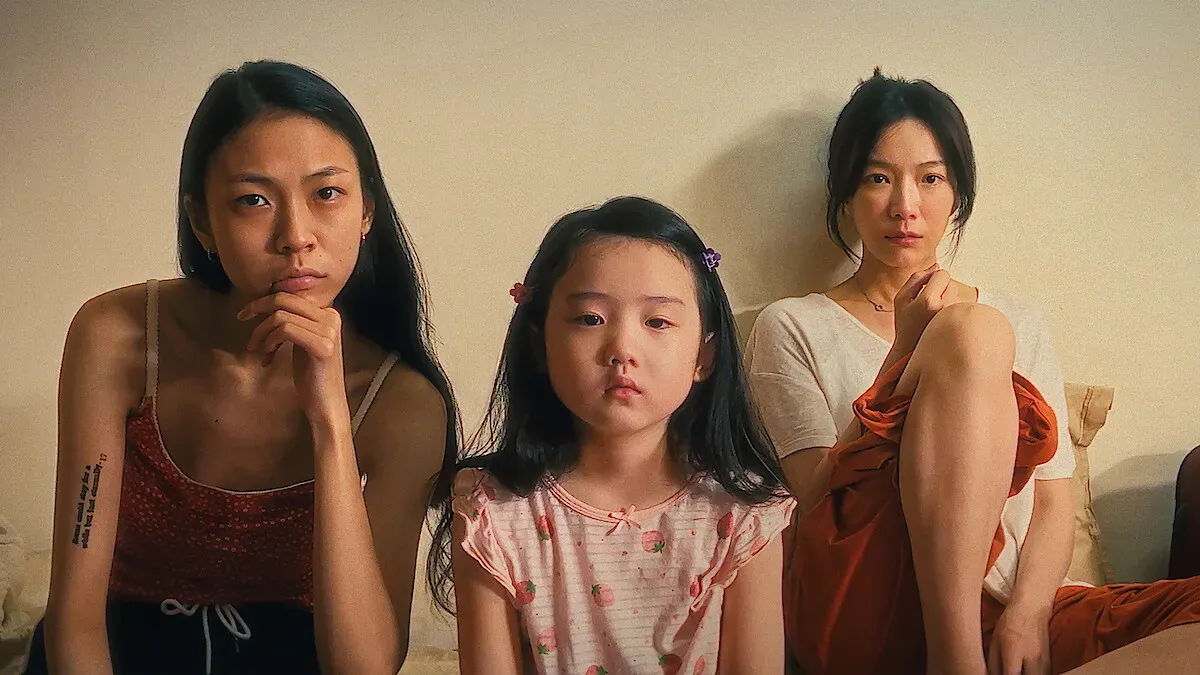
The film unfolds from the perspectives of three family members: I-Jing, a kindergarten-aged girl; I-Ann, her spirited older sister; and Shu Feng, their young-looking yet weary mother. Director Tsou Shih-Ching aims to portray family relationships rooted in traditional Chinese beliefs, reflecting challenges women face within the family and the generational gaps between them.
Viewers may notice that I-Jing’s ‘left hand’ symbolizes marginalization, representing those bearing societal differences. The film also portrays grandfather’s traditional belief disapproving of I-Jing’s left-handedness, later explaining it as the 'devil’s hand' that brings misfortune.
The belief that the left hand is unlucky has long been a traditional Chinese superstition. This belief also spread to culturally related regions like Taiwan. Similar to the old notion that 'women with small feet are charming'—which led Qing dynasty women to bind their feet—this deep-rooted belief has evolved into a common joke that 'China is a country without left-handers.'
Saying everyone is right-handed might be an exaggeration; statistics show about 10–12% of Chinese people are left-handed, comparable to global averages. However, instead of freely using their left hand, left-handers must hide it from teachers and family members (like I-Jing’s grandfather), who force them to use only their right hand for easier teaching and social integration. For example, writing Chinese characters is difficult for left-handers due to stroke order and aesthetics, prompting schools to require right-hand use.
Looking deeper into the social stigmatization of left-handers reveals longstanding superstitions linking them not only to oddness but also to evil and bad luck.
In Chinese, 左道 (zuǒ dào, meaning 'left path') combines 'left' and 'dao' (meaning 'way' or 'path,' referencing Taoist natural order). This compound carries negative connotations, implying deviation from the correct or middle path. Historically, Chinese people associated left-handedness with waywardness and evil.
In some parts of China, families view the left hand as designated for dirty tasks like cleaning toilets or household chores, while the right hand is reserved for 'better' activities such as eating and writing. Thus, gifts or tea offerings should be made with the right hand for good fortune.
In reality, using the left hand is not linked to evil or deviance; rather, it highlights differences in daily life. These beliefs serve as social strategies to encourage uniformity, since left-handers, being fewer in number, appear unusual—like writing at desks designed for right-handers or using scissors—which draws attention.
China may seem extreme in enforcing right-hand use, but this reflects differing eras and cultural values. Nowadays, Chinese society is becoming more accepting. Western countries were also once as strict, and even in Thailand decades ago, teachers would turn and hit left-handed children to force right-hand use.
In Left-Handed Girl, after being scolded by her grandfather for using her left hand, I-Jing wraps it up to force herself to use her right hand. However, she finds she can barely use her right hand. Switching hands requires significant time and brain adaptation, plus strong intention. Most left-handers grow up forced to use their right hand unwillingly, leading to hidden difficulties.
One issue is stuttering. In the 1930s, Wendell Johnson, who had stuttered himself, conducted the 'Monster Study' at the University of Iowa with his student Mary Tudor. They tested 22 orphans to investigate whether stuttering resulted from cerebral imbalance by forcing use of the non-dominant hand and using harsh language. The unethical study lacked consent and used verbal abuse. Later research found switching hands does not directly cause stuttering but may increase risk; genetics play a larger role.
Another problem involves reading and writing difficulties (dyslexia), such as poor spelling or slow reading. According to the Geschwind-Behan-Galaburda theory (still debated), the left brain controls language skills and right hand use, while left-handers rely more on the right brain. Forcing left-handers to use their right hand overloads the left brain, disrupting neural processing and slowing literacy development.
Perhaps most evident in Left-Handed Girl is the psychological trauma. I-Jing appears sad after hearing from her grandfather that her preferred left hand is evil. Using her non-dominant hand leads to poor results, damaging her self-esteem and creating a false perception that her family rejects her true self, as if she disappoints her grandfather.
Although family and cultural upbringing vary, the information presented helps us understand how forcing left-handers to use their right hand can cause lasting issues for some individuals.
In some areas, these beliefs remain strong; elsewhere, they have diminished. We must emphasize and recognize that hand dominance, whether left or right, results from genetics beyond our control and is a natural human variation, like differences in ethnicity, gender, appearance, or personality. Left-handedness is not socially alienating and does not harm others or society. Traditional beliefs aimed for social harmony but must evolve with changing values for true peace.
I-Jing does not have an evil hand, as seen in the film (currently streaming on Netflix). Instead, she creates a pivotal change for her family through her left hand. Good and evil are not tied to a particular hand; the world moves forward with both positive and negative aspects naturally around us.
References:
Maura Elizabeth Cunningham (2013). China: A Land Without Left-Handers. https://mauracunningham.org/2013/08/14/china-a-land-without-left-handers/
Howard I Kushner (2012). Retraining left-handers and the aetiology of stuttering: the rise and fall of an intriguing theory. https://pubmed.ncbi.nlm.nih.gov/22332811/
N Geschwind, P Behan (1982). Left-handedness: association with immune disease, migraine, and developmental learning disorder. https://pubmed.ncbi.nlm.nih.gov/6956919/
The New York Times (2003). The Stuttering Doctor's 'Monster Study'. https://www.nytimes.com/2003/03/16/magazine/the-stuttering-doctor-s-monster-study.html