

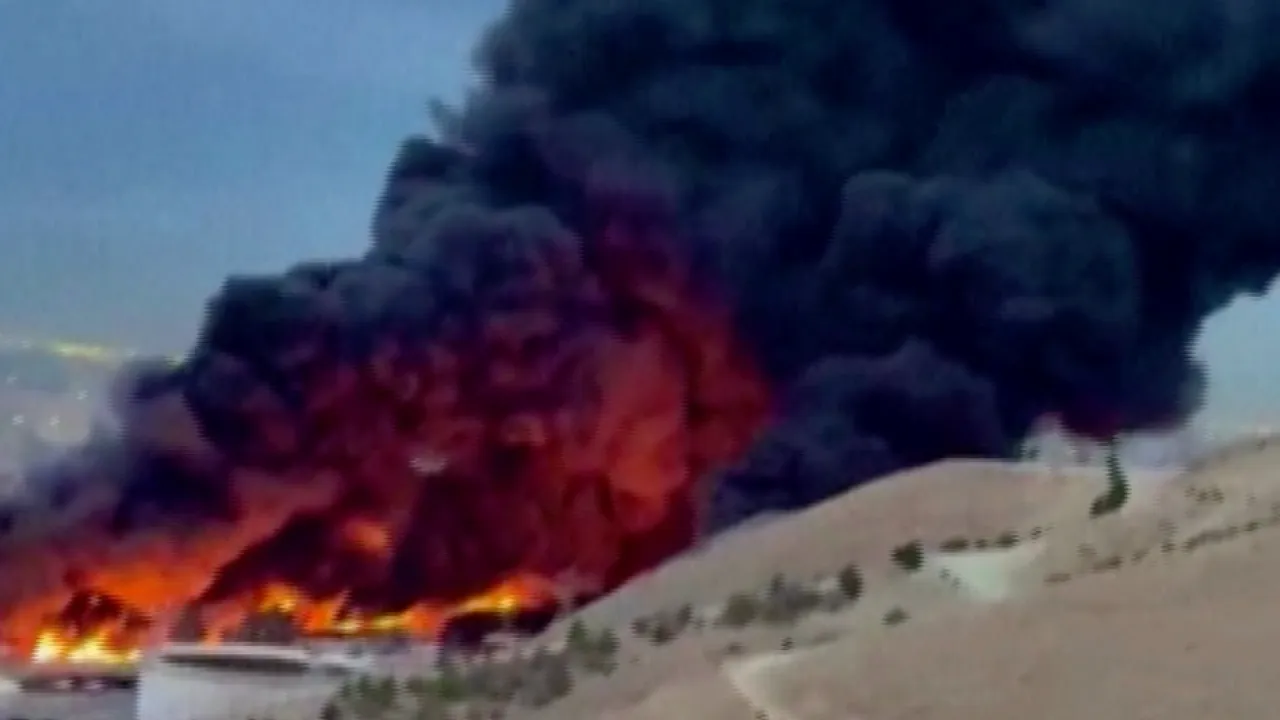
Giant fireballs and thick smoke rising over Tehran’s sky reflect the terrifying reality of the latest Middle East conflict, triggered by attacks on four oil depots and oil production transfer centers in Tehran and Alborz Province on Saturday, 7 Mar 2024 GMT+7.
The next morning, the sky above Iran’s capital was shrouded in dense toxic smoke that blocked sunlight. Residents woke to the pervasive stench of burning, and worse, the rain that fell was soaked with black oil residues, forcing authorities to issue warnings for people to stay indoors.
The Iranian Red Crescent Council issued an urgent statement that the depot explosions released massive amounts of hazardous chemicals into the air, including hydrocarbon compounds, sulfur, and nitrogen oxides.
These toxins accumulated in the atmosphere and reacted with moisture, causing black acid rain to fall over communities. This rain and polluted air are highly acidic and carcinogenic; inhalation risks severe respiratory damage potentially leading to lung failure, and direct skin contact can cause severe burns.
Social media debates arose questioning the meaning of lifelong environmental efforts if world leaders can trigger wars releasing massive toxic gases into the atmosphere within seconds, simply to serve geopolitical or political interests.
There is also the paradox in international order: while many governments and global forums like COP campaign to reduce greenhouse gas emissions aiming for Net Zero, no one or mechanism can stop the carbon footprint generated by leaders at war.
People are instilled with eco-guilt over using plastic bags, carrying personal cups, or drinking from soggy paper straws, yet governments’ tanks, warplanes, and missiles burn fuel and pollute massively in moments. This reality reminds us that individual efforts alone cannot save the planet without systemic change, especially when national leaders escape accountability for environmental destruction.
This has revived calls to recognize Ecocide as a crime again. In September 2024, Pacific island nations Vanuatu, Fiji, and Samoa submitted proposals to amend the Rome Statute to make Ecocide the fifth major crime under the International Criminal Court (ICC), alongside genocide and war crimes, to hold high-level government and corporate decision-makers accountable for serious ecosystem damage.
Although some domestic laws like Belgium’s and EU regulations have begun to embrace this concept, international ICC enforcement faces many obstacles. Proving guilt requires high standards, the ICC has jurisdiction over individuals but not corporations, and many major powers fall outside ICC jurisdiction and oppose this idea. The process may take years to secure the two-thirds member support needed for the constitutional amendment.
However, we don’t need to abandon environmental protection individually; we must insist on rejecting a world order that allows some leaders to burn homes and destroy natural resources just to win wars. Black acid rain does not discriminate between those who use paper straws and those who press missile launch buttons.
#ThairathPlus #Thairath #Iran #Israel #War #MiddleEast #Environment #AcidRain #ToxicRain #Oil #Pollution