

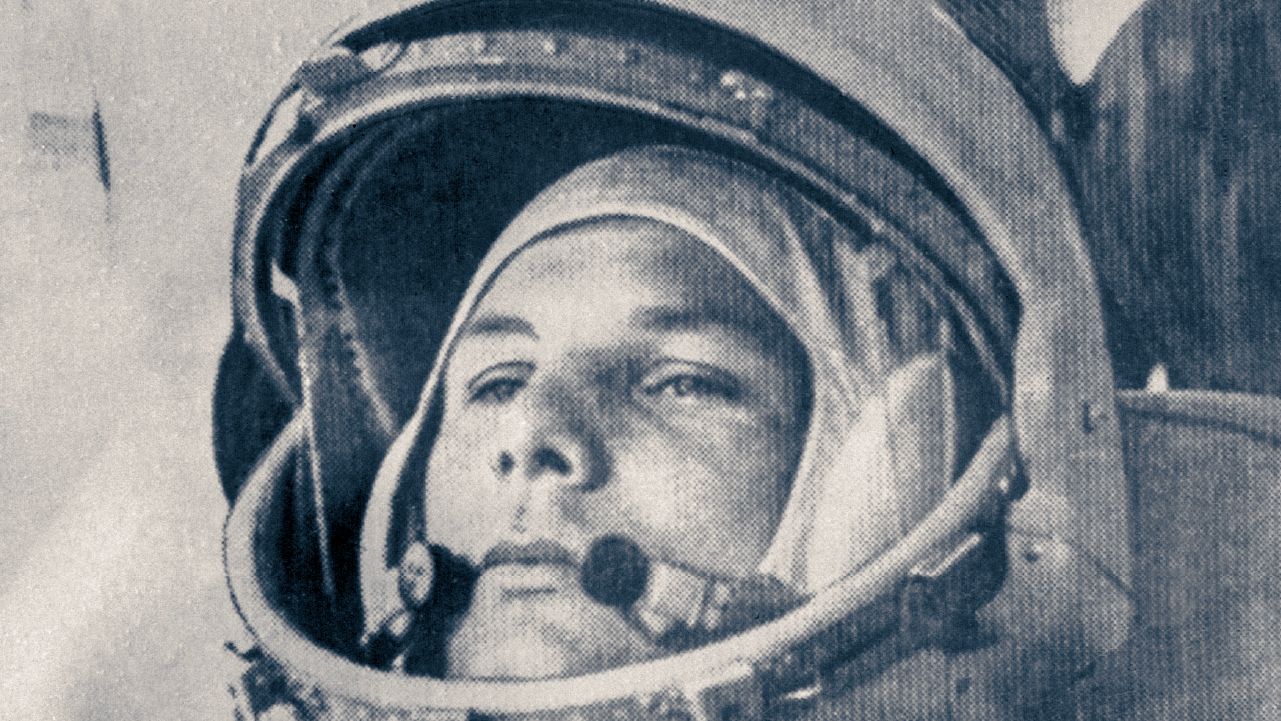
Eight years before Apollo 11 would explore the moon, Vostok 1 carried Yuri Gagarin into space for the first time in 1961. This was a major milestone for humanity's efforts to expand knowledge of Earth's nature and the cosmos. However, such human advancement was made possible largely due to the Cold War competition between superpowers—the United States and the Soviet Union—each vying to assert true dominance through technology, politics, and economics.
This mission was crucial for both sides. Although the United States was known for its military power and weaponry, the Soviet Union held an early advantage in developing large, efficient rockets capable of sending humans into space. This success owed much to engineer Sergei Korolev, who received government support for the project without needing budget approvals or concern for public image—even in the event of tragedy—since the project was top secret and unknown to the public.
Previously, the Soviet Union had successfully launched a satellite into space in 1957, which greatly alarmed the United States. This achievement boosted Soviet confidence and commitment to sending humans into space. They began by sending living creatures first, including a stray dog named Laika. Unfortunately, Laika did not survive the mission due to overheating during ascent through the atmosphere. To preserve its image, the Soviet Union publicly claimed Laika died from lack of oxygen to suggest a more humane outcome.
Meanwhile, the United States accelerated efforts to build rockets powerful enough to send humans into space ahead of the Soviet Union. However, Wernher von Braun, chief rocket engineer, worried about issues with the Redstone rocket and requested a final test using a chimpanzee named Ham to verify life support systems. This delayed astronaut Alan Shepard's flight until May 1961.
Upon learning that the United States was close to success, the Soviet Union took a significant risk and promptly sent Gagarin into space on 12 April 1961, followed by Shepard's flight on 5 May—23 days later than the Soviets.
Yuri Gagarin sat aboard the spacecraft Vostok 1, which launched at 9:07 a.m. from the Baikonur Cosmodrome. Gagarin famously exclaimed “Poyekhali!” meaning “Let's go!”—a phrase that later became historically significant in early space technology history.
The Vostok 1 mission lasted 108 minutes, completing one orbit at an altitude of 327 kilometers. During the flight, Gagarin reported experiencing weightlessness, being the first to see Earth's curvature, and described the planet as beautifully surrounded by a blue halo. The mission was simple yet challenging. Although called a pilot, Gagarin was effectively a passenger, as the spacecraft was controlled from Earth.
The most perilous part of the mission was re-entry. After one orbit, Vostok 1 flew over Africa, where the team fired thrusters for 42 seconds to slow the craft enough for Earth's gravity to pull it back into the atmosphere.
The Vostok spacecraft consisted of two parts: a spherical descent module where Gagarin sat, and a cone-shaped service module containing the rocket. During re-entry, these two parts were supposed to separate, but the cone remained attached by a tether to the descent module. The attached weight caused the craft to spin violently, subjecting Gagarin to 10 Gs of force. He described the intense spinning as like a ballet dancer, his vision blurring from near unconsciousness. Fortunately, atmospheric friction melted the tether, allowing the descent module to stabilize.
The spherical descent module plunged toward Earth like a meteor, engulfed in flames with temperatures soaring. Gagarin heard the spacecraft creaking as if it might break apart at any moment. At about 7 kilometers above ground, he ejected from the module and deployed a large parachute, landing safely near the Volga River within Soviet territory.
Gagarin was hailed as a Soviet hero and was subsequently banned from further space missions due to fears of risking his life. Nonetheless, he died unexpectedly at age 34 during a MiG-15UTI jet training flight, likely due to outdated weather information from the control center.
Although Yuri Gagarin's mission occurred amid Cold War hostilities where technology was pursued without full regard for safety, he became a symbol and humanity’s first emissary to space. His journey inspired confidence in what humans could achieve and what might be possible in the future. It was a small but pivotal step that revealed the beauty of nature and the awe-inspiring vastness of the universe simultaneously.