

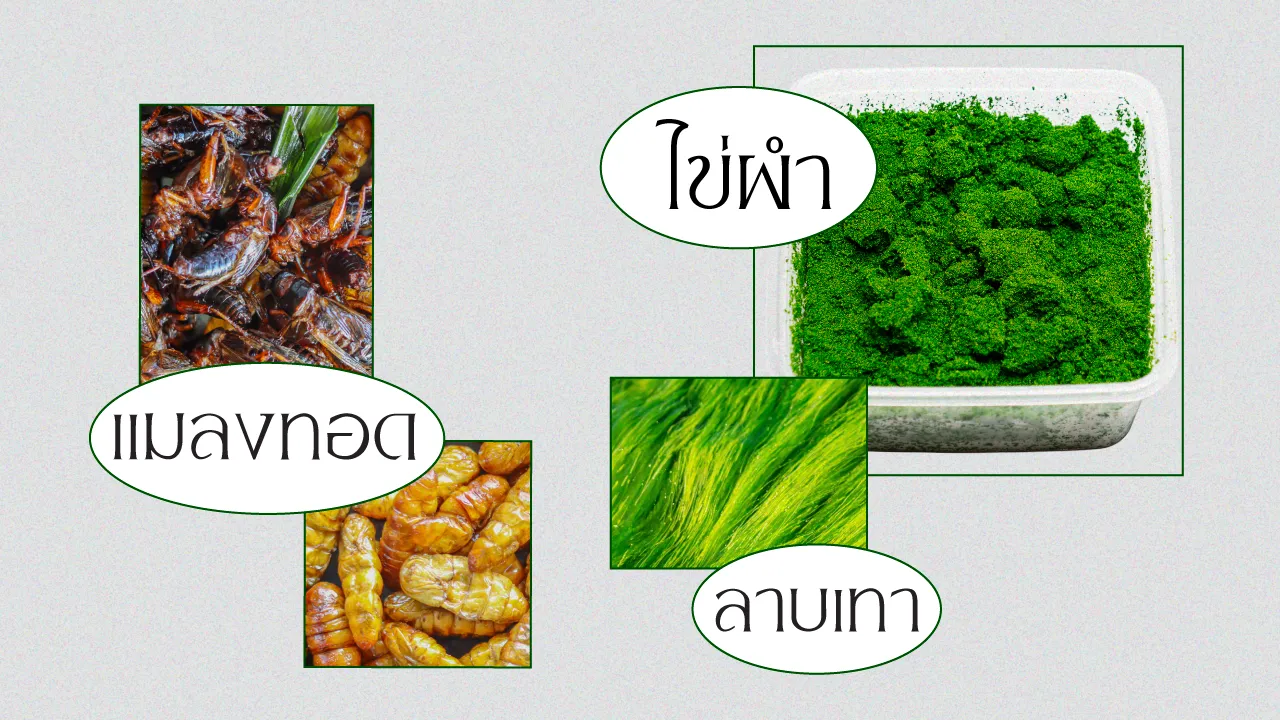
Traditional foods like egg clusters, larb tao, and fried insects have been elevated into high-priced products as 'Superfoods' and alternative protein sources. This shift not only reflects food security but also risks making these native dishes less accessible to locals or the general public. It mirrors capitalist mechanisms that appropriate local community 'culture and lifestyles' to create products aimed at middle- to upper-income consumers.
The popularity and trends have not only inflated prices but also reveal underlying power imbalances and inequalities. Thairath Plus invites us to examine why traditional foods turned Superfoods reflect these disparities through the lenses of science, economics, politics, and sociology.
When capitalism displaces locals through food.
We may have heard of Gentrification, which refers to buying up neighborhoods or low-income areas to transform them into economic or creative hubs, attracting wealthier residents and businesses. This drives up land prices, rents, and living costs, ultimately forcing original inhabitants to relocate. A similar phenomenon can occur in food, known as 'Food Gentrification'.
When traditional foods like egg clusters, larb tao, fried insects, or others are redefined as Superfoods, global demand—especially from first-world countries or urban consumers—surges. Consequently, ingredient prices skyrocket, making it difficult for local communities, the original culture bearers, to afford or access these foods at their former prices.
A clear global example is quinoa in Peru and Bolivia. When it became a health food trend in America, quinoa prices soared, forcing indigenous farmers who cultivated it for millennia to switch to cheaper foods. This scenario may now be unfolding with native Thai ingredients as well.
Capitalism is transforming ‘ways of life’ into ‘tastes’.
Historically, these foods were viewed as rural or working-class fare, born from local wisdom to survive and obtain affordable natural protein sources. However, amid global food insecurity and health trends, their cultural value is converted into products that incorporate identity, lifestyles, and working-class necessities, repackaged with stories and new packaging to increase product value.
Take egg clusters, an aquatic plant commonly found in ponds, which used to sell for just a few tens of baht per kilogram. Now, when farmed in controlled environments, processed into ready-to-drink protein shakes, or served in fine dining restaurants, prices can rise to hundreds or even thousands of baht.
Consuming these foods in new contexts is no longer solely about survival but rather a display of superior taste, signaling environmental concern, openness to cultural novelty, and adherence to global health trends. This often leads to the original stories and backgrounds being overshadowed or forgotten.
When traditional foods become high-priced global commodities, locals may lose access to their own native food sources if ingredients and natural resources are bought up by investors for export farming or if environments are altered for industrial production.
Although this process seems to legitimize local foods, the increased value and profits typically accrue to investors controlling technology, branding, and marketing rather than the rural communities who originated these cultural foods.
The erasure of the working-class identity.
Karl Marx, the German philosopher, once stated that in capitalism, commodities become detached from the labor and hardship of their producers.
For example, when ordering pasta with powdered egg cluster cream sauce or cricket protein bars, packaged attractively with stories crafted by marketers, these presentations erase the struggles, poverty, sweat, and challenging environments faced by rural farmers.
Capitalism chooses to highlight novelty and abundant benefits to create new narratives and selling points, discarding the humanity and social contexts of the original creators.
Examples of traditional foods elevated worldwide.
The capitalist elevation of traditional foods is not unique to Thailand but a global phenomenon. Here are examples of ingredients and foods once considered ‘marginal’ that have become premium products and Superfoods today.
Açaí Berry: From tribal sustenance to the 'Açaí Bowl'.
The term Açaí comes from the Tupi indigenous language, meaning 'crying fruit,' rooted in Brazilian folklore about tribal sacrifice to survive famine. The berry, discovered and consumed by indigenous peoples in the Amazon rainforest, Brazil, served as a staple and affordable energy source for indigenous and marginalized communities for centuries, also used as traditional herbal medicine.
Over time, this once-accessible food transformed into a Superfood with the world's highest antioxidant content, rebranded as the Açaí Bowl, beautifully decorated with fruit in cafes.
Consequently, açaí prices in Brazil soared many times over, making it inaccessible to local indigenous people, while profits went to exporting companies and cafes in first-world countries.
Tempeh: Laborers' protein becomes 'premium vegan'.
Tempeh is a fermented soybean product originating from Indonesia, traditionally providing an affordable protein source for laborers who could not afford meat.
As vegan and plant-based diets grew in popularity, the West marketed tempeh as an easily digestible protein with probiotics. What was once an inexpensive staple became a health food with prices rising severalfold, symbolizing a health-conscious urban lifestyle.
These stories reinforce that food value depends not only on the product itself but also on who consumes it and how capitalism constructs its narrative.
However, elevating traditional foods to Superfood status is not just about food security or global cultural success. In reality, capitalist mechanisms extract culture, lifestyles, and identities from local communities to generate added value and monopolize profits among a few.
The paradox of affordable ingredients becoming overpriced reflects a broader societal question: as the world advances and seeks survival strategies for the environment and quality of life, how do we develop without forgetting the originators and their stories?
Ultimately, true Superfoods and future global foods may not always be expensive ingredients but those accessible to all in price and nutrition, while elevating the quality of life for local cultural originators without leaving anyone behind due to capitalist adaptation pressures.
References: