

No one can forget the major terrorist attack on 11 September 2001, when Al-Qaeda hijackers took control of passenger planes, crashing two into the Twin Towers of the World Trade Center. A third plane struck the Pentagon, while the fourth crashed in a Pennsylvania field after passengers fought back. This event deeply shocked many Americans, with 2,977 deaths including civilians, police officers, and firefighters. The government later established a memorial to honor the victims and holds annual remembrance ceremonies.
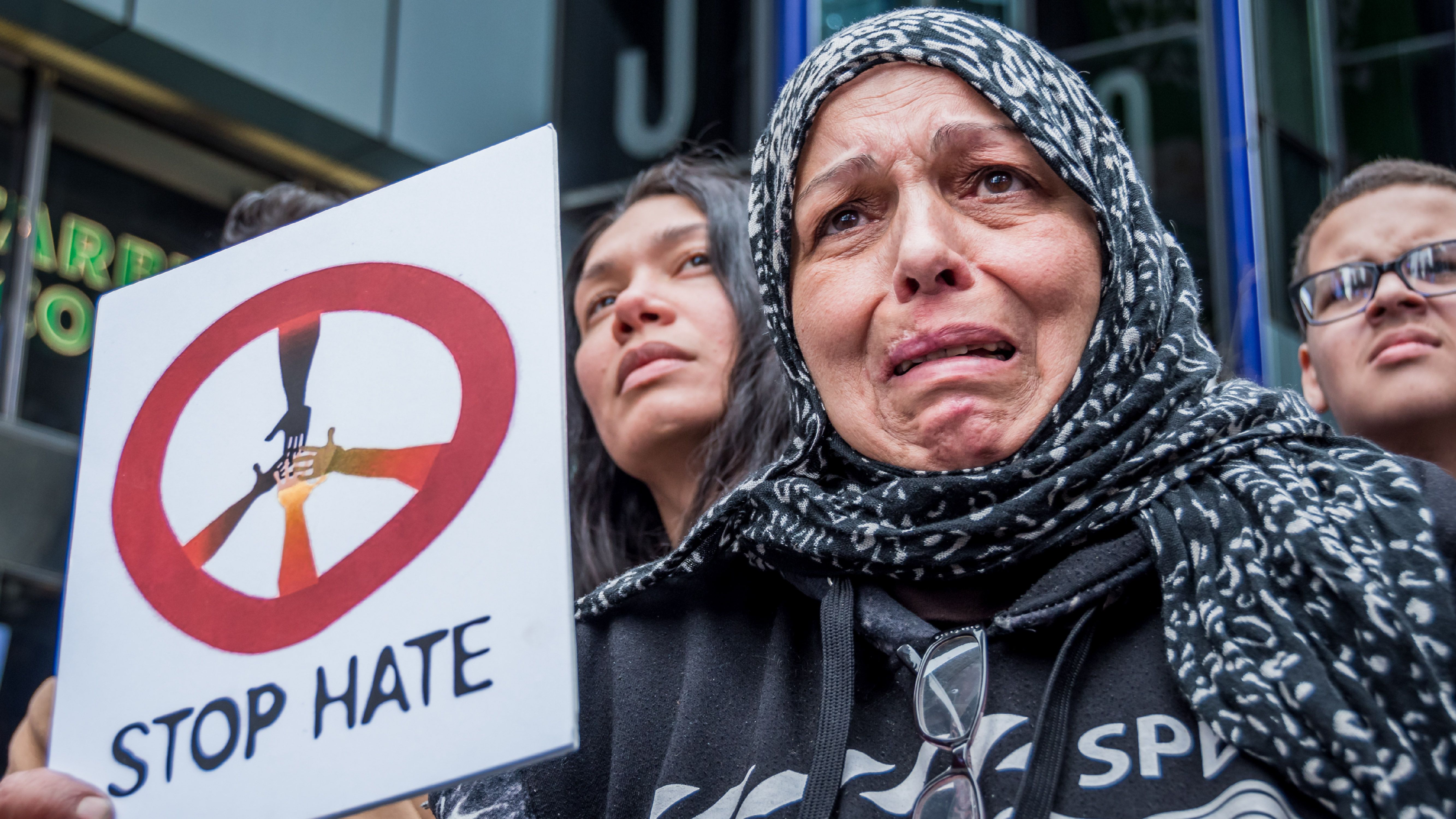
Amid the national grief, even days after 11 September, beyond the collective pain, an unavoidable group affected was U.S. Muslims who had no involvement in the attacks. They tried to minimize problems as much as possible. The FBI reported a 1,600 percent surge in hate crime cases in 2001. Mosques were vandalized, Muslims faced threats and assaults in public. At airports, Muslims were subjected to searches and questioning to prevent potential attacks. Worse, people from the Middle East and India were stereotyped as terrorists, leading to violent misunderstandings, such as the murder of Balbir Singh Sodhi, a Sikh gas station owner, just four days after 9/11.
The U.S. government responded immediately with measures such as the National Security Entry-Exit Registration System (NSEERS) in 2002, requiring fingerprinting and interviews for non-citizens from 25 Muslim-majority countries. Thousands were deported as a result. Additionally, the USA PATRIOT Act expanded government authority to monitor communications, financial records, and internet activity. This led to widespread surveillance of Muslims, affecting charities, private businesses, and personal lives.
To understand how Muslims lived in the U.S. after 9/11: shortly after, more American flags appeared in residential areas, symbolizing conservatism and national solidarity. Women altered how they wore the hijab to appear less visibly Muslim for protection. Men shaved beards to avoid associations with terrorists. Children changed their names to English variants—"Mohammed" became "Mo," and "Osama" changed to "Sam." In public, Muslims tried to speak English loudly and clearly to reassure others they were American Muslims, not foreign terrorists as stereotyped. At airports, they behaved with utmost restraint to avoid unnecessary questioning. Their lives became a constant effort to prove innocence despite no wrongdoing, whether as neighbors, coworkers, or strangers. Anyone could falsely accuse or target Muslims at any time.
Rozina Ali, a Pakistani-American writer, told The Guardian that this happened when she was a teenager living with her family, one of only 2-3 Muslim families in their California community. She recounted that her parents feared that what happened in Pakistan might happen there too, but she believed the U.S. government would protect fundamental rights like religious freedom and free speech. Ali described how, after 9/11, law enforcement appeared in plain clothes watching Muslim communities closely—in coffee shops, mosques—and sometimes provoked trouble despite no wrongdoing. Muslims felt as if they were constantly under surveillance.
The Pew Research Center's 2026 survey revealed that Muslims still face racial discrimination daily, and the proportion of American adults viewing Islam as supportive of violence has doubled since 2001—an expression of “Islamophobia,” the fear and hatred of Islam. Even after 25 years, Muslims continue to deal with stereotyping and racism. However, the rise of Sohraan Mamdani, New York City's first Muslim mayor, has built confidence not only among Muslims but also among other ethnic groups in the city. His policies promote inclusivity and equality, reinforcing that everyone is equal and contributing to New York's dynamic society. This example encourages all Americans to better understand humanity amid ongoing political challenges and resist purely conservative narratives.
.