

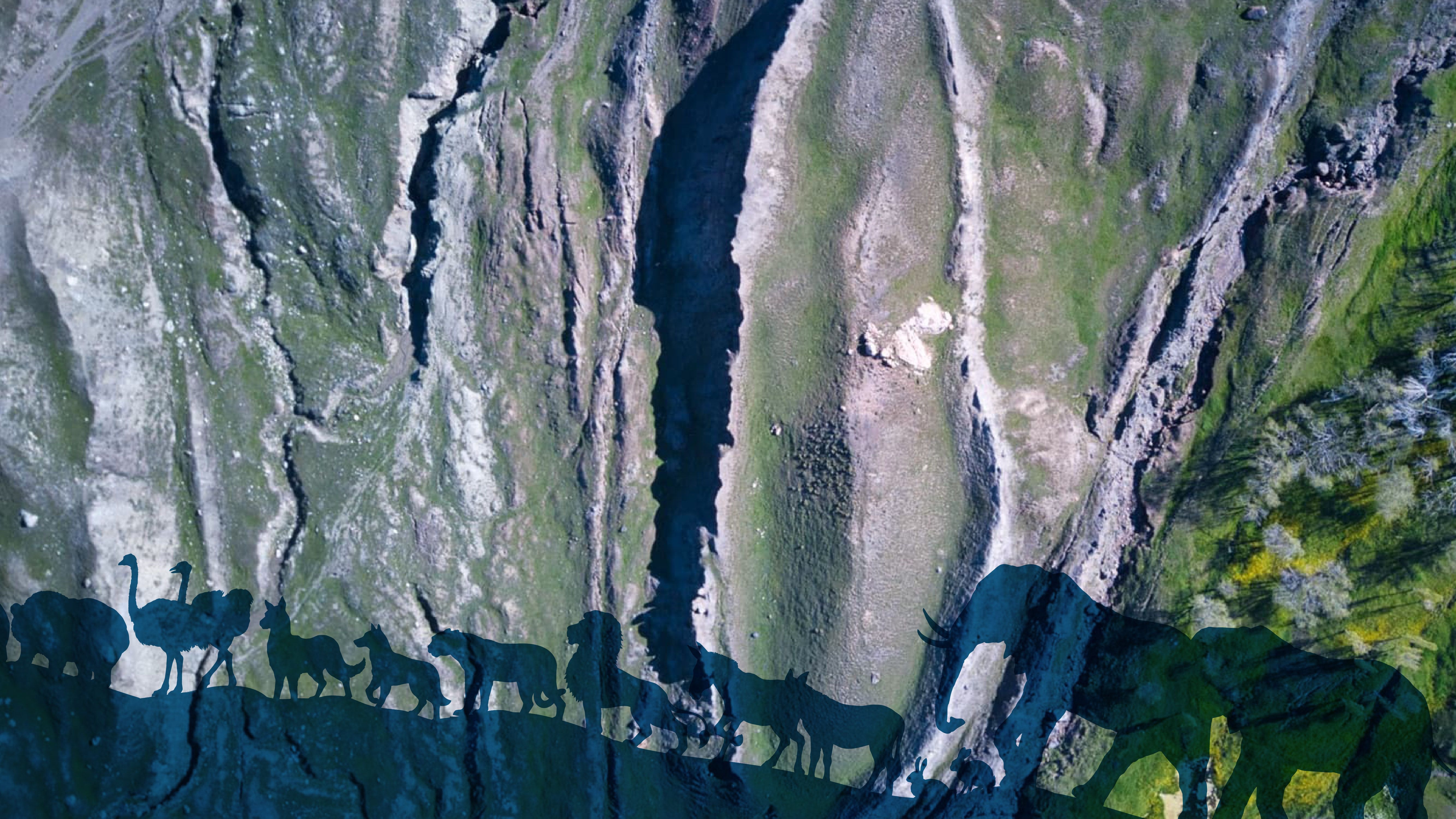
Everyone has likely heard the legend of Noah’s Ark, which carried pairs of animals to survive a great flood for a new beginning. This tale is recorded in the Bible, and many have seriously studied whether this giant wooden ship truly existed in history. After Turkey claimed to have a cave linked to the Odyssey epic, the country also has another site famous as an archaeological location believed to be the remains of Noah’s Ark, called the Durupinar Formation or Durupinar rock group.
Durupinar was named after Turkish Major Ilhan Durupinar, who first spotted this unusual rock formation during aerial photography in 1959. Since the rocks lie in the area that medieval Westerners believed to be Mount Ararat—the mountain where Noah supposedly brought animals to start life anew—and because the rock formation resembles a giant ship, people have believed for over 70 years that this strange rock group is the petrified remains of Noah’s Ark.
Naturally, this attracted great interest in the Western world. The following year, a research team funded by a US archaeological organization conducted an immediate survey of the site, led by George Vandeman, a religious TV teacher, and Arthur Brandenberger, an expert in aerial photographic landscape measurement. This expedition was briefly mentioned in LIFE magazine on 5 September 1960, noting that some team members suspected Durupinar might be merely a natural rock formation with no human origin. Their conclusion was that no evidence showed the object was man-made.
Although Durupinar was officially dismissed as Noah’s Ark, it did not stop believers. In the late 1970s, Ron Wyatt, a paramedic and amateur archaeologist, was inspired by that LIFE magazine article and flew to Durupinar to explore it himself.
Wyatt conducted investigations and experiments and concluded that these rock formations were indeed Noah’s Ark. He argued that radar and scan images revealed evidence of walls, decks, and petrified wood. This conclusion convinced another American amateur archaeologist, David Fasold, who later published a book on this proposal in 1988, gaining further public belief that Durupinar was Noah’s Ark. However, despite his conviction, Fasold admitted that opposing evidence could disprove it. Ten years after publishing his book, he concluded that the rock formation was not Noah’s Ark because geologists argued that the supposed petrified wood was ordinary stone, the alleged metal was volcanic rock components, and the ship-like shape was naturally formed.
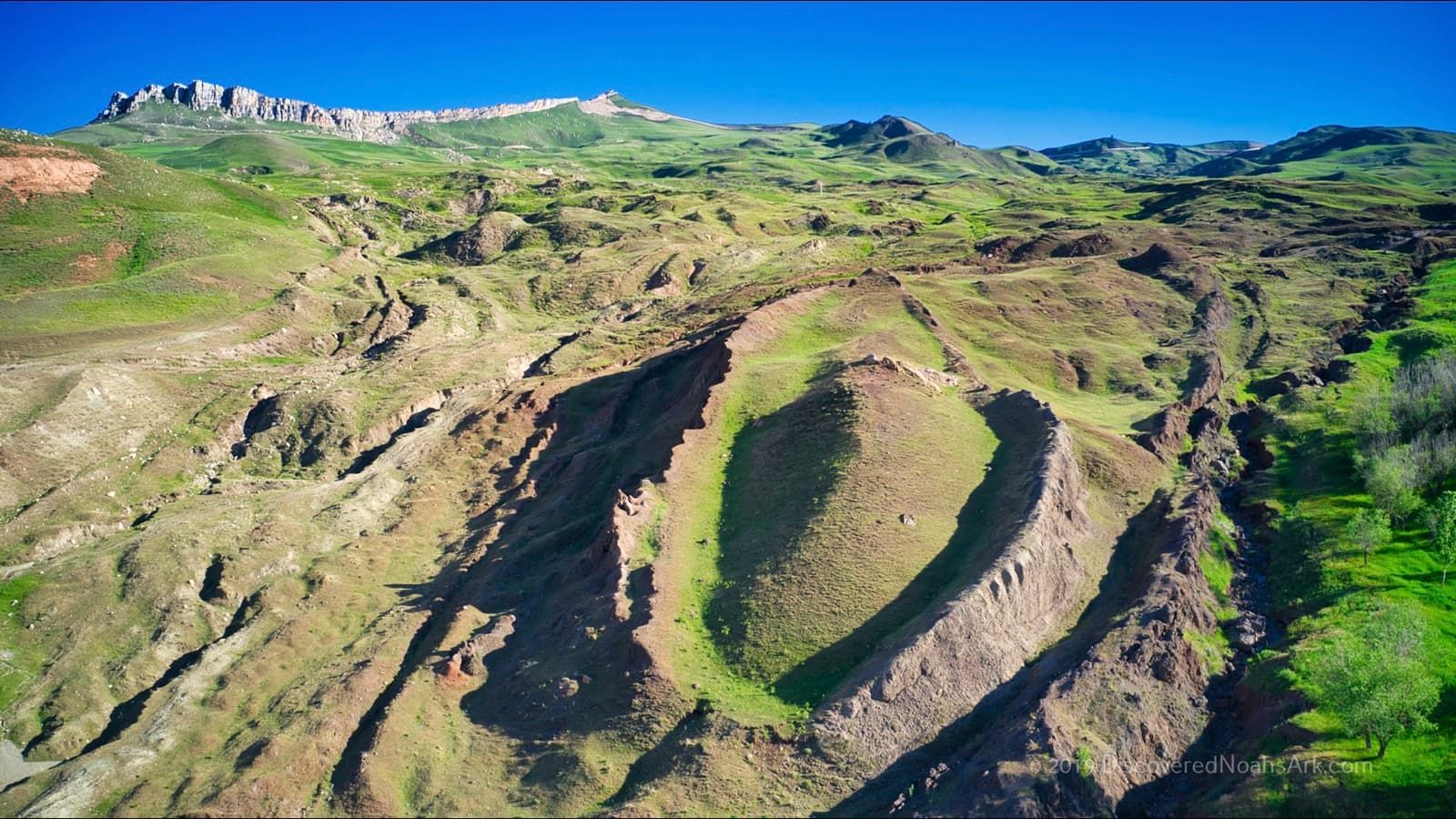
After more than 70 years, a research team from Sivas Cumhuriyet University in Turkey has seriously reexamined this rock formation. Although the idea of a legendary ship among rocks sounds incredible, and it has even been promoted within some US Christian organizations as Noah’s Ark’s resting place, the team found that Durupinar is not merely a natural rock formation with a coincidental ship-like shape. They discovered that these rocks are 100% man-made, making the hypothesis much more intriguing.
Geologically, Durupinar consists of iron oxide-rich rocks near the town of Dogubayazid, only a few kilometers from the Iranian border. The research team stated that laboratory analysis is ongoing, but preliminary examinations confirm the ship-shaped rock group is human-made, not natural. A detailed conclusion is expected in 2027.
The story of proving Durupinar’s truth is not just about archaeology but also reflects the perspective of believers wanting to verify the Bible’s stories. Although some biblical locations like Mount Ararat or Mount Sinai correspond to actual sites, archaeology has many doubts because the terrain often conflicts with biblical descriptions. Only a few places, such as Jerusalem, are confidently identified. Still, believers continuously seek evidence to affirm the Bible’s truth, aligning with the scientific mindset that many people now uphold.
Whether Durupinar is truly Noah’s Ark or not, from an archaeological perspective, it represents a renewed search for truth after many decades. If it turns out not to be the legendary ship but is indeed human-made, it raises even more fascinating questions about why ancient civilizations built such a massive rock formation in the first place.
References: