

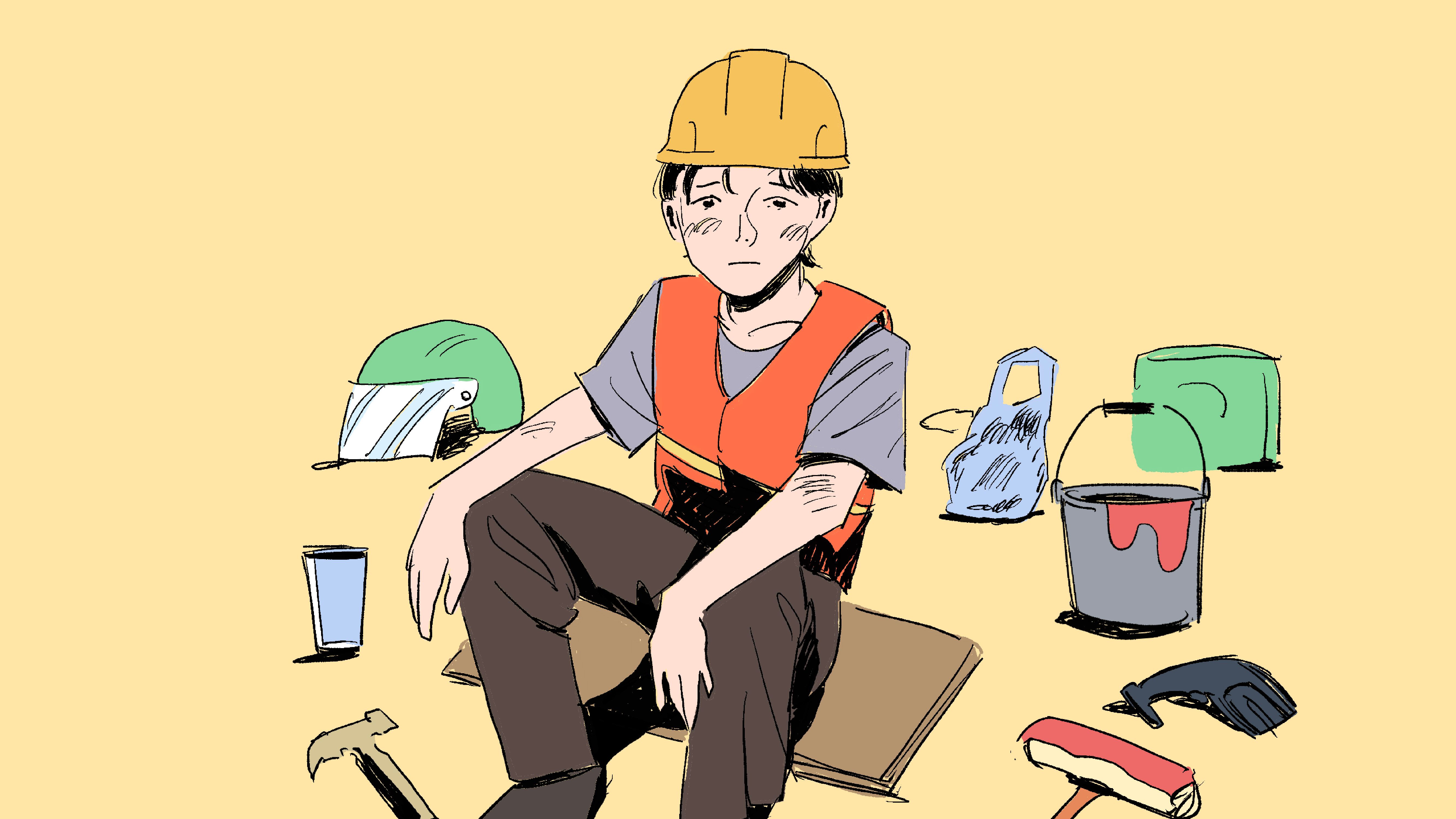
The Korean series 'Dead-End Job,' known in Thai as 'งานสนุก จะตาย,' available on Netflix, narrates the story of Byeon Hyuk-jun (played by Lee Jae-wook), a young man whose life plummets to its lowest point amid heavy debt, unemployment, and hopelessness, driving him to consider ending his own life.
However, a turning point occurs when he stumbles upon a part-time job flyer from the mysterious 'Spider Job Agency,' offering an enticing salary 50 times higher than typical wages in exchange for surviving strange and dangerous missions. The series not only delivers suspense but also reflects and satirizes the distortions of South Korean society and the fate of the working class in a capitalist world.
The fate of the working class in Thailand is likely no different. Thairath Plus invites readers to consider if such a mysterious job agency were to open a branch in Thailand with five familiar part-time jobs. This might reveal even darker truths: these jobs are full of risks yet offer no large sums or 50-fold wages—only minimal hourly pay earned through sweat, dignity, and daily survival. For those without options, what choices remain?
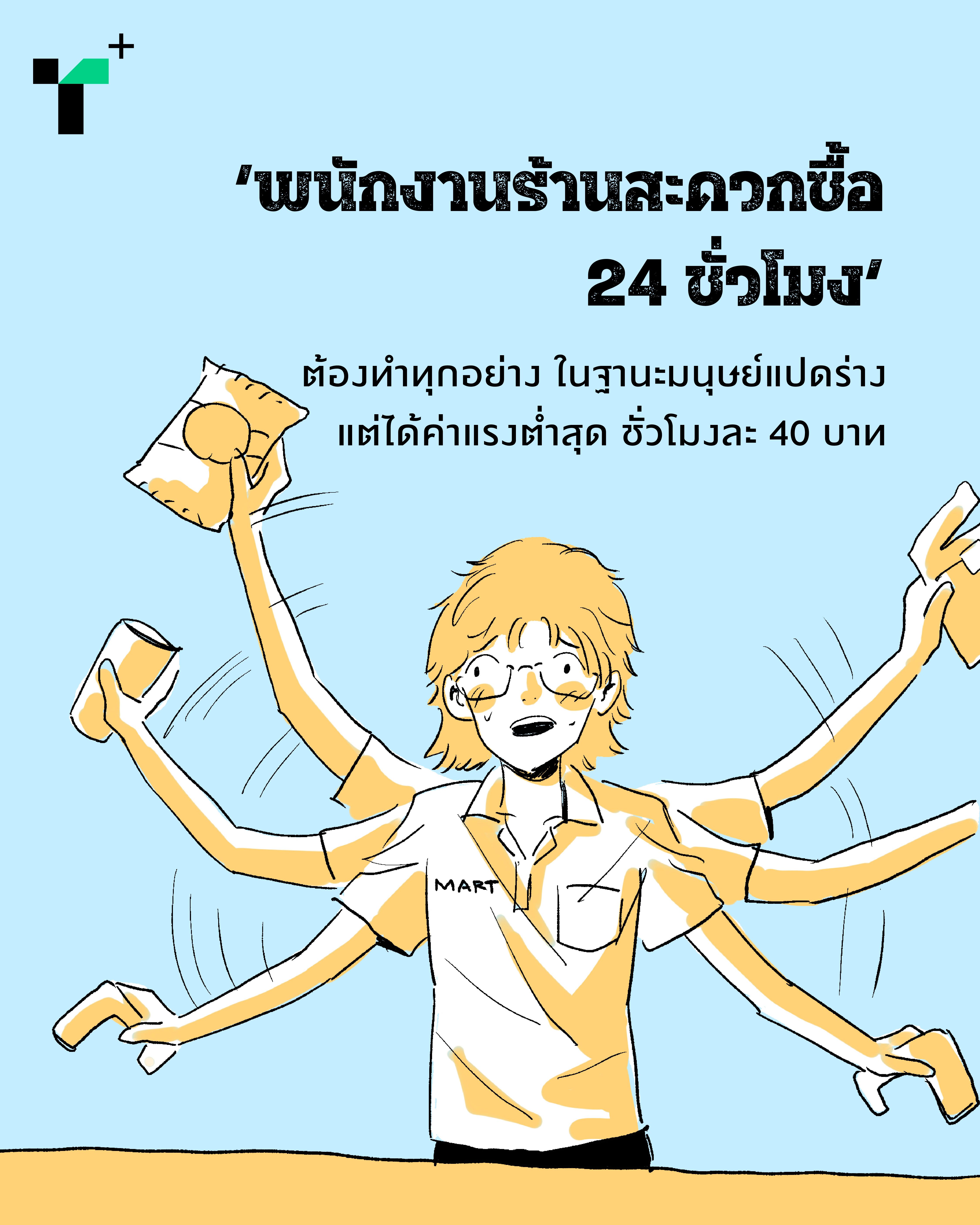 One employee must shoulder responsibilities as if having 'eight bodies' simultaneously: standing at the cashier counter, making coffee, heating food, frying fresh items, carrying and stocking boxes, cleaning bathrooms, handling parcel deliveries, and even riding a motorcycle through rain to deliver goods in alleyways.
All this is exchanged for an average minimum wage of 45 to 53 baht per hour or a starting monthly salary around 10,000 to 15,000 baht, consistent with Thailand’s regional minimum wage rates averaging 330 to 400 baht daily, equating to only 41 to 50 baht per hour based on a standard eight-hour workday.
The cruel irony is that employees are often implicitly pressured to arrive 30 to 45 minutes early to count cash and check stock, and to stay after their shifts without overtime pay. Additionally, a 'stock difference' system requires staff to share financial responsibility if goods go missing or cash is short, resulting in deductions averaging hundreds to thousands of baht per month per person.
Even though a single store branch’s daily sales may reach 80,000 to 150,000 baht, the wages of workers enduring back pain after standing 8 to 10 hours during night shifts barely cover monthly rent.
According to Thailand’s Labor Protection Act of 1998, employers are clearly prohibited from wage deductions except by law. Yet in many retail businesses, joint responsibility for loss compensation and forced off-hours preparations persist, leading to ongoing complaints to the Ministry of Labor and retail labor unions.
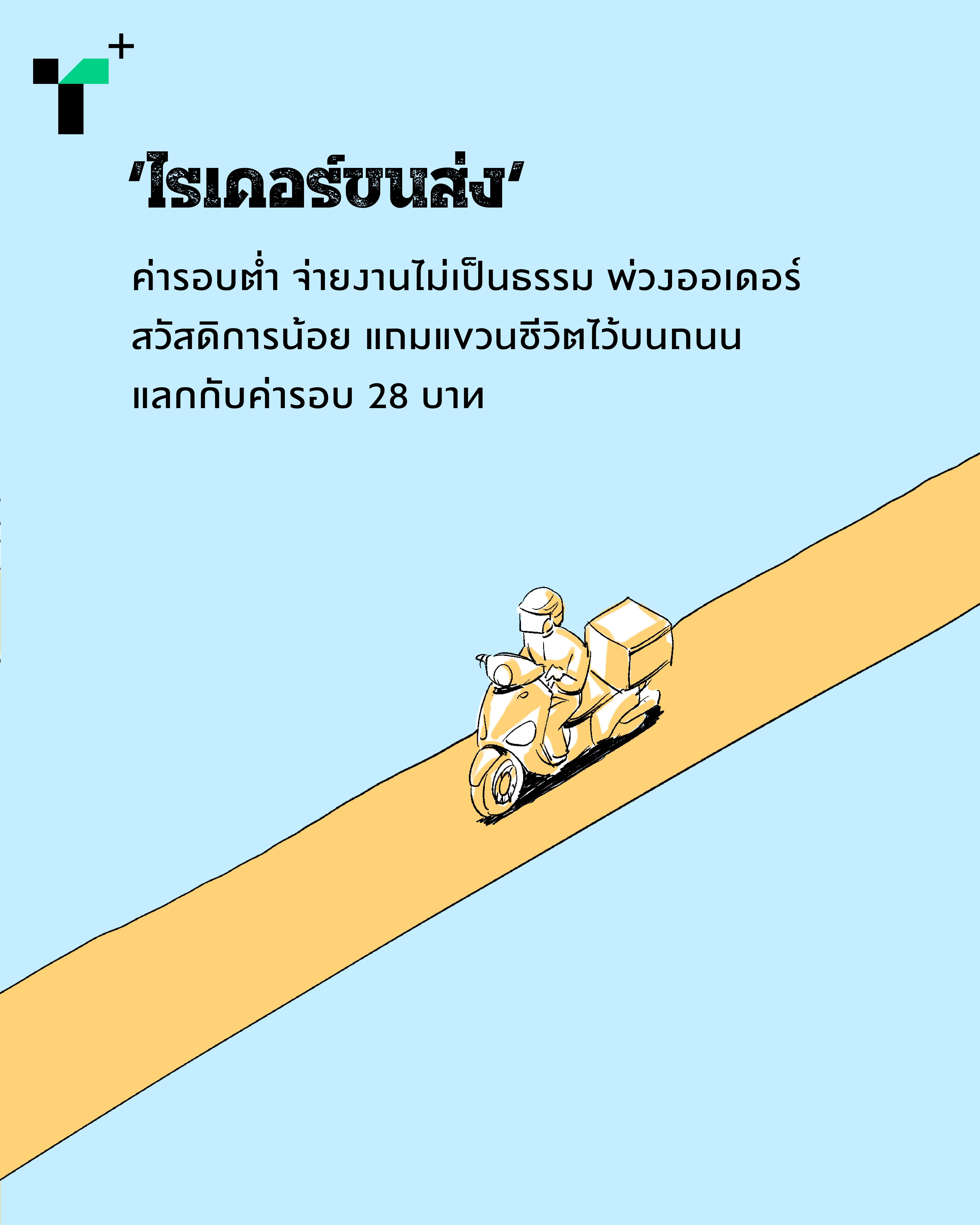
Rocket Media Lab surveys show that delivery platforms’ starting pay per run was once 60 to 62 baht per order between 2018 and 2020 but has steadily declined to only 28 to 30 baht in Bangkok, and as low as 15 to 20 baht in some provinces. Batch order systems further reduce pay per drop by 35 to 50%.
Under Thailand’s Labor Protection Act (1998) and Social Security Act (1990), riders are classified as 'independent contractors,' excluding them from Social Security Section 33 benefits. They lack healthcare coverage, sick leave, or severance pay despite working amid high risks.
Data from the Thai Road Safety Culture Center and the World Health Organization’s Global Status Report on Road Safety agree that Thailand ranks among the highest worldwide in road traffic deaths, averaging 14,000 to 15,000 annually, with over 75 to 80% being motorcycle riders.
To earn 500 baht daily, riders must work 12 to 16 hours (25 to 35 deliveries), braving scorching heat up to 40 degrees Celsius and heavy rain. After deducting costs for fuel, vehicle depreciation, and internet, actual hourly pay drops to mere tens of baht, below minimum wage, while risking life amid Thailand’s dangerous traffic.
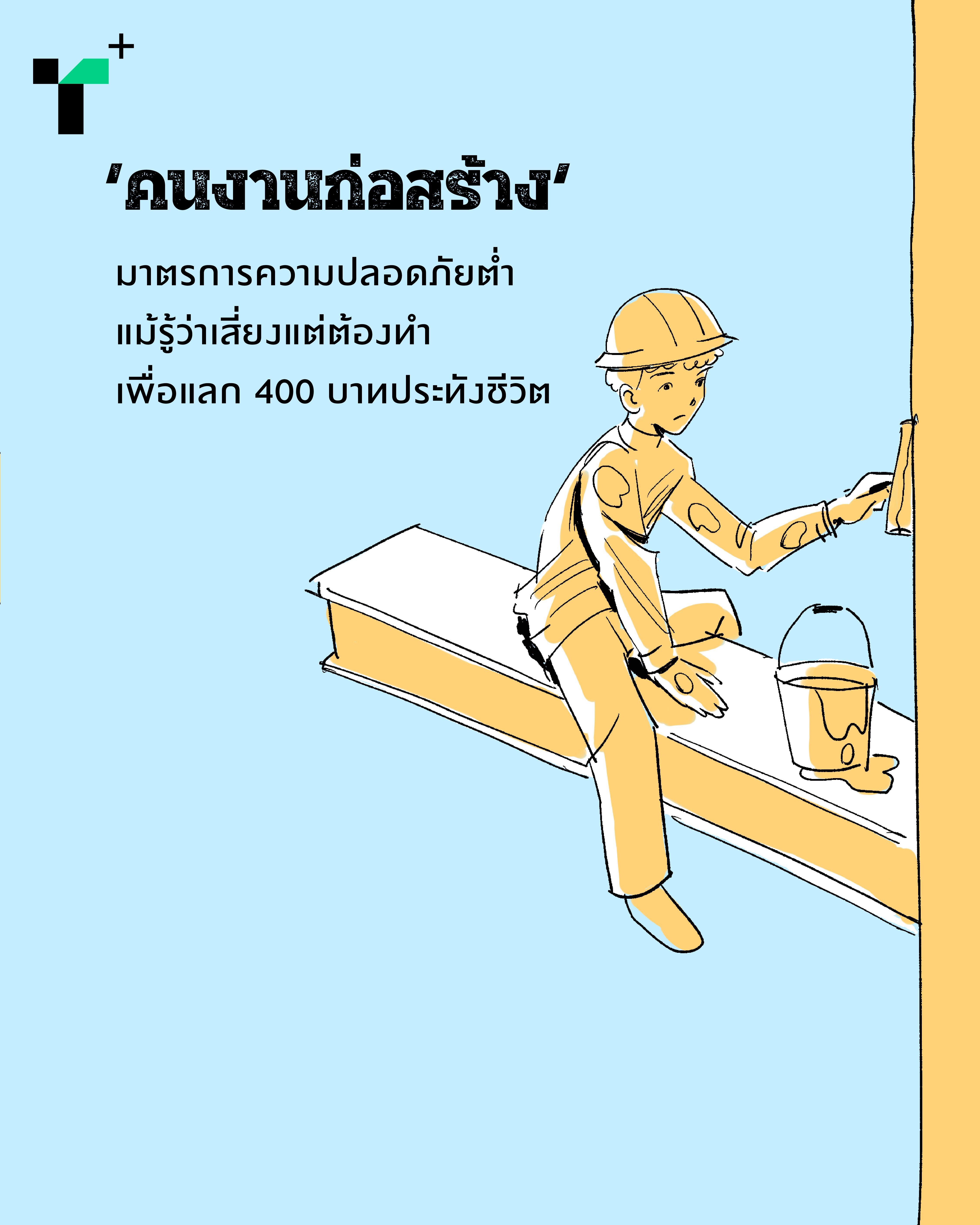
Average wages for general construction workers range from 370 to 500 baht per day. Most are migrant or informal workers with little bargaining power.
Social Security Office data shows that annually over 80,000 to 90,000 employees suffer work-related injuries, with 500 to 600 deaths. The construction sector leads in fatalities, primarily from falls from heights claiming over 100 lives yearly, plus dozens more from collapsing structures or falling objects.
For perspective, consider the State Audit Office building case, where workers knew about reduced steel specs, improperly mixed concrete, and unsafe scaffolding. Yet they could not refuse to work on a 30-plus-story building, faced only with the choice of 'risking death on the site' or 'starving today.'
If the building collapses, compensation from the Workers’ Compensation Fund, calculated on minimum wage, amounts to only a few hundred thousand baht—minuscule compared to multi-billion baht project values and incalculable against the permanent loss of loved ones.
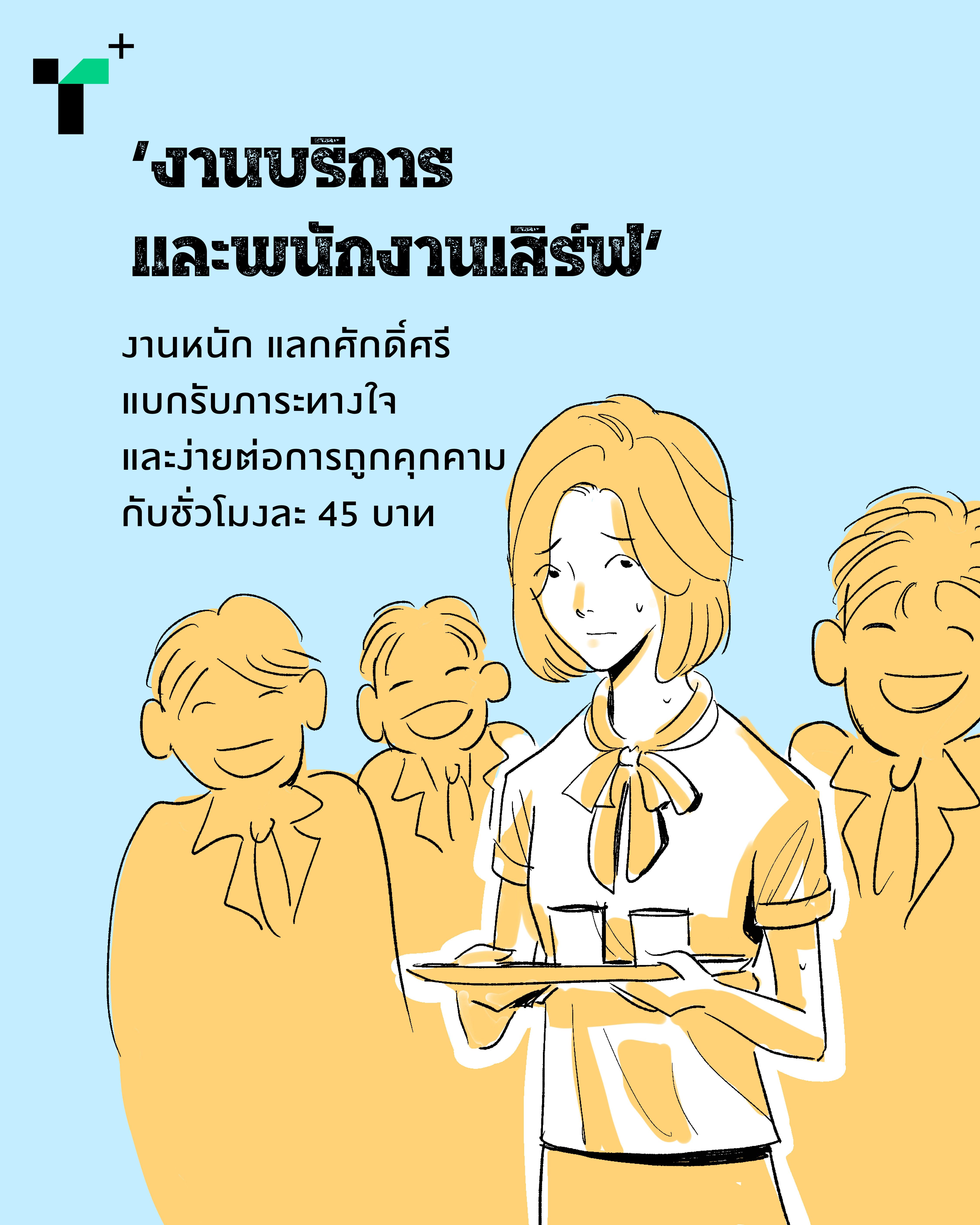
With minimum daily wages averaging 350 to 450 baht (about 45 to 55 baht per hour), tips are uncertain and often deducted by managers into a shared pool used to cover damages. Research from Mahidol University’s Institute for Population and Social Research found that over 44.4% of Thai employees have experienced workplace sexual harassment, rising to 60.2% among sexual minorities, 45.9% among women, and 33.9% among men.
Common incidents include teasing about appearance (27.2%), sexually suggestive jokes (16.4%), and unwanted touching (9.5%). These align with international statistics from the Restaurant Opportunities Centers United, showing service workers face significantly higher sexual harassment rates from customers and supervisors than other industries.
The ‘customer is king’ narrative pressures staff to endure and smile through harassment like hand-holding, touching, or sexual remarks. Speaking up risks being labeled as unserviceable and fired. Moreover, 45.4% of establishments lack policies or mechanisms to protect employees from such harassment.
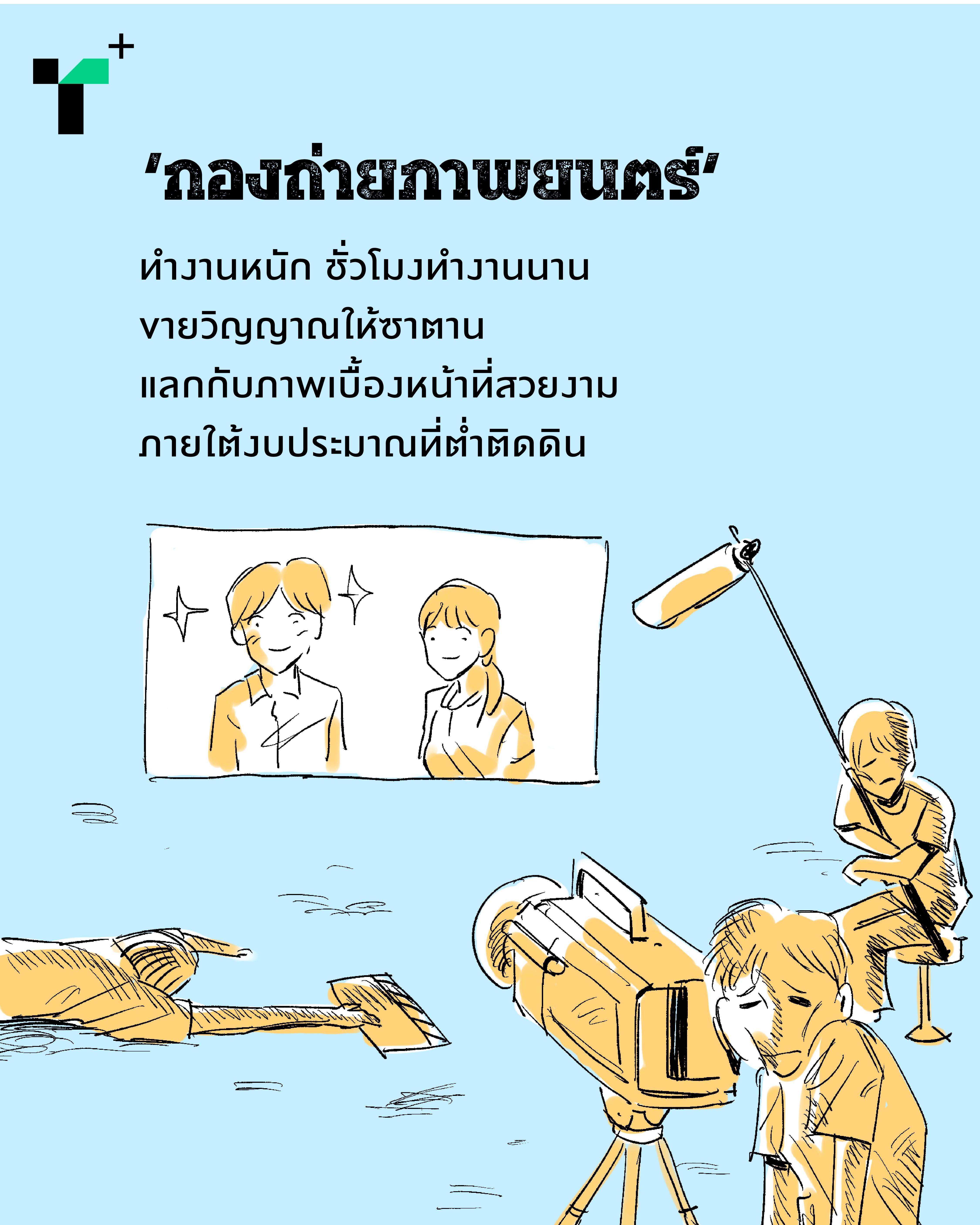
Film crew members—assistants, electricians, set workers, welfare staff—usually receive a 'queue fee' averaging 1,500 to 2,500 baht per queue (varying by project scale and experience). Though this seems reasonable, a 'queue' in Thai productions often means 16 to 24 hours of work per day.
Some shoots extend over 30 hours straight. Dividing an average 1,800 baht queue fee by 20 actual hours yields about 90 baht per hour. Freelancers lack overtime pay, health insurance, or contracts protected under the Labor Protection Act.
Data from the Creative Labour Union (CUT) and Safety on Set Thailand reveal that 80 to 90% of crew members have fallen asleep from accumulated exhaustion while driving home after late shoots, causing ongoing road accidents with injuries and fatalities, all without safety standards protecting crew lives.
Dreams, passion, and dedication to art are used to justify overworking people beyond limits. Legal loopholes force workers to endure risks: illness, stress, and continuous hard labor just to produce beautiful images on screen under the tightest budgets.
The scariest reality is not monsters or strange missions like in the series, but the invisible 'capitalist system' web that controls lives and forces people to struggle and survive for wages that seem hardly worth it.
Capitalism suppresses wages, safety, and quality of life, turning humans into cheap cogs whose value is measured by life, health, and loss. Social, economic, and inequality structures leave workers with no choices, no bargaining power, no right to refuse dangerous, sleepless, or harassing work. If they don’t comply, hunger and debt await them tomorrow.