

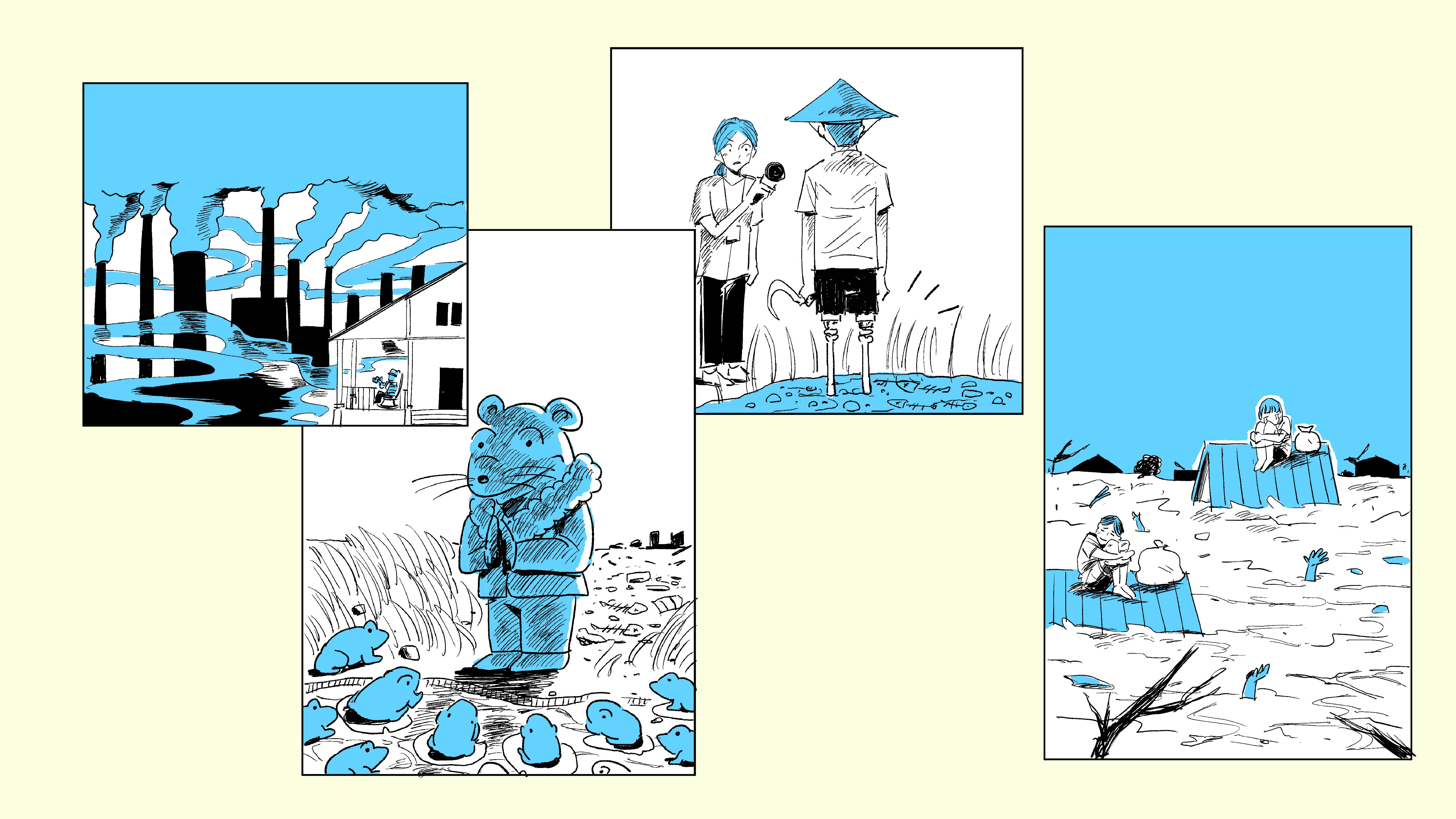
Proverbs and sayings, besides being moral teachings and reminders, also serve as mirrors reflecting behaviors, events, or beliefs that often contain social satire relevant to each era. No matter how many years pass, we still use these proverbs to explain situations and their meanings, though the choice of which to use varies according to the intended message and context of the current events.
Amid relentless crises, many people find themselves living by adapting and surviving environmental, political, and economic problems, uncertain when these issues will be truly seen and earnestly addressed.
Whether in the north, south, sky, land, or underwater, problems confront us daily. Thairath Plus invites you to revisit seven Thai proverbs, retold straightforwardly through social, political, and environmental issues, prompting us to question what is happening and the lives we all face today.
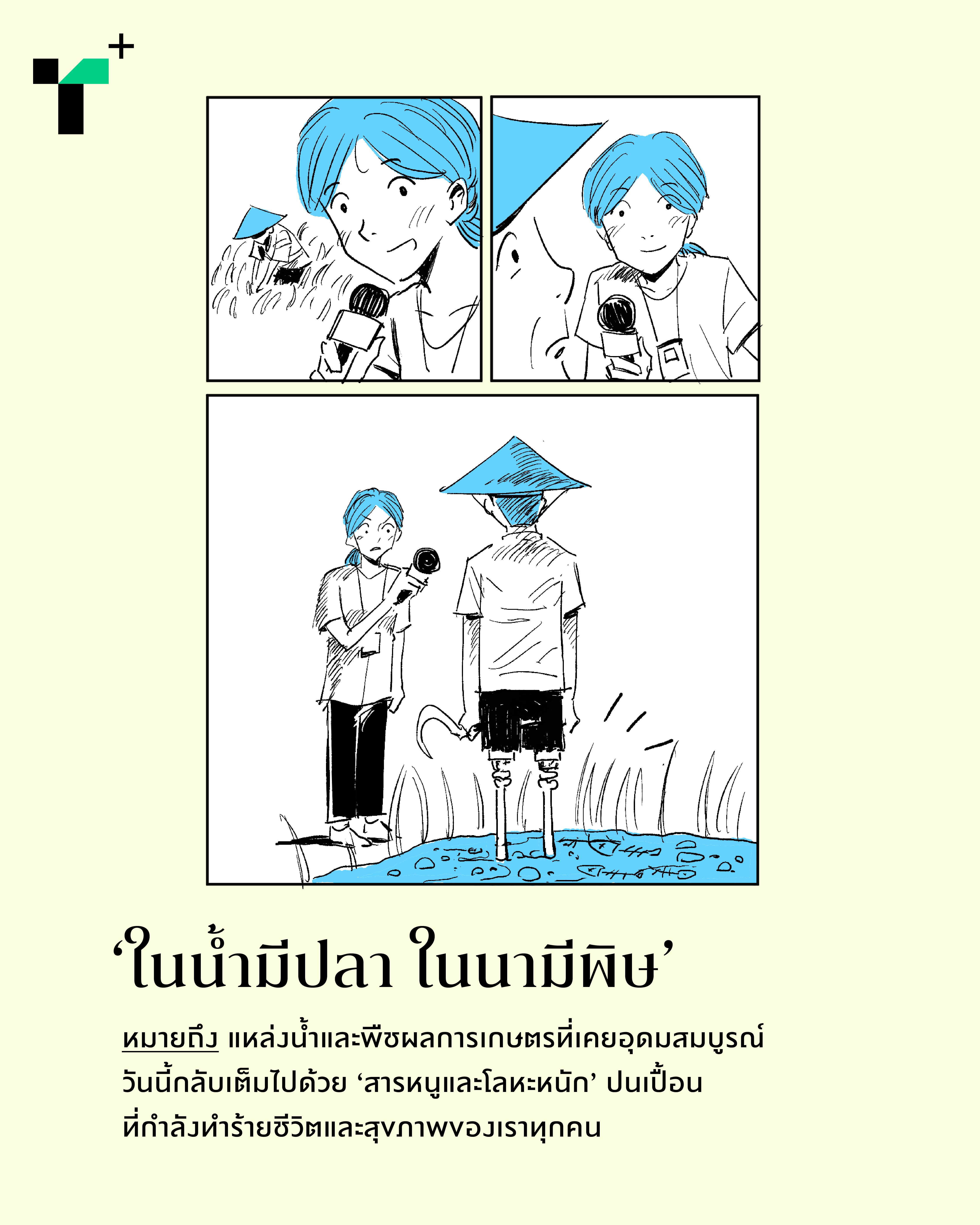
This means that water sources and agricultural produce that were once abundant are now contaminated with arsenic and heavy metals, harming the lives and health of everyone.
Thailand's image as the 'rice bowl' is being replaced by crises of toxic contamination and heavy metals in the Kok, Sai, Ruak, Mekong, and Salawin rivers—linked to cross-border mining in the upper watershed in Shan State, Myanmar.
Data from the Department of Disease Control between 2025 and 2026 revealed urine tests of at-risk populations in seven riverside provinces—Chiang Mai, Chiang Rai, Mae Hong Son, Loei, Nong Khai, Bueng Kan, and Nakhon Phanom—on 3 November 2026. Of 1,269 samples in 2026, 94 individuals had arsenic levels exceeding reference values, while water quality tests in rivers showed arsenic up to 28 times above standards.
Although in mid-November, ministers and agencies such as the Provincial Waterworks Authority and the Ministry of Higher Education, Science, Research and Innovation conducted water sample collections in Chiang Rai for quality testing,
in reality, unless international government negotiations can stop the upstream mining source, these toxins will continue contaminating water, agricultural products, and ultimately our dining tables.
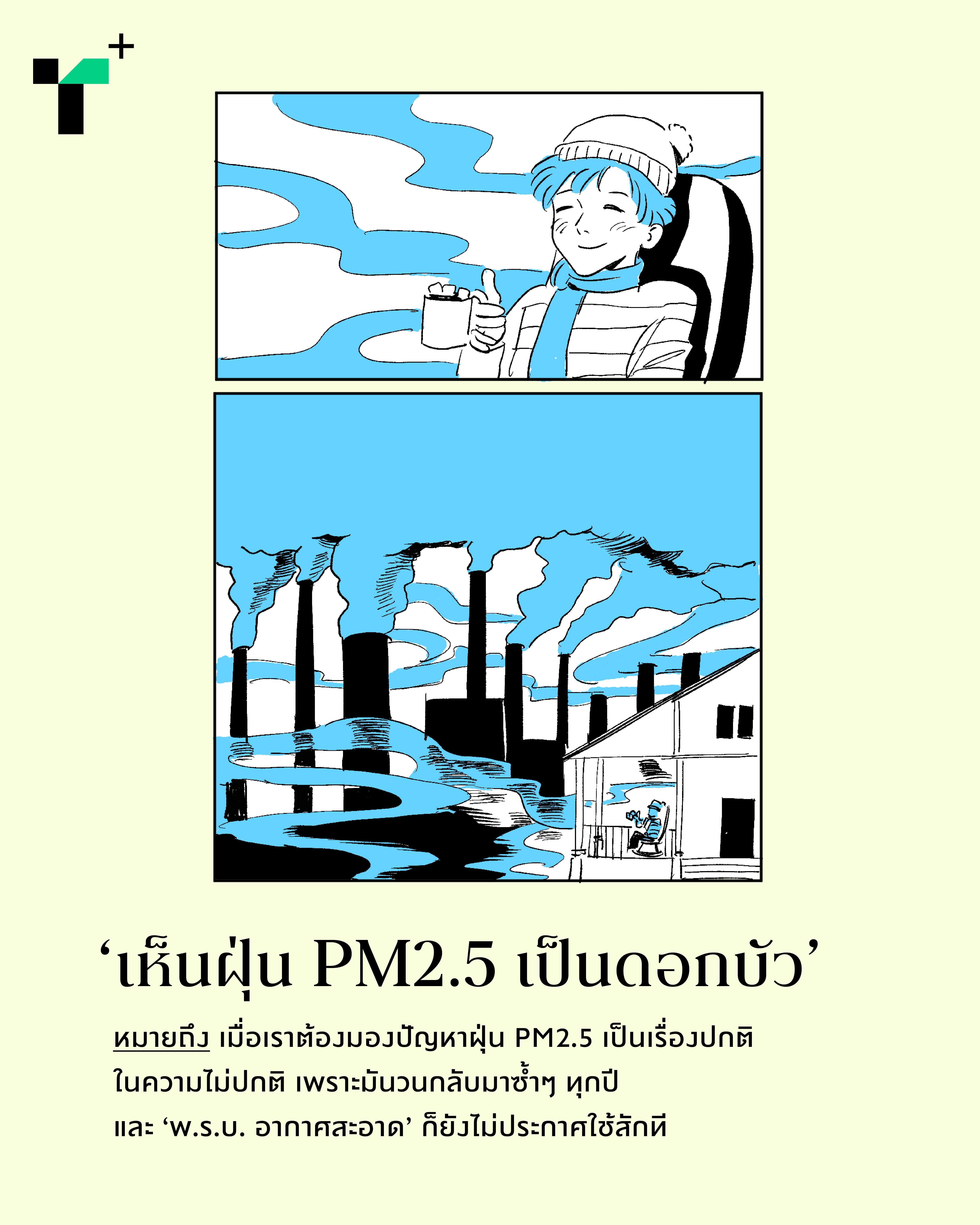
This means treating the PM2.5 dust problem as normal in an abnormal situation because it recurs every year, yet the Clean Air Act has still not been enacted.
Although winter has officially begun, the weather is not as cold as expected, and the haze filling the sky is not winter fog but recurring PM2.5 dust, especially from late year to early next year. Next year, this is expected to worsen between late January and March due to weather patterns and a super El Niño.
Data from the Pollution Control Department and Bangkok's Air Quality Information Center in mid-November 2026 showed PM2.5 levels in Bangkok and its vicinity exceeding standards in 10 to 16 areas, peaking at 48.5 micrograms per cubic meter in Bang Khen district amid stagnant weather and agricultural burning hotspots in lower northern and central regions.
Although the Ministry of Natural Resources and Environment reported a nationwide average PM2.5 reduction of over 5% in 2026 with targets to cut another 5-10% in 2027, coordinating haze reduction with Laos and Myanmar, and parliamentary joint committee progress on the Clean Air Act draft on 17 November 2026, the situation remains to be closely monitored.
However, during this haze season, our daily routine remains starting the day amid hazy air, checking pollution levels, and wearing masks before leaving home—a normality that is anything but normal.
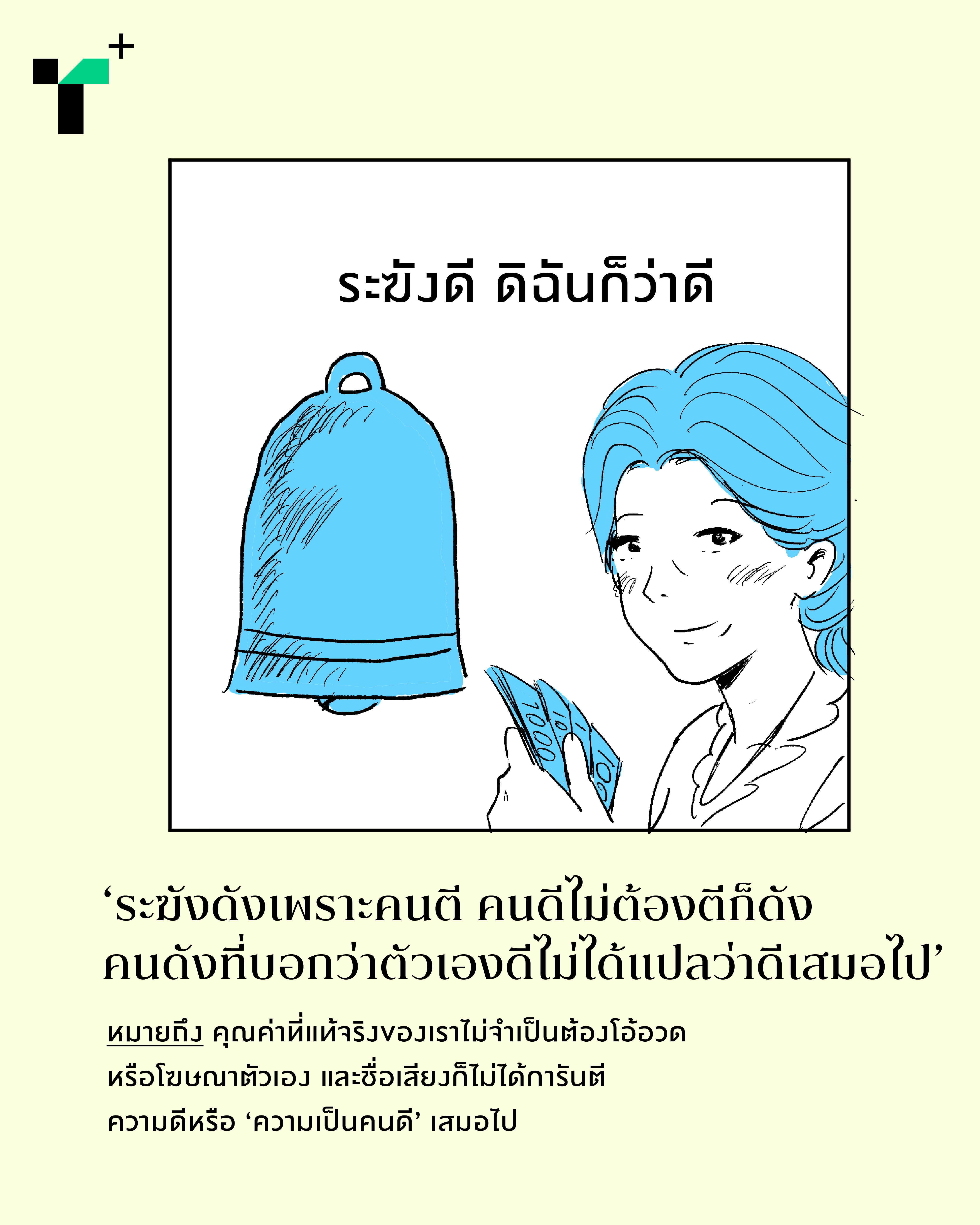
This means true value does not require boasting or self-promotion, and reputation does not guarantee goodness or being a good person.
In a country where state welfare does not fully cover all areas, 'donations' often become society's fallback in hardship. The issue is not the existence of foundations but the need for fair systems, management, and responsibility to the public, requiring improved governance, transparency, and real accountability.
A foundation established by celebrities became a societal focus after the Economic Crime Suppression Division revealed financial investigations showing donation turnovers from 2015 exceeding 815 to 1,000 million baht, with allegations of misusing over 527 million baht, leading to arrest warrants, asset searches, and summonses of foundation board members and contractors in November 2026.
This incident raised public doubts and concerns about transparency in charitable organizations, prompting investigations into other foundations with abnormal finances and misuse, such as a former animal foundation board member accused of soliciting donations using photos of injured cats and flood donation collections without permits. Consequently, government agencies have accelerated measures to audit foundation finances nationwide every three months.
Therefore, fame and media presence, which some may view as proof of experience and social exemplary status, do not guarantee transparency or goodness. This problem reflects structural issues in welfare, oversight systems, and legal loopholes.
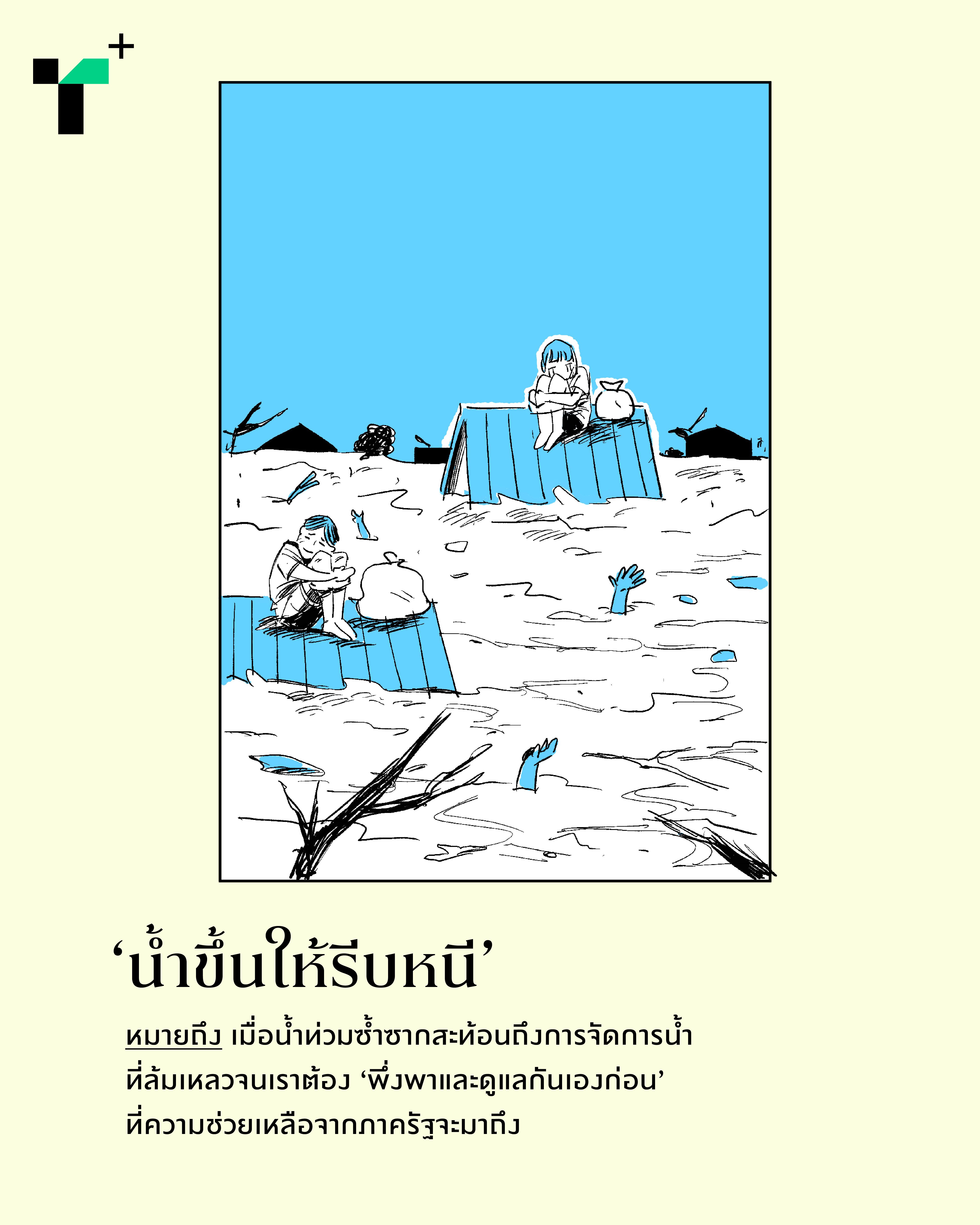
This means recurring floods reflect failed water management, forcing us to rely on and care for each other before government aid arrives.
Recurring problems each year include not only haze but also floods worsening situations in many areas. Satellite images from GISTDA in late September 2026 showed floodwaters covering 822,000 rai across 30 provinces, including Bangkok, severely impacting over 42,000 households in Ayutthaya downstream from the Chao Phraya Dam and 39,000 households in Prachinburi.
The familiar image during flood crises is people helping and relying on each other before government agencies or interventions reach victims. Many remain trapped in cycles of self-warning, moving belongings to higher ground, sandbagging, civil society donations, and awaiting annual compensation instead of root cause solutions and serious government water infrastructure management.
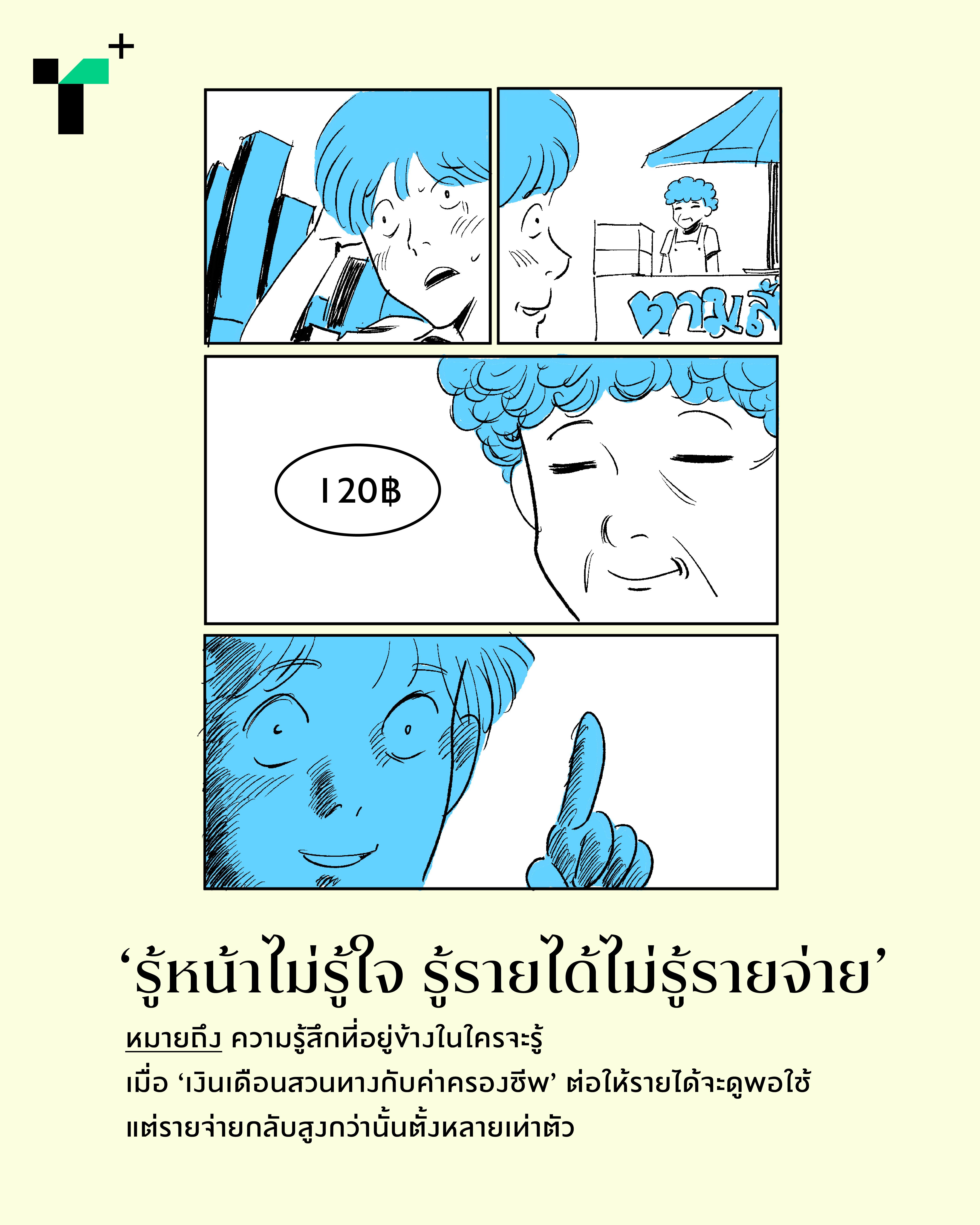
This means the internal feelings are unknown to others when 'salary conflicts with living costs'; income may seem sufficient, but expenses are many times higher.
Many workers bear daily expenses with insufficient time and money to pursue dreams. A 2026 household debt survey by the University of the Thai Chamber of Commerce found average household debt rose 7.3% to 794,945 baht, with credit card debt leading amid rising living costs exceeding income.
Correspondingly, Kasikorn Research Center data in October showed national household debt at 16.4 trillion baht, about 1.5 times disposable income. Worryingly, among those earning up to 15,000 baht monthly, 48.8% struggle to make ends meet.
Thus, while monthly salaries are fixed, we cannot predict daily expenses, fuel price hikes, or food costs, nor whether income will suffice through the month. Despite apparent income growth, it cannot keep pace with rising necessary expenses, inflation, and accruing interest burdens.
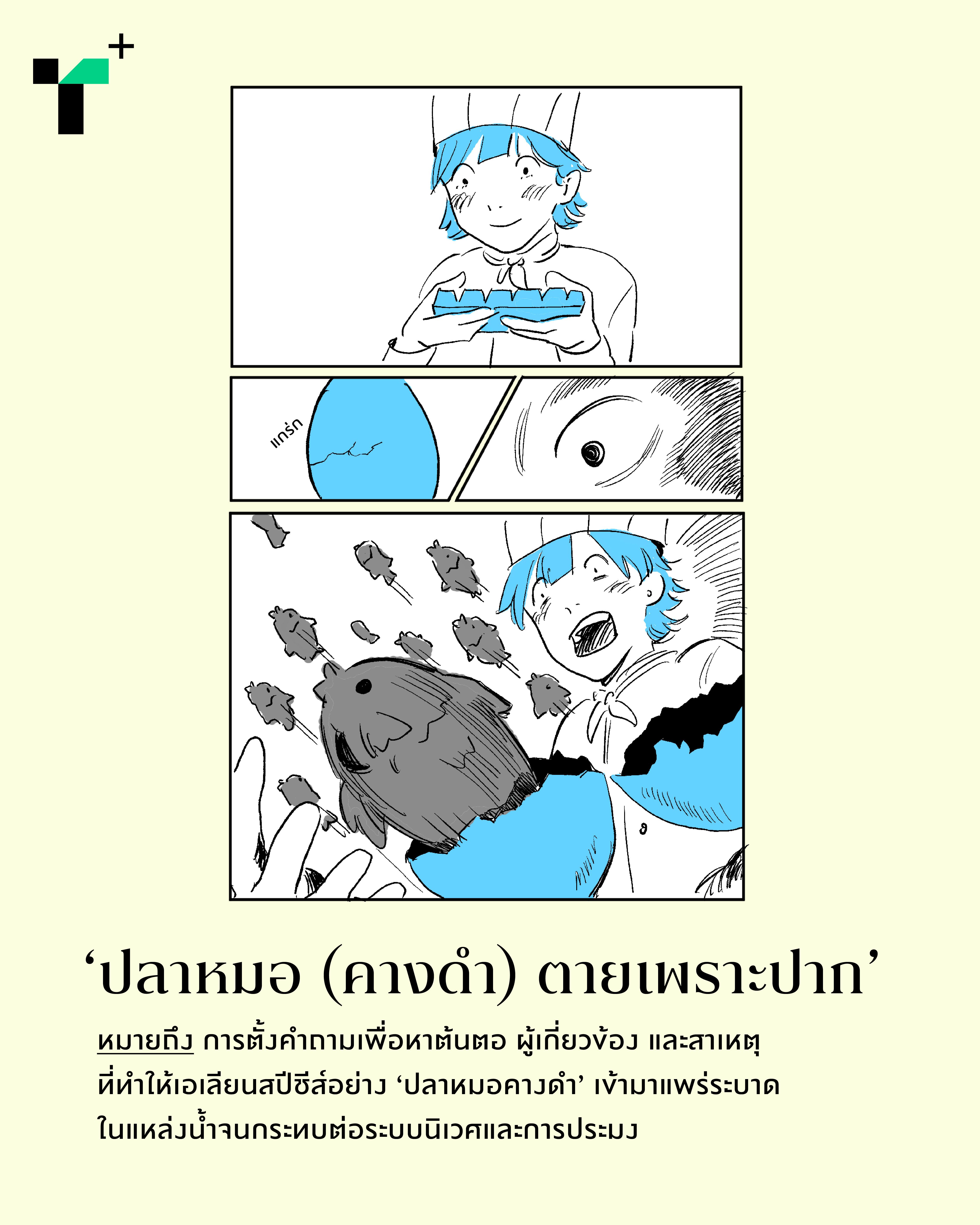
This means questioning the root causes, responsible parties, and reasons why an alien species like the black-chinned tilapia has spread in water bodies, affecting ecosystems and fisheries.
Many remain concerned about responsibility for ecological damage lasting over 16 years, originating from permission granted in 2010 to import black-chinned tilapia from Africa for research and breeding.
Outbreaks first appeared in aquaculture ponds and natural waters in Samut Songkhram in 2012, later spreading to Samut Sakhon and other provinces, reaching Lam Pao Dam in Kalasin in September 2026, continuing rapid reproduction and wider distribution.
Although research was reportedly halted, with fish carcasses destroyed and buried since 2011, and lawsuits filed against academics and the BioThai Foundation for revealing information, the Department of Fisheries stated no clear evidence of sample delivery or destruction. The government reported having eliminated over 11 million kilograms of tilapia through seven measures and mandated weekly reporting.
However, without answers on initial accountability, local fishermen bear the costs of native aquatic species losses, damages to breeding ponds, and farmers’ incomes, while ecosystems may lose biodiversity continuously, impacting the planet and all lives.
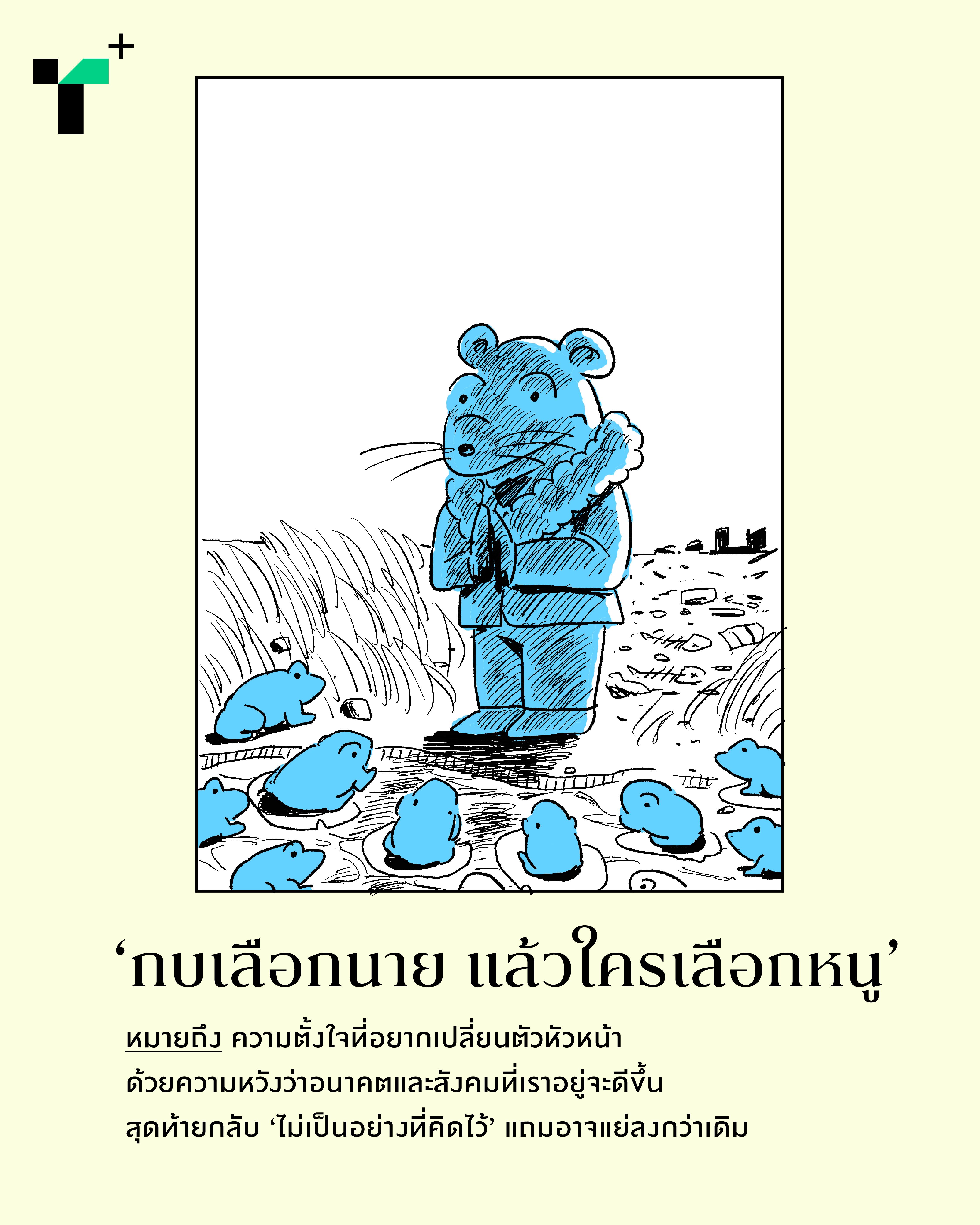
This means that while we hope changing leaders will improve society and our future, the outcome often fails to meet expectations and may worsen.
Elections bring hope for leadership that can reform society and future, yet amid toxic contamination, PM2.5, private organization scrutiny, floods, economic and environmental crises, and more, challenges relentlessly persist.
Disappointment arises when leaders do not align with public will, leading many to question lost hopes post-election. Government performance is not measured merely by quick fixes or post-crisis relief.
Rather, it depends on law enforcement ability, infrastructure reforms, and creating mechanisms preventing citizens from repeatedly facing the same problems. If we become indifferent and ignore root causes, we remain like small frogs in a pond, resigned to fate and crises with no options.
Ultimately, while these proverbs reflect familiar issues people may feel numb to, many continue fighting to preserve their and their loved ones’ quality of life.
Questioning government and stakeholders—both directly responsible parties and systems that leave ordinary people struggling amid recurring crises—is driven by our shared hope for safe, just spaces and better societies.