

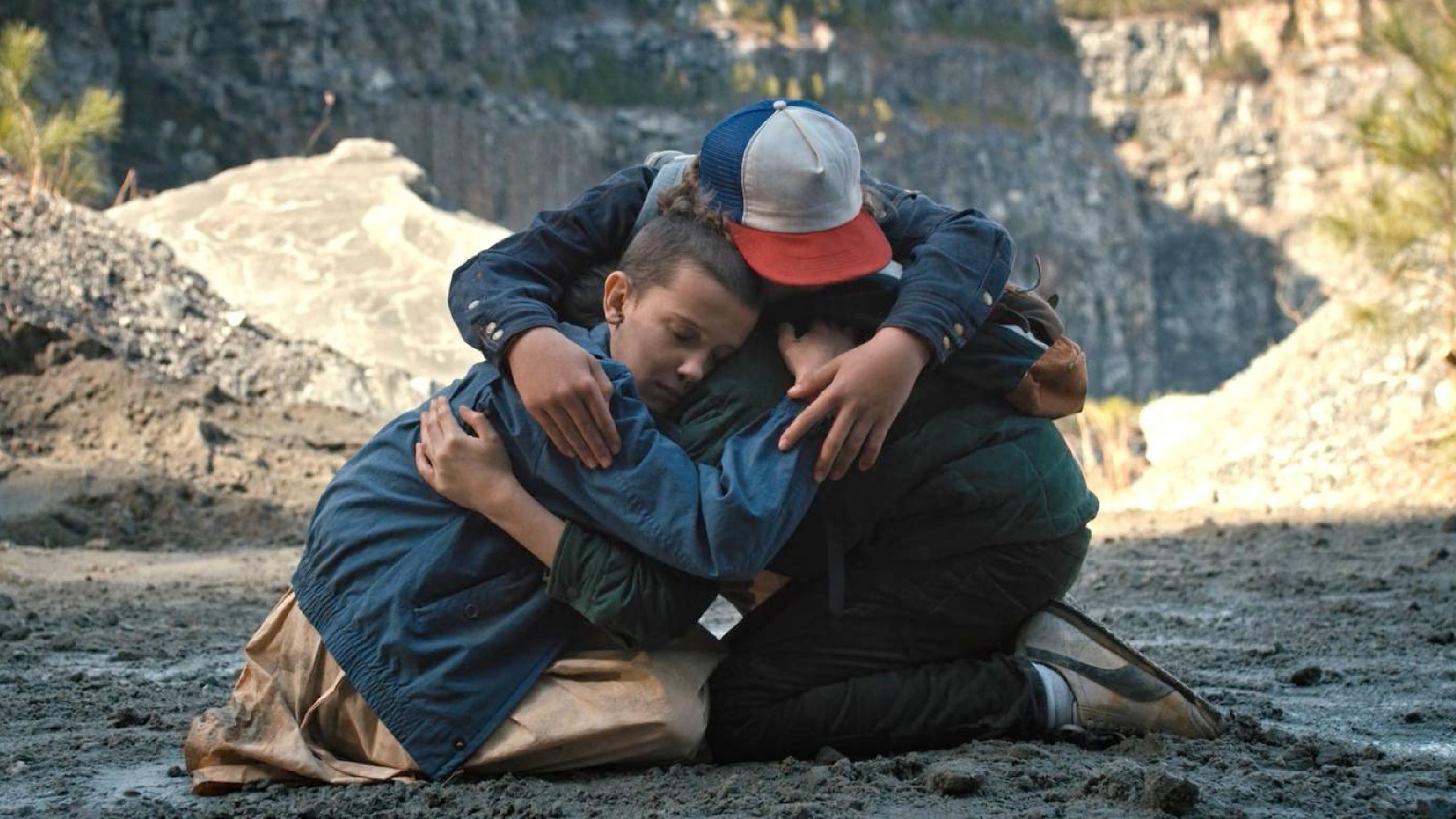
This season marks the end of the mysterious series that sparked numerous phenomena, such as reviving 80s nostalgia in 2016—a trend that remains popular today—and launching many new stars, proving that child actors can deliver strong performances.
Besides the 80s theme, another reflection is on the actors themselves. Comparing them from Season 1 to now, we see they have grown from neighborhood kids into full-fledged teenagers. Off-screen, the young ladies Millie Bobby Brown has gotten married, Finn Wolfhard has his own band, and Noah Schnapp has matured enough to follow world politics and has publicly chosen to support Israel in the conflict with Palestine.
The ending of this phenomenon series brings a unique feeling. Unlike finishing a movie, where we first think about its message, concluding a long series feels like a bittersweet farewell—as if saying goodbye to a friend we know well.
Why do we often feel this way about series or dramas?
The most significant difference between series and films is the amount of time we spend with them. A typical movie tells its story within about an hour and a half, up to three hours. In that time, we might still be watching the first episode of a series and barely meeting the characters.
Though these characters are fictional, our humanity connects us to them. A study titled "Parasocial break-up from favorite television characters" by Jonathan Cohen examines the feeling of "heartbreak" viewers experience when a favorite character is removed from a series.
The research found that when someone learns their beloved character is cut from a series, they experience feelings similar to the end of a real relationship. This stems from a parasocial relationship—a one-sided bond—between the viewer and the character.
Such relationships often form between stars and fans, especially Asian idols in industries that sell their private lives as part of the content for fans to follow. This constant connection creates a feeling of familiarity, making fans see them more as friends than distant celebrities.
It’s no surprise we feel similarly with long-running series that tell continuous stories. Watching Buffy from Buffy The Vampire Slayer shows the character growing from a rebellious teenager through evolving relationships and many losses, almost like witnessing their everyday life.
Some series release episodes weekly. Cartoons or sitcoms watched after school in childhood become part of our routines. Even though separated by a TV screen and despite Teen Titans' world being about fighting villains and us not yet understanding many adult issues of Pentor, their world quietly becomes part of ours without us realizing.
Although modern series often release entire seasons at once, reducing the feeling of being part of our daily lives, the bond doesn't disappear immediately because fandoms today offer new ways to engage deeply with characters.
Fandom culture is not new; it began when Sir Arthur Conan Doyle wrote the detective stories Sherlock Holmes in 1887. But with today's speed and connectivity, fandoms appear as larger, more connected communities than ever. Fans worldwide produce content that reaches us widely, increasing its volume. Consuming and creating fan series content can make us feel like "owners" of the story and make fictional worlds seem "real."
Cultural critic Azuma Hiroki calls fandom content consumption"Database Consumption."He compares media to a computer with a display layer everyone sees—the movie, series, or book—and many behind-the-scenes parts only the most knowledgeable see, like the code creating images, representing background details including fandom content.
Database consumption means engaging with all media layers, visible and behind the scenes. This reveals new aspects filling gaps in the series. Characters become more human after reading fan fiction adding new dimensions. Some fan comics present situations unseen in the original story, offering fresh perspectives. Even fan cams showing actors’ similarities and differences from their characters provide new feelings.
Moreover, the longevity of fandoms in long series plays a role. In the study "How TV series overtook films: A study on the increase in popularity of TV series" by Kevin Kieran, he examines why streaming-era viewers prefer series over movies. One key factor is their continuity, which fosters fan discussion.
"The nature of ongoing series creates a desire to engage with the content. Cliffhangers or plot twists spark debates on social media. Analyzing episodes and waiting together for the next builds a community experience, strengthening fandom bonds," Kieran writes.
The different release methods make fandoms view movies and series differently. Movie fandoms see watching a film as a grand event, while long series fandoms see it as an enduring gathering space for conversation. Thus, saying goodbye to a series is like leaving that shared space.
References:gwern.net,,ijrpr.com,,jmpc-utokyo.com