

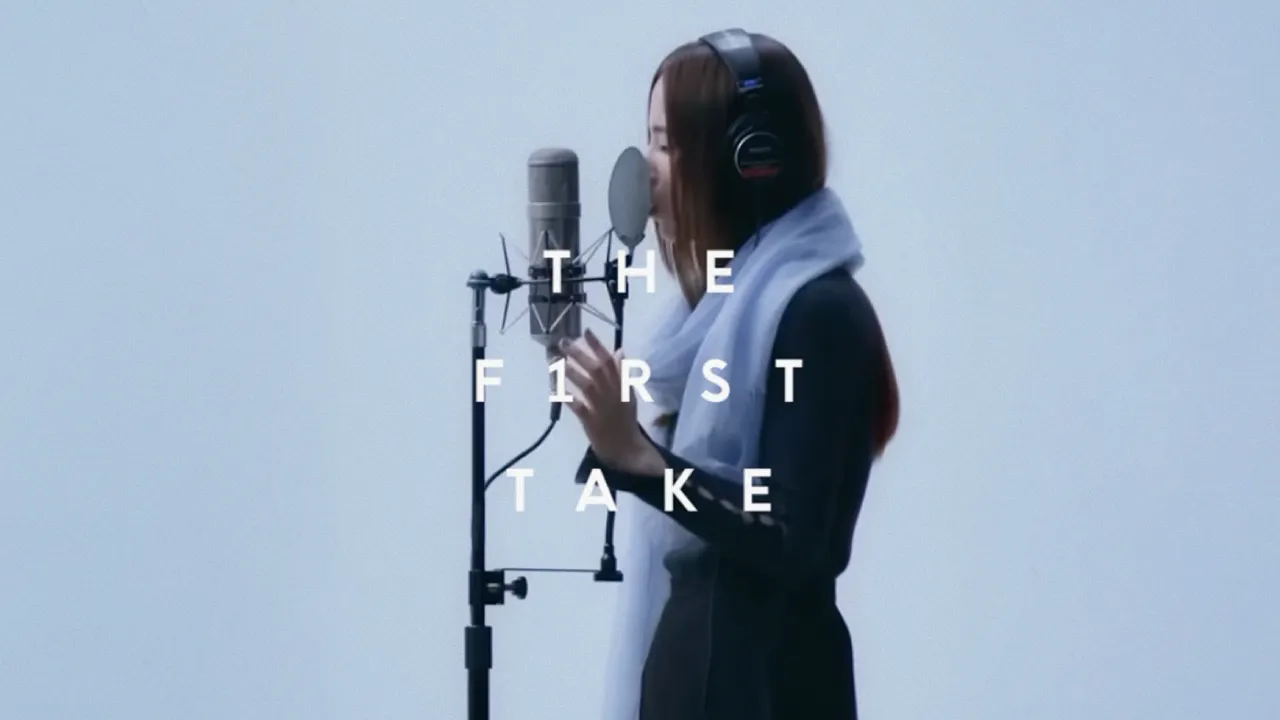
Amid numerous live shows across all social media platforms and televised performances in the past, audiences have become accustomed to stages lavishly decorated with front and backdrops full of props and musical instruments. Artists’ outfits, makeup, and appearances are fully highlighted, accompanied by multi-camera footage switching between various shot sizes capturing both singers and musicians in dynamic, often countless, cuts.
Live performances, whether mini-shows or large concerts, have consistently followed this format because audiences seek not only to hear music but also visual elements that showcase the artist's charm from the very first camera shot, creating a lasting impression. However, these elements can distract viewers or lead them away from the music’s essential substance.
The beauty of music lies in revealing the inner feelings of the performer—whether happiness, sorrow, nervousness, insecurity, pain, or any emotion—through gestures, vocals, and every note played, rather than presenting the artist’s external appearance, which merely conceals life's fragility.
Since the invention of television and live or recorded broadcasts, fans have seen only the perfected and flawless beauty of artists as captured by evolving camera technologies. Vocals are polished to hit the correct keys, while production aligns closely with the music’s image or concept.
It is fair to say that no media previously emphasized the internal voice within the artist’s heart that the vocal cords cannot express. No live session would permit artists to show nervous or insecure body language, nor would production design be completely stripped down to just microphone stands and instruments.
Looking back to MTV’s golden era from the 1980s to mid-1990s, it would have been unimaginable that such a simple program as THE F1RST TAKE would become highly popular forty years later. Even the simplest MTV Unplugged sessions from bands like Alice in Chains, Nirvana, Lauryn Hill, or legends like Sinéad O’Connor, Neil Young, and Eric Clapton featured beautiful visuals—great for artist promotion but also diverting attention from the artist’s purity and the music’s nature.
THE F1RST TAKE: A program delving deeply into humanity through music.
On 15 Nov 2019 GMT+7, shortly before the global COVID-19 crisis, THE F1RST TAKE debuted on YouTube. The show’s format completely overturned the standard live show template: only microphone stands and microphones appeared on screen, with artists performing unembellished before the mic. The only variation was image size, determined by camera lens distances placed at optimal positions. Despite featuring instruments like piano, guitar, bass, string quartet, drums, and harmonized vocals, the visuals offered no distractions except the artist’s facial expressions and gestures conveying sincere emotion.
The female artist was adieu (real name Moka Kamishiraishi), performing "ナラタージュ" (Narataaju), a title blending "Narrative" and "Montage." This song’s name holds deep meaning in relation to the show’s core theme and also connects to the 2017 film "Narratage," starring Jun Matsumoto and Kasumi Arimura.
In film terms, "Narratage" refers to storytelling that combines a narrator’s voice-over with flashback scenes to convey a character’s thoughts and memories. Adieu’s song narrates a past love story, preserving memories. Choosing adieu’s performance for the first episode was no accident; the show was meticulously planned. Fans of subtle simplicity are fortunate to hear detailed production insights.
Why only the first take? An in-depth look at the show’s concept from the producers.
On Monday, 12 Jan 2026 GMT+7, Bangkok University’s Faculty of Communication Arts hosted a seminar titled CREATIVE SPARK 2026: THE FIRST TAKE - BANGKOK UNIVERSITY EDITION: Redefining Entertainment Content Creation as a Global Experience. It inspired students and enthusiasts with talks by Makoto Uchida and Katsuki Nakayama, the producers and cinematographer of THE F1RST TAKE, a show featuring Japanese and international artists performing songs in a single, unedited take streamed on the show’s channel. Pa Ted Yutthana Boonorm hosted the interview, while real-time interpreters Atta Bunnak and Somrapee Panyarachun performed excellently.
Currently, THE F1RST TAKE has 11.7 million YouTube subscribers with over 1,500 uploaded clips. Daily views average 200,000 to 400,000 per clip, doubling for trending artists or those with global fanbases. The 24-hour view record belongs to BABYMONSTER’s "Drip" performance, garnering over 4 million views in one day.
The all-time top artist record is DISH// (Takumi Kitamura) with their 2020 performance of "Neko (Cat)," which has over 232 million views. Frequent repeat views have steadily increased this total. This clip was THE F1RST TAKE’s global breakthrough, reviving "Neko" years after its release and earning a Japan Record Award.
However, THE F1RST TAKE’s rise to success was not easy.
Before 2016, when Makoto Uchida worked as an artist manager at Sony Music Japan, he conceived a streaming music show. He felt artist performances on media platforms were overly produced and unnatural. To him, true nature is humanity itself, but production processes—scene setting, camera movement, rehearsed music, and vocals—often stripped away subtle but crucial details, obscuring genuine charm.
For Uchida, true charm is not the artist’s charisma or allure but humanity’s imperfections, which should be expressed. Presenting these imperfections accurately and engagingly requires understanding the meaning of perfection first.
During the seminar, Uchida reviewed many famous live shows, mainly to study their pursuit of perfection or gimmicks that mask it. He mentioned the Tiny Desk Concert as an original concept, which THE F1RST TAKE also values. Yet the show’s core is deeper: revealing artists’ inner feelings expressed through their voices.
This priority guides Uchida and his team’s strategy, planning, and market research in creating THE F1RST TAKE, focusing solely on highlighting this inner expression.
To clarify this concept, Uchida cited the legend of the Asagao flower arrangement by Sen no Rikyu.
The Asagao legend is the vital core nurturing THE F1RST TAKE’s heart.
Sen no Rikyu, Japan’s most influential tea ceremony master and founder of "wabi-sabi" aesthetics emphasizing simplicity and nature’s truth, is central. The Asagao legend is widely known across Japan.
During summer, warlord Toyotomi Hideyoshi heard rumors that Rikyu’s garden held blooming "Asagao" flowers—rare and beautiful morning glories highly prized then. Curious, Hideyoshi requested to visit Rikyu’s garden and join a tea ceremony.
Arriving early, Hideyoshi expected a garden full of blooming Asagao but was shocked and angry to find Rikyu had cut all flowers, leaving only bare earth and silence. Entering the tea room in a bad mood, his eyes met a breathtaking sight.
In a vase tucked in a wall alcove stood a single Asagao flower, delicately arranged with dew still on its fully blooming petals.
Rikyu aimed to teach Hideyoshi about true beauty. He believed a garden full of flowers would blur each bloom’s value. By removing all but the perfect single flower and placing it in a simple space, guests could focus and deeply appreciate its true beauty—extracting nature’s essence without distraction.
Seeing Rikyu’s arrangement, Hideyoshi’s anger faded, replaced by admiration for Rikyu’s taste and decisiveness. The legend became a symbol of Japanese Ikebana flower arrangement style "Chabana," emphasizing simplicity and power.
A whole garden of flowers cannot compare to the beauty of a single bloom.
Historically, music audiences have seen music videos, live concert broadcasts, and heavily edited shows resembling a flower garden’s abundance. THE F1RST TAKE eliminates such extravagance, leaving only one microphone per artist to focus viewers’ single gaze on one point—the artist’s face and movements in the present moment—mirroring the beauty of Rikyu’s single Asagao in the tea room.
The single flower’s beauty lies in its fleeting freshness and inevitable fading, embodying THE F1RST TAKE’s essence. Slight imperfections, breath tremors, and artists’ insecurities—never seen before by fans—express "truth" unattainable in studio recordings, which are perfected with lavish production as commonly seen.
The transient truth of a single moment and the eternal beauty of imperfection.
During the lecture, Uchida highlighted three words defining the show’s direction toward the "one beauty" viewers witness: One Take, Aura, and Charm. While literal translations fit, these words carry hidden meanings reflecting Japanese philosophy simply, beautifully, and purely.
Asked why only the "first take," Uchida did not answer directly. Naturally, the show seeks freshness reflecting the artist’s initial feelings in a vocal performance that, though sometimes powerfully hitting high notes, also includes clear voice trembles and pitch deviations from album versions. This format lets us hear the "Hidden Voice" exclusive to this program. Why so?
One Take is not just a technical term meaning "only one take." Spiritually, it signifies the truth of a "single moment," known in traditional Japanese philosophy as "Ichigo Ichie"—a once-in-a-lifetime encounter. The producers eliminate other options to make artists focus solely on singing, playing, and performing. Artists must put on headphones themselves and count in the first note. Simply put, artists follow one true path; otherwise, progress halts. This forced choice compels artists to pour their entire soul into every real second.
Beauty lies not in perfection but in the present truth happening only once, never to be repeated. This is THE F1RST TAKE’s One Take essence.
Aura literally means a personal radiant glow. For Uchida and Nakayama, it means "a powerful emptiness." The show’s aura does not stem from distracting embellishments but from a sacred "empty space."
This empty space cannot be measured quantitatively because it exists within the artist’s mind. If confident, the gap between lips and microphone is real as seen; if nervous, the gap may seem vast or invisible. This pressure imposed by the stark white studio enhances artists’ true identity, creating a unique personal aura.
When distractions vanish, human energy fills the room. Viewers sense breath, nervousness, and intense concentration—an aura missing from music videos with swinging camera angles and flashy editing.
Charm here does not mean just the artist’s external appeal or vocal excellence but includes the charm of imperfection—Wabi-sabi Charm.
In sum, entering the open white studio with only microphone stands, headphones, and instruments to be picked up by the artists is like passing through "nijiriguchi," a tiny tea room door requiring one to bow or crawl, symbolizing humility and equality for all who enter.
To enter THE F1RST TAKE’s world, artists must leave fame and reputation outside, becoming the single morning glory flower cut from a garden. This flower inevitably wilts over time—through trembling voices, slight pitch flaws, sweat, and other imperfections—yet this natural beauty makes artists more human than mere music industry products. These flaws create bonds between listeners and artists unmatched by other shows.
Listening to Uchida and Nakayama, one realizes THE F1RST TAKE distills global music chaos into a single morning glory in a stark white room, where flaws and pressure or natural ease become an aura that immortalizes the single take moment.
Marketing strategy.
This profound concept challenged all production team roles. Producer Makoto Uchida worked diligently, spending about six months refining THE F1RST TAKE’s concept before releasing adieu’s first clip.
The show did not achieve instant success; even after the first episode, the team worked daily to promote it. Uchida used statistical data from past successful music shows to meticulously build a marketing foundation. Their long-term promotion arranged clip releases strategically, following music industry norms: first releasing lyric videos, then teasers, then full music videos, followed by behind-the-scenes clips after songs gained traction.
Although in the digital era, THE F1RST TAKE’s marketing still draws from analog-era methods. Previously, promo shows introduced new songs or singles, with media receiving advance copies for reviews. The show adapted these strategies to new platforms, leveraging retweets and endorsements by popular artists and influencers as powerful digital marketing tools.
Initially, many viewers struggled to grasp the show’s essence, puzzled why a favorite singer performing one song with a single microphone and white background in one take could be interesting. But when Yojiro Noda (lead singer, guitarist, and songwriter of The Radwimps) tweeted a recommendation,
"The song 'Narratage' I wrote is performed in a special way on the new project THE FIRST TAKE. Adieu’s one-take singing is amazing. I hope everyone listens," views rose significantly from then on.
At that time (2019), Yojiro Noda had millions of Twitter followers and was highly influential in Japan’s music scene, especially J-rock and J-pop. His recommendation prompted his massive fanbase to watch immediately, boosting views from tens of thousands to millions rapidly.
Many call Noda’s tweet historic, as it not only launched Adieu as an artist instantly but also paved the way for THE F1RST TAKE to become one of the world’s most influential music platforms.
Thus, a key marketing strategy is to make each episode appeal to music influencers who create reaction videos, increasing audience size. Achieving this requires careful planning: selecting trending artists, those with hits, or nostalgic veterans; timing episode releases; and adding unique elements per episode.
Moving images from still photos: the show’s vital visual lifeblood.
Katsuki Nakayama, a fashion still photographer for leading Japanese media and magazines, accepted the challenge to oversee THE F1RST TAKE’s moving visuals. He felt no pressure, as the work form was familiar.
Nakayama does not see himself filming video but rather capturing continuous stills at 24 frames per second. He referenced Edward Muybridge’s Zoopraxiscope, which analyzed sequences like "Sallie Gardner at a Gallop" to find moments when all four horse legs are off the ground, illustrating cinema’s origins and the show’s cinematic quality.
To illustrate, Nakayama cited Mika Nakashima’s live performance of "Yuki no Hana," asking listeners how many cameras he used—eight in total—mounted on tripods without movement. This allowed focus on specific body parts, such as the left cheek and right side of the mouth, in close-up shots.
This is the Golden Ratio clearly applied. Full shots, medium shots from the waist up, medium close-ups between half-body and face, and other framing use golden proportions. Negative space and cropping heads—a normally unbalanced approach—are seamlessly integrated.
Notably, medium and medium close-up shots in the same cut differ only by a slight angle shift behind the head. No other music show pays such detailed cinematic attention to visual sequencing.
This technique, called Subtle Shift or Reframing, involves minimal angle changes to reorganize composition, fostering audience empathy with the singer. Though seemingly simple, it is challenging, requiring framing accuracy down to millimeters. Jump cuts from wide shots including the mic to close-ups of lips, pianist’s hands, or bare feet shift viewers’ feelings from distance to intimacy instantly.
The show breaks the 30-degree rule, shifting directly from medium to close-up shots (normally avoided to prevent jarring edits) to create a new visual language and identity. Remarkably, during Mika Nakashima’s session, a 400mm lens was used.
This super-telephoto lens breaks the traditional live session filming mold, requiring at least 25 meters distance between camera and artist for sharp images. The studio’s length is about a standard swimming pool, two buses, or six row shops. Using such a lens for medium and close-up shots demands top-grade tripods to prevent focus loss or shake from even slight vibrations.
Is using a 400mm lens for live sessions worthwhile? No, unless the show’s concept is very strong. The producers want to tell other music show producers, "You can imitate what we do, but never with this natural authenticity."
Achieving such precise visuals requires deep knowledge of artists’ movements and body angles. Since 100% familiarity is impossible, Nakayama has artists rehearse beforehand, informing them about camera numbers and focus points. He observes and memorizes details to optimally position cameras and determine shot sizes.
All these efforts produce editing that maximizes emotional impact, drawing viewers into the singers’ and musicians’ feelings during performances. Nakayama emphasizes he captures continuous stills at 24 frames per second, making THE F1RST TAKE’s live sessions distinct from typical artist live recordings on social media.
Nakayama stresses THE F1RST TAKE is not a music video or standard live recording but a cinematic experience portraying artists’ life stories through every movement and gesture. These reflect love, joy, sorrow, fulfillment, and emotions, matching the notes and keys sung or played.
Knowing these are one-time performances, producers creatively extract artists’ full potential, showing their life experiences. Even brief lip movements or trembling hands during key lyrical moments convey emotional release otherwise impossible without the production’s depth.
With the artist as the sole visible element and precise cinematography and editing, the show reveals artists’ imperfect humanity more clearly than any image, immersing viewers in the genuine experience.
Kana-Boon’s lead singer Maguro Taniguchi visibly showed nervousness, speaking tensely before performing "Silhouette," then relieved after finishing. Stray Kids’ vocal warm-up and member introductions before "SLUMP" revealed some insecurities, especially Han’s audible sigh afterward. Han once said the room was so silent he could hear his heartbeat. Artist Ano’s earring falling and LiSA’s tears during "Homura" overwhelmed both herself and viewers.
Artist nervousness and mistakes have become commonplace, enhancing the show’s charm. Fans often mention artists’ imperfections as much as or more than the overall performance quality. Many show visible tension before and relief after singing. Like Rikyu’s single morning glory, close inspection reveals bruises on petals—flaws that remain beautiful in their own way.
Creating a recognizable image through design.
Nakayama revealed the frame-dividing line in each clip’s thumbnail forms part of the number 1, symbolizing the single take. This iconic, minimalist design is easily recognizable and immediately associated with THE F1RST TAKE, even if replicated.
This iconic design balances thoughtful planning and simplicity, embodying "less is more" for viewers. The number 1’s color varies per artist, creating unique personal color codes reused in future episodes featuring the same artist or group.
Nakayama shared the challenge of balancing thumbnail composition, easy for solo or duo artists but increasingly difficult for groups of three or more. The seminar showed thumbnails and behind-the-scenes stories, valuable for studio photographers, designers, and modeling professionals, as each artist poses differently.
Creating a unique identity for the show is its most crucial marketing strategy.
Today’s music content producers mostly follow similar production strategies, often involving excessive promotion. Music videos and live shows are heavily staged and lip-synced. Many YouTube clips have low audio-visual quality. Online live shows use techniques that mask the music’s core, which is key. Due to copyright laws, many music shows on social networks cannot be watched later.
Both Nakayama and Uchida said THE F1RST TAKE strives to stand out by opposing typical music show production norms: delivering the best possible audio and video quality on YouTube; prioritizing optimal timing over upload frequency for promotion; simple yet profound live performances; and thumbnail quality matching album cover standards.
Currently, about 320–330 Japanese and international artists have appeared. Viewers are 61.3% male, 38.4% female, with the 25–34 age group most prominent. Domestic viewers form 65%, abroad 35%. Top five countries by viewership are Japan, Taiwan, the USA, Indonesia, and the Philippines; Thailand ranks seventh with 1.2%. For foreign artists, international viewers dominate at 65%, with Japan at 35%.
These stats reflect differing musical tastes between Japanese and foreign audiences. Japanese channel members tend to support domestic artists more than foreign ones. Producers research which foreign artists to feature. Thai artist CDGuntee has appeared. Global stars like Harry Styles, Avril Lavigne, and Måneskin have performed, as well as many K-pop groups such as IVE, ILLIT, NMIXX, ITZY, aespa, (G)I-DLE, and RIIZE, many singing Japanese versions, showing K-pop views THE F1RST TAKE as a key foreign promotional platform.
THE F1RST TAKE created The First Take Music (TFTM) label under Sony Music Entertainment Japan, remixing and digitally releasing artists’ songs on streaming platforms to expand internationally. They have also launched sub-projects to diversify content.
Notable spin-offs include Inside the First Take, a semi-documentary exploring artists’ feelings before and after their appearances; The First Take Fes, simulating live festival performances in studio settings before real audiences; Flash the First Take, special 60-second vertical performances following a "60 seconds, one take" rule.
V/S The First Take is an annual New Year special featuring two artists performing together (most recently Ado x Phantom Siita). The First Take Stage is a competition to discover new artists, with winners debuting on the official channel—Reina won season one. The show also collaborates with Taiwan’s Chill Club, accepting public audition clips, with winner Vincy performing on the main Japanese show. Positive feedback makes Uchida interested in producing a Thai version.
This is a music program transcending language and borders (A Global Experience), connecting people worldwide via wabi-sabi philosophy and the morning glory legend, emphasizing the unique beauty perceived by the eye. The insights shared by the show’s key creators are fascinating, engaging, and inspiring.
It is certain to inspire new content creators toward success.