

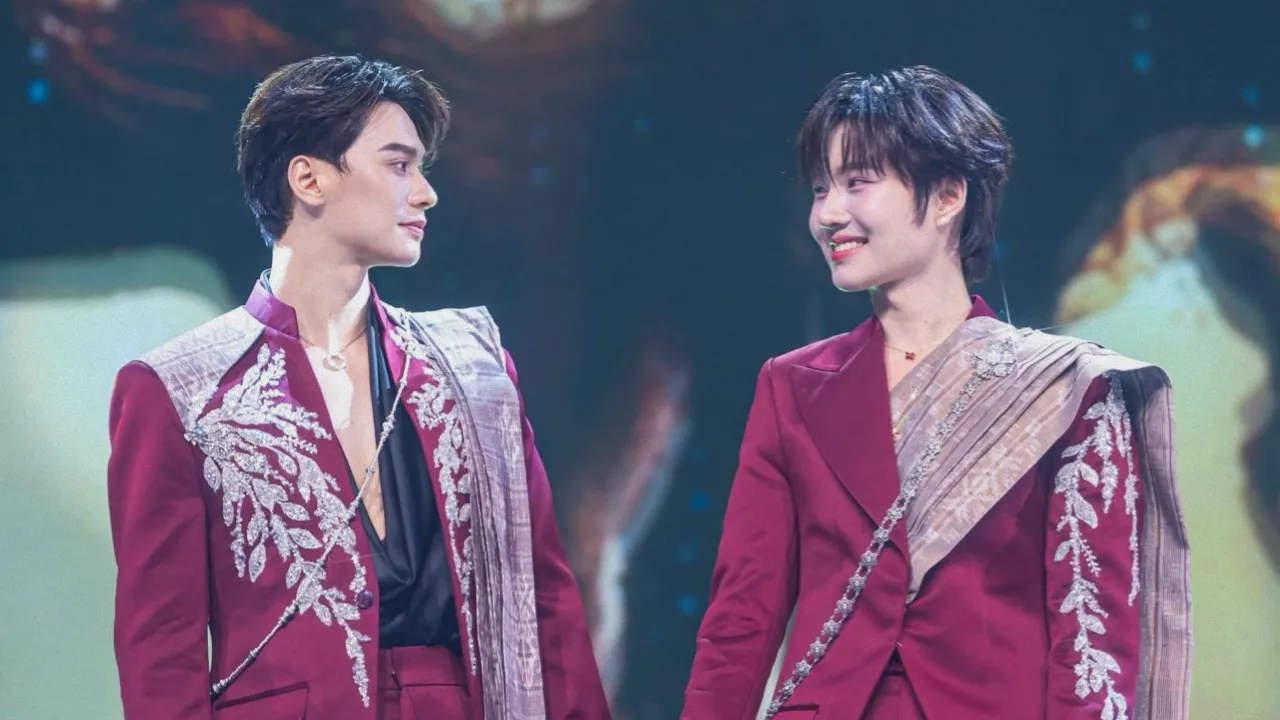
Khemjira Must Survive impressively presents folk superstitions and Thai identity through the eyes of the younger generation. It conveys a contemporary feel both in storytelling and atmosphere, especially in costume design referencing styles from the 1940s to today, combined with traditional Thai draping such as the diagonal sabai or sashes in mysterious tones, reflecting the complex and magical nature of the characters while perfectly showcasing folk culture.
Seeing characters in a modern context while retaining traditional Thai clothing has erased the old-fashioned image, turning it into a highly fashionable item. This sparked a phenomenon where fans of the novel and series, as well as young people, emulate the style by blending traditional Thai elements that express the lifestyle and identity of this generation—charming, mysterious, and intriguing.
Khemjira Must Survive is thus a series that embraces folk culture from northeastern Thailand, bringing it closer to pop culture and increasingly embedding it in the hearts of many.
Even after the series ended, the mixed-style dressing remains a strong trend as the 'draped sabai with jeans' style goes viral nationwide and across all online platforms, accompanied by KT Kratae’s song 'Bangkok City,' which draws out Thai identity and uniqueness through its music, culture, atmosphere, and lively melody, clearly demonstrating soft power.
Celebrities and content creators across various channels have used this song in their videos to showcase vibrant Thai sabai draped over street-style jeans, confidently strutting through central Bangkok. This perfect blend of traditional Thai sashes and modern clothing has become a fresh, exciting image that breaks gender boundaries, reflecting boldness and initiative. It serves as a key turning point inspiring many, especially young people who dare to take traditional Thai fabrics once stored in their grandmothers’ closets and confidently parade them on the streets.
Beyond the trend, an interesting point is why young people dare to pair Thai fabrics with jeans. Research shows that young people do not reject Thai textiles but rather reject outdated forms. When combined with jeans or modern clothing, it creates a trend known as Hybrid Fashion, seamlessly blending styles, materials, and functions.
Influence from favorite artists also affects attitudes toward Thai fabrics, transforming the perception of Thai textiles from 'old-fashioned' to 'stylish' impressively. Moreover, young people value environmental concerns by supporting simplicity, durability, and longevity, which Thai fabrics fulfill well as slow fashion—valuing existing good things and adapting them to modern lifestyles and identities.
The current phenomenon not only sets a new standard for style but also acts as a mechanism turning a temporary trend into sustainability. The draped sabai with jeans trend bridges cultural gaps and brings Thai culture closer to pop culture. It reflects the flexibility and adaptability of Thai culture, which can evolve beautifully with the times, strengthening local community economies, supporting Thai fabric shops, and nurturing new generations of artisans.
Ultimately, preserving Thai culture does not come from keeping Thai fabrics on shelves but from adapting and wearing them in daily life, fueled by love, pride, and the courage to fully be oneself.