

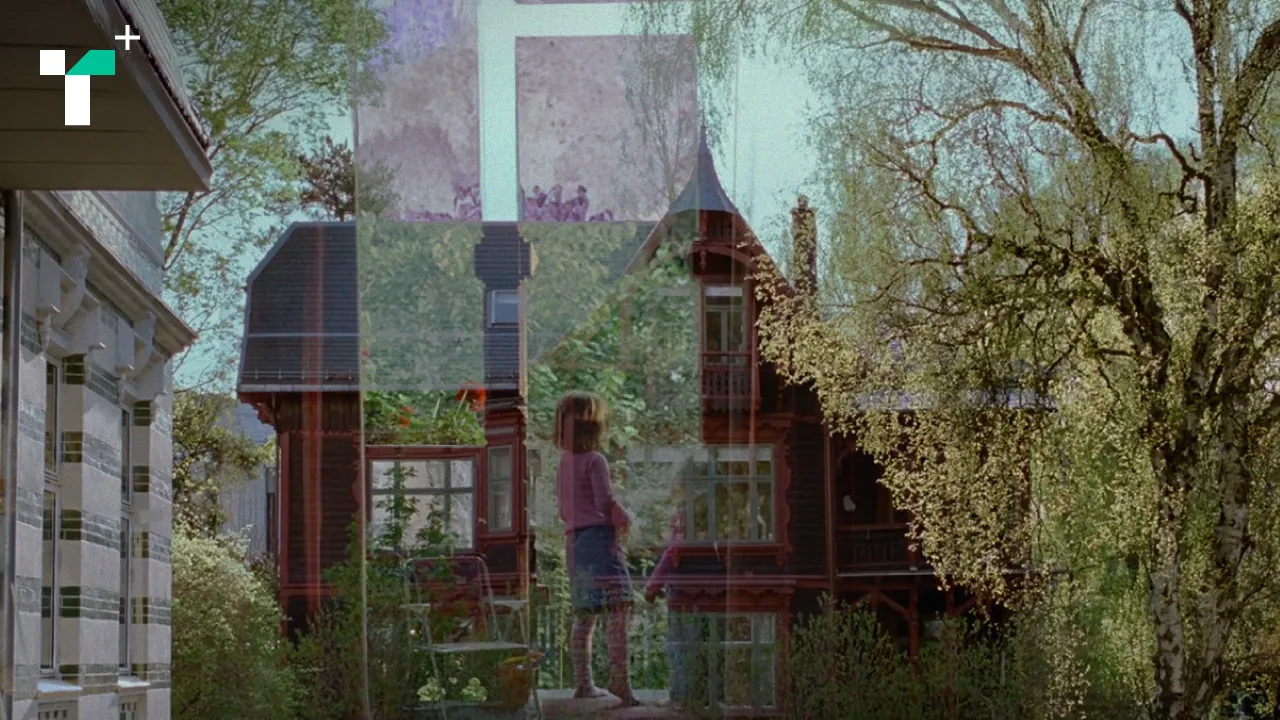
“I often wonder if a home can feel pain, or if its walls ever feel ticklish. Does it enjoy the light emptiness when no one is there, or does it prefer the heavy presence when the house is full? When my parents argue loudly, how does the home feel? Yet, the silence that follows when my father decides to leave the house feels even worse.”
This is the feeling of Nora, the main character, when her teacher asked who she sees herself as, and Nora answered, ‘A home.’
This opening dialogue of the filmSentimental Value (2026)already shows us that this old family home, where Nora’s family has lived for generations, is the heart of the story, serving as the thread that weaves and conveys the protagonist’s entire narrative. Because a home is a place that nurtures relationships, giving birth to both happiness and pain; it is both the beginning and the end of life.
Sentimental Value is a Norwegian film by director Joachim Trier, who previously earned acclaim and an Oscar nomination for The Worst Person in the World (2021). This film stars talented actors such as Renate Reinsve, Stellan Skarsgård, Inga Ibsdotter Lilleaas, and Hollywood star Elle Fanning.
From a single house to overwhelming relationships and emotions, today Thairath Plus delves deep into the home as the central core of all things.
Viewers of Sentimental Value will find that the film presents the fractured lives of its characters: a daughter full of anger and resentment toward her father, a father who abandoned his children since they were young, and a grandmother who lost her life to heartbreak during wartime.
The storytelling, which expands from the house itself, reveals that these fractures have deep roots from previous generations. Gustav Borg (played by Stellan Skarsgård) grew up isolated in this house after his mother, who was once captured and tortured during World War II for opposing the Nazis, suffered immense pain before ending her own life inside the home when Gustav was only seven.
As the boy grew up and started his own family, it was inevitable that this house—witness to countless events across generations—would continue to pass down pain. When Gustav chose to leave his family, Nora (played by Renate Reinsve), the eldest daughter, saw her father through the window frame as he drove away without looking back, leaving Nora, her mother, and sister to live together with no further contact from him.
During their critical growing years when they needed their father most, he was absent. Nora’s wounds seem etched into every corner of the house, causing the two sisters to grow up with bitterness and making it difficult to mend their broken relationship.
All these stories of fragmentation happen within the home. The house serves as the origin of relationships and, simultaneously, the space that creates emotional wounds for its inhabitants.
In another sense, Nora’s deep emotional connection to the word ‘home’ may stem from daily triggers—images, sounds, smells, even textures inside the house—that quietly activate her inner wounds.
Because the family’s stories, mental states, and emotions are embedded in these structures, the physical environment acts like a backdrop that records memories. For those who have endured trauma, pain is not stored as coherent stories but scattered in feelings. Every shadowed corner, marks on the walls, or old piece of furniture can revive hidden pasts at any time. Thus, the home becomes a large mirror reflecting our identity and mental state.
Furthermore, from the opening dialogue where Nora imagines how the home feels in various situations, it can be seen that the home is directly tied to the human psyche. Our thoughts and feelings arise not only from relationships with others but also from the places we inhabit daily. Because a home is where we cry, argue, laugh, wait for someone, or feel alone, it becomes part of who we are.
For this reason, Nora yearns intensely for a sense of home. For her, a home should be a place of emotional refuge. But when her family lacks a father, the home becomes hollow and incomplete—mirroring her fragile mental state. Growing up with a sense of ‘lack,’ Nora feels homeless emotionally and constantly seeks security. When a part of her psyche fails, she becomes broken, struggles with relationships, cannot engage seriously with anyone, and ends up hiding in secret affairs with married men.
This hollowness and longing for emotional refuge is the core issue the father seeks to heal emotionally. Gustav tries to reenter his daughter’s life through filmmaking—possibly his last work. He wants only Nora to play the lead because the script is written to reflect his daughter’s inner cries, as expressed in the dialogue:
“I was there. I destroyed everything, everything collapsed, and I was left alone. I lay there crying, and for the first time, I sat down and prayed. It’s hard to explain. I don’t even know who I was praying to, but I just said, ‘Help me. I can’t keep doing this. I can’t handle it alone. I need a home. I need a home.’”
This speech confirms that the bad father who once abandoned his child is trying to reach the depths of his daughter’s pain to compensate and heal the wounds he caused in her heart.
Ultimately, when we think of home, we do not think only of the building but also of our feelings during the times we spent there. A home acts like a mirror reflecting parts of our inner selves rather than just a simple structure. For this reason, whatever form our home takes, it can be considered the main storyline of our lives, much like in the film.
References: