

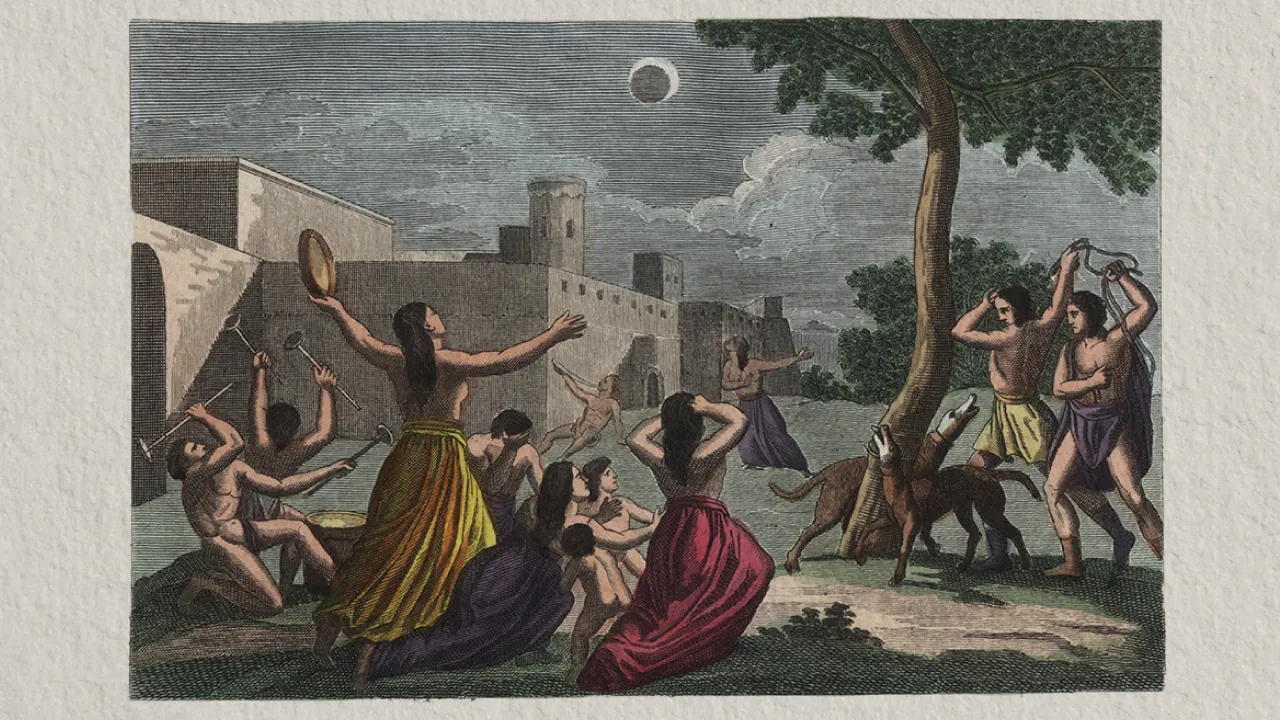
Since a lunar eclipse is happening this evening, Thairath Plus invites everyone to learn about fascinating eclipse legends from diverse cultures worldwide.
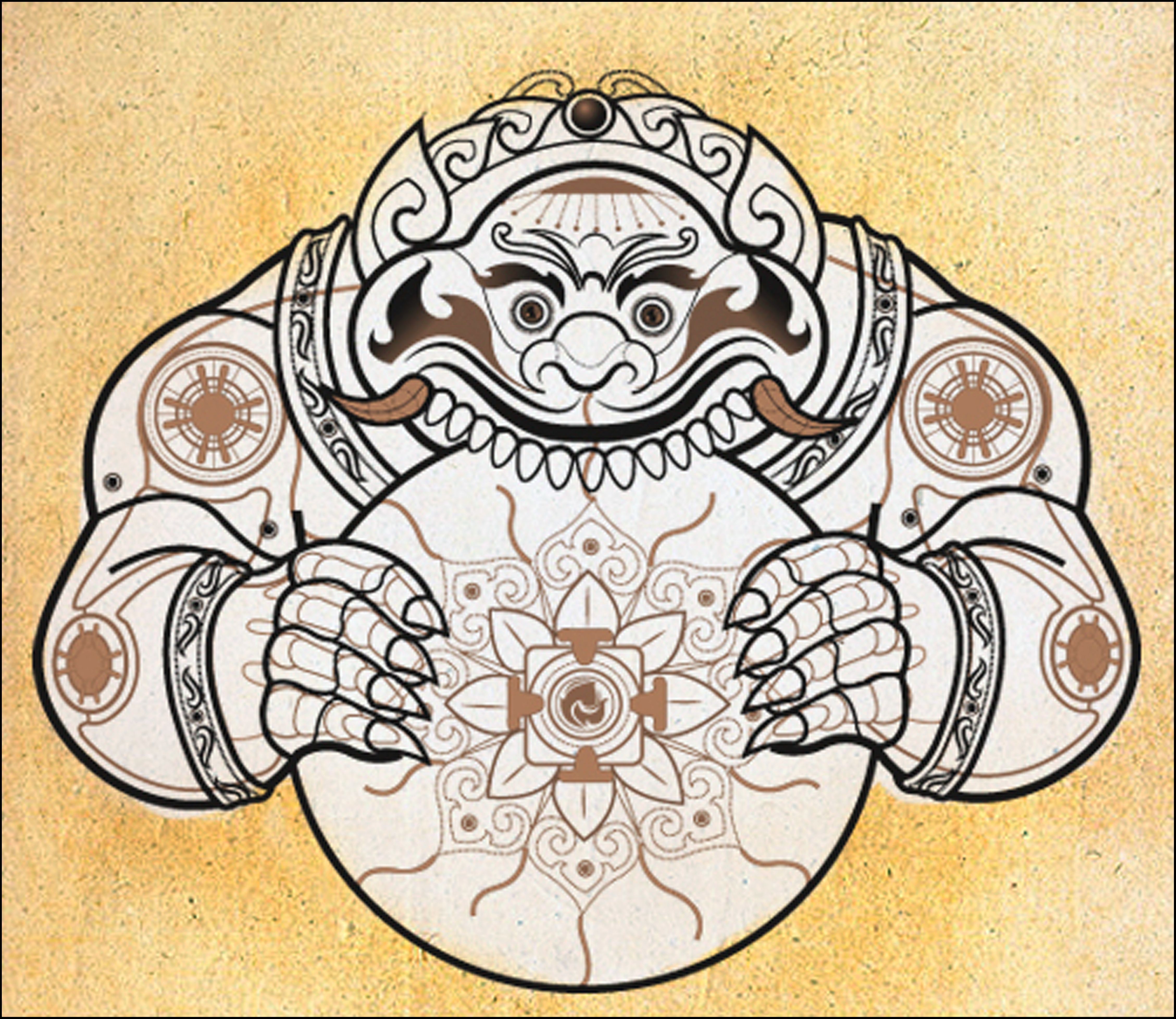
The legend of ‘Phaya Rahu’ or ‘Phra Asurintra Rahu’ is the 8th celestial demon deity in Thai and Hindu beliefs, and is among the most familiar tales. It originates from the ‘Churning of the Ocean of Milk’—a creation myth and key Hindu story about gods and demons cooperating to churn the ocean to produce the nectar of immortality.
According to the legend, Lord Rahu secretly drank the nectar hoping to become immortal, but ‘the Sun’ and ‘the Moon’ saw him and immediately reported to ‘Lord Narayana,’ who angrily decapitated Rahu with his discus.
Due to the nectar's power, Rahu did not die, but his grudge caused him to chase and ‘swallow’ the sun and moon whenever possible. This became the origin of the term ‘lunar eclipse’ or ‘Rahu swallows the moon,’ commonly used today. The belief arose that making loud noises like beating cans or clanging metal would force Rahu to release the moon.
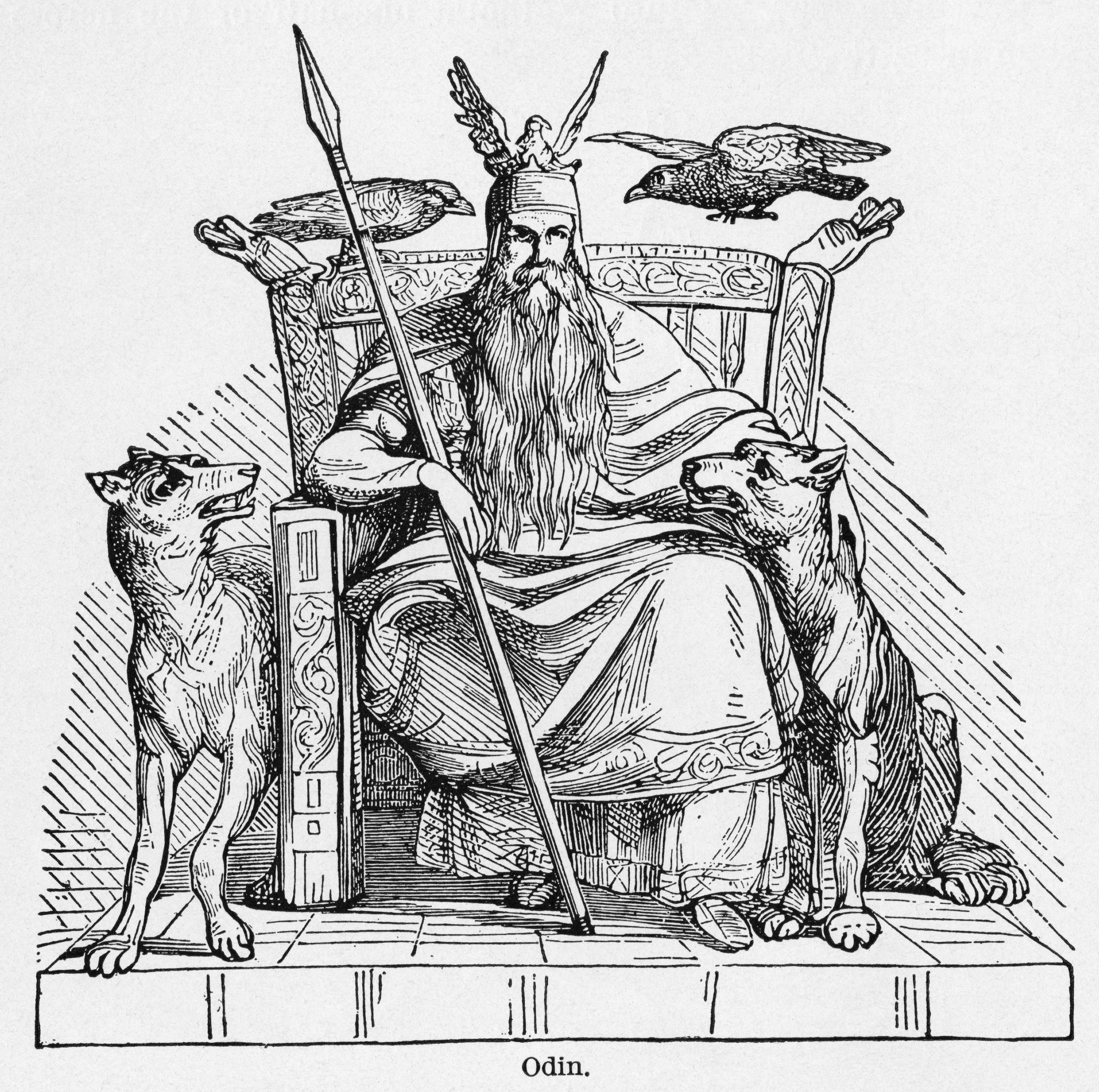
In Norse mythology, the Norse believed two fierce wolves roam the sky with distinct roles: ‘Sköll’ chases the sun, and ‘Hati’ chases the moon.
Whenever Hati catches and bites the moon, a lunar eclipse occurs. The Vikings would make loud noises—beating armor and clanging wood—to scare the wolf into releasing the moon. The legend holds that if Hati ever fully devours the moon, darkness would engulf the sky, signaling the end of the world.
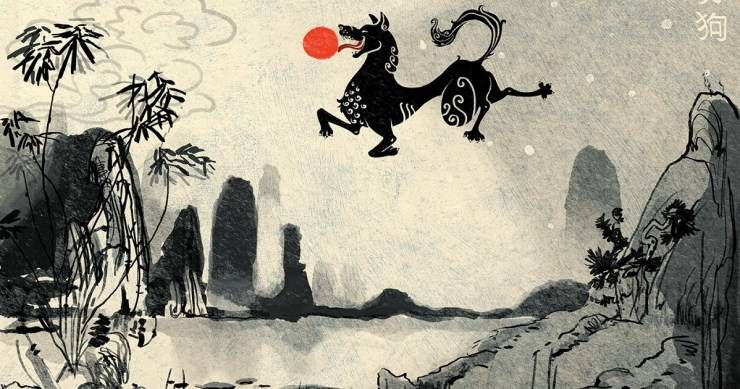
Tiangou, or ‘Heavenly Dog,’ is a mythological Chinese creature resembling a black dog known for ferocity. Some legends depict it as a white dog spirit bringing peace.
Ancient Chinese believed the lunar eclipse happened because Tiangou chased and bit the moon along with Chang Er, who hides behind the moon. When Queen Wangmu learned this, she assigned the dog to guard the celestial gate.
Thereafter, the black dog was named Tiangou and forced to release the moon it had swallowed, with Chang Er remaining on the moon. The belief continues that everyone should beat drums, light firecrackers, or bang kitchenware loudly to drive away the dog and save Chang Er and the moon.
In Inca legend, like many others, gods and sacred animals are believed responsible. The Inca believed lunar eclipses occur because a jaguar—the symbol of power in their civilization and tribes—is eating the moon.
More frighteningly, the Inca believed that after finishing the moon, the jaguar would leap down to Earth to eat humans. To prevent this, they made loud noises by waving spears, shouting, and uniquely, making dogs bark by hitting them, believing the dogs’ barking would scare the jaguar into releasing the moon before it attacked humans.
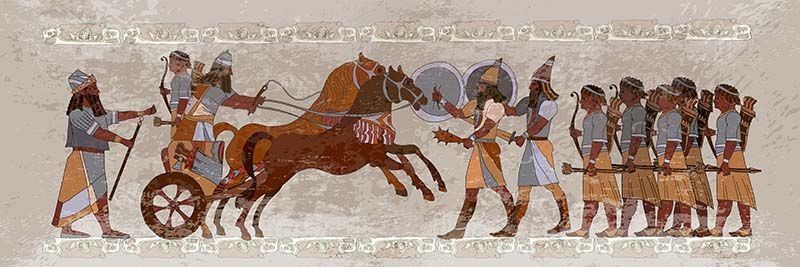
Ancient Babylonians believed lunar eclipses were attacks by ‘the Seven Demons,’ a group of destructive spirits born from chaos, causing disasters and opposing both gods and humans.
They saw both solar and lunar eclipses as ill omens targeting kings, believing the king might be assassinated during these events. To counter this, Babylonians appointed a ‘substitute king,’ often a prisoner or commoner, to reign temporarily and absorb the misfortune in place of the real king.
Among the Battammaliba of West Africa, especially in Benin and Togo, an ancient belief holds that lunar eclipses occur because the sun and moon are fighting. The Battammaliba view the sun and moon as siblings at war.
When a lunar eclipse happens, villagers make loud noises to ‘stop the battle’ and end the conflict, encouraging reconciliation with neighbors or family members who were angry, cleverly using a natural event to promote peace within the community.

Despite the different beliefs among cultures, in reality, a lunar eclipse is a natural astronomical event caused by the alignment of celestial bodies: the sun, Earth, and moon all lie in the same plane, with Earth directly between the sun and moon.
This alignment causes Earth to block sunlight, casting a shadow. When the moon moves into Earth's shadow, we see it gradually darken or appear crescent-shaped temporarily.
Although beliefs vary, ‘sound’ consistently serves as a symbolic communication tool and energy humans create to tangibly respond to unseen and distant forces. Every legend and culture explains natural phenomena through stories reflecting their way of life, beliefs, and the powers of the mind.