

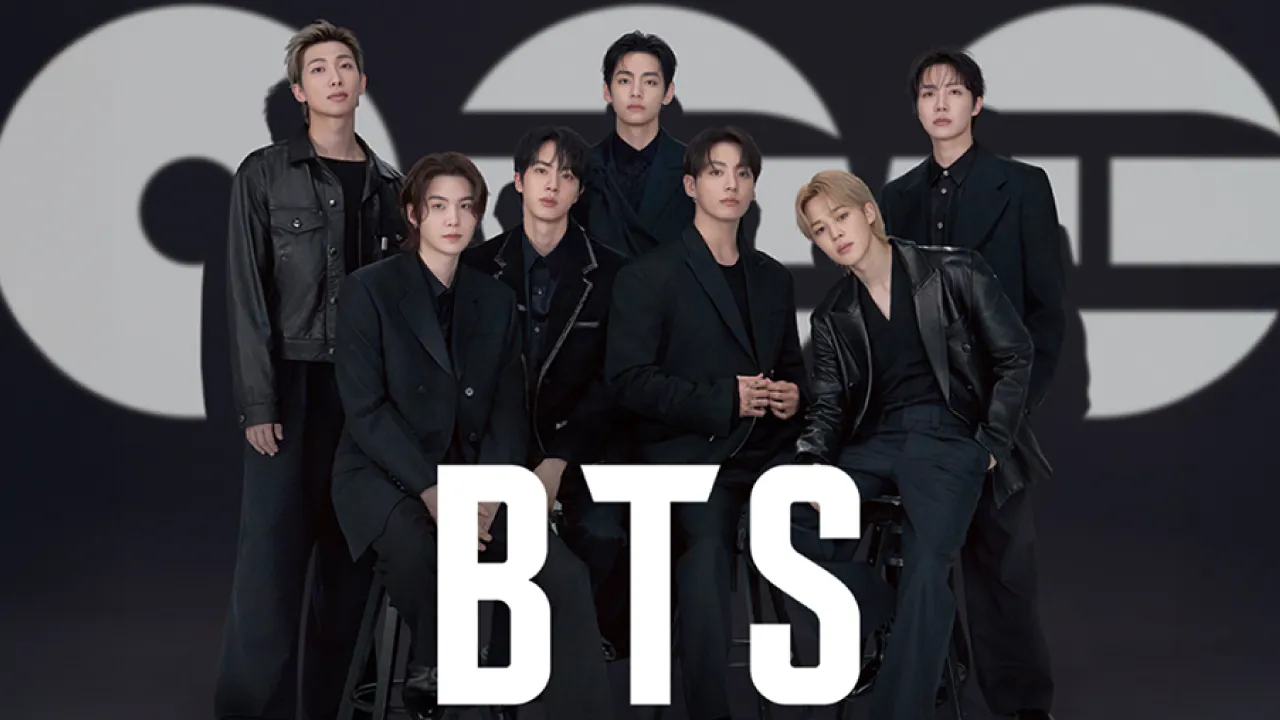
They are the first Korean artists to top the Billboard Hot 100, the first Korean group to speak on the UN stage, and even during their three years apart for mandatory military service, no one has risen to replace them.
And when all seven members reunited, what was interesting was not just their "return."
It was about "what they chose to tell."
Arirang: a folk song every Korean lineage is familiar with.
Gwanghwamun Square: a space representing the nation's history, politics, and identity.
This is not merely a comeback but a retelling of "Korean roots" through the language of pop culture.
In this article, we invite you to consider why "Gwanghwamun Square" was chosen.
Why "Arirang"?Andhow BTS is taking Korea's Soft Power even further.
Gwanghwamun stands in front of Gyeongbokgung Palace, the main royal palace, and has been Seoul’s central axis since the Joseon era.
This area was deliberately chosen based on landscape principles and beliefs, with mountains surrounding and a stream flowing in front, known as "water in front, mountain behind," believed to allow the best energy flow.
Its importance was clear even during colonization when Japan built the Government-General of Chōsen Building atop the palace grounds to undermine the symbolic meaning of the Joseon state, showing that this space was more than geography—it was the "center of power."
In the Joseon period, this area was known as Yukjo Street, hosting the six main government agencies of the royal court and serving as the city's administrative center.
In the modern era, especially post-war urban development, the area was transformed into a large road to accommodate urban expansion and traffic, emphasizing car-oriented planning.
Then, in 2009, it was reshaped into Gwanghwamun Square by reducing road space and returning area to pedestrians, marking a shift from state power center to a people’s space.
These public spaces mean Seoul’s heart no longer just serves traffic or state authority but is a place where people live, interact, and share experiences.
In this context, Gwanghwamun isn’t just a city square but part of Seoul’s evolving urban concept, and in contemporary South Korea, it functions as a "space for the people's voices."
It is the focal point of major political protests, including the massive demonstrations that led to President Park Geun-hye's impeachment in 2016–2017, drawing millions.
This shows Gwanghwamun Square is not just a city landmark but a place where democracy is actively practiced and people express their will.
Seen this way, the site overlays history, state power, and public voice simultaneously, making BTS’s choice of Gwanghwamun for their comeback stage more than just a landmark—it’s a performance placed within a space dense with social context and South Korea’s pivotal history.
Interestingly, BTS themselves have consistently reflected social issues, through songs like "Am I Wrong" questioning societal injustice, or "Silver Spoon" critiquing class structures and generational divides. Though not directly political, these songs mirror Korea’s social tensions about opportunity, class, and expectations.
In other words, this stage is not just for performance but a further step in telling Korean roots through significant places, pop culture, and contemporary social context.
The album name forthis comebackis ARIRANG (아리랑).
A folk song familiar to Koreans for generations, called the “song of the people,” with no clear original composer, existing in numerous versions.It has been passed down, adapted, and repeatedly sung in different contexts over hundreds of years, with more than 3,000versions.Because in every era, Arirang conveys fundamental human emotions such as longing, farewell, pain, or endurance through difficult times.
In this sense, it is not owned by any single person but is a song for the whole nation, open for anyone to sing and imbue with their own meaning. BTS, likewise, can shape Arirang in their own style.
Notably, exporting Korean voices like this is not new; it’s a historical record BTS draws on for their album narrative (YouTube: BTS (방탄소년단) '아리랑 (ARIRANG)' Animation Trailer: What is your love song?).
In 1896, seven Koreans traveled to the United States and recorded Arirang, at a time when sound recording was a new technology globally, making Arirang one of the earliest preserved Korean musical sounds in a modern format.
Symbolically, this event was not just a recording but a moment when Korean voices began traveling beyond the peninsula, becoming a starting point for “telling Korea to the world.”
Returning to BTS, artists who bring Korean voices to global audiences today, choosing "Arirang" is more than selecting a folk song concept; it connects the voice recorded abroad over a century ago to Korea's voice on the world stage now.
Arirang in the past was the voice of those who departed, and today it is sung again by artists taking that voice even further.
From an album to a whole city.
butexpanded into a citywide project under BTS THE CITY: ARIRANG—from advertising media facades on key city architecture, to light shows andeventsat important Seoul locations.The entire city transforms into a “storytelling space.” Tourists don’t just attend concerts but visit various sites,
which helps stimulate the local economy, as increased visitors boost spending in those areas.BTS thus go beyond entertainment to become part of city branding, turning concerts into urban experiences.Of course, such activities require cooperation across sectors, showing how Seoul’s city government and private sectors have joined forces to realize this phenomenon.BTS as a “cultural intermediary.”BTS acts as a “bridge” translating Korean culture from local contexts into something global audiences can understand—not a straightforward cultural export but a “reinterpretation” through visuals, sound, and experience.
In this way, Korea’s Soft Power this time goes beyond music, performance, or entertainment industries, reaching the very “roots” of national identity.
Traditional songs like Arirang, historic sites like Gwanghwamun Square, and reinterpreted cultural heritage are not told separately but woven into a single narrative through collaborations among artists, content industries, and cultural agencies.
injecting
culture into
pop culture, but making that culture the very 'core'.
Living in South Korea during BTS's comeback was a new perspective for the author—from an 18-year-old who knew Korean culture superficially to now a graduate student studying Korean culture, society, and politics through BTS’s music.This reveals the evolution of telling “Koreanness” from songs, lyrics, and concepts to now expanding to the scale of an entire city. This is not merely an artist’s success but reflects the potential of cultural storytelling to grow beyond previous limits—truly a return that impresses and evolves every time.AuthorPanisara Songthamjit (Jeans), meatyKoreaReferences
Korea Joongang Daily:
new album]