

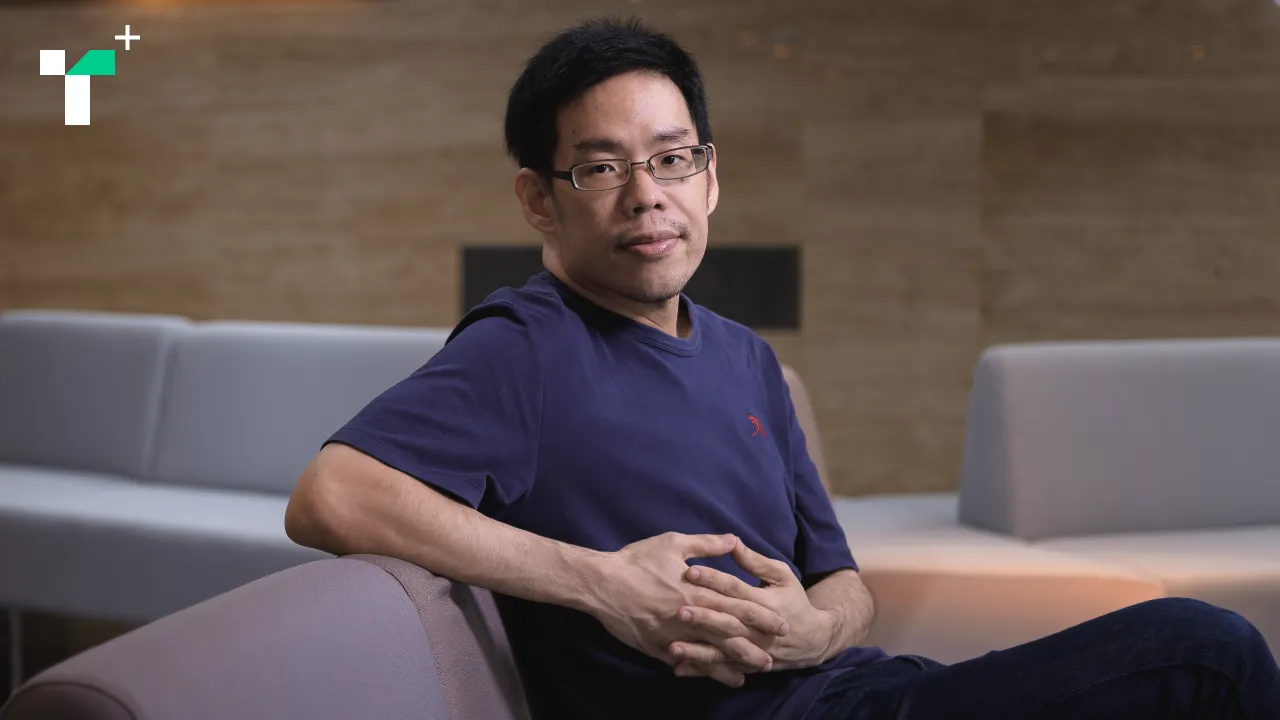
"Teaching still holds meaning for me because, well, I can't die yet; I still have grades to assign." ","tags":["teaching","education"]},{
"But realistically, no matter how bleak the era we face feels, if we survive it, ultimately we will stand in the 'post-' phase of that era." ","tags":["survival","hope","time"]},{
Though his words often carry a sharp, sarcastic edge, this deeper, thoughtful perspective within Kanchat Rangsikarnsong cannot be separated from him." ","tags":["personality","perspective"]},{
If Kanchat were a movie character, he'd be a compelling one due to the many overlapping dimensions he embodies. On one hand, he is a 'teacher' guiding us; simultaneously, a 'writer' whose work we follow; also a 'critic' well-known in society; and amid his academic identity, he is a devoted Korean pop superfan (and indeed a real teacher)." ","tags":["professions","identity","K-pop"]},{
After 16 years as a teacher and over 22 years as a critic, Kanchat returns to the National Book Fair as a writer with the publication of 'Just This Man (Still) a Special Lecturer: 16 Years of Hope (?)', a sequel to 'Just This Man Is a Special Lecturer' (first published 2014)." ","tags":["book","publication","career"]},{
Thairath Plus explores Kanchat’s '16 Years of Hope (?)' to extract survival lessons that have kept this special lecturer going without burning out, even though he often says," ","tags":["interview","survival","career"]},{
"I barely manage to survive myself." ","tags":["quote","personal struggle"]},{

"I remember back in school, the teacher asked a question in class and no one answered. Then she said," ","tags":["memory","teaching"]},{‘Do you know that when I come to teach you, I waste a lot of my life? I could spend that time writing academic articles that would benefit the country more.’" ","tags":["teaching","student experience"]},{Whoa, she had to be that harsh? Did we do something that wrong?" ","tags":["reaction","education"]},{
Kanchat recalled this formative experience during his own studies, which motivated him to become a teacher who wouldn’t build walls so high that students feel alienated." ","tags":["motivation","education"]},{
Before becoming a teacher, Kanchat was an economics student at Thammasat University, known as the most annoying person in his film class because he was the only one to earn an A—just from taking an elective course. His top status in film stemmed from his passionate consumption of movies," ","tags":["background","education","film"]},{from the obscure to the mainstream," ","tags":["film interests"]},{whether art films, mass-market movies, or bizarre flicks, he had seen them all." ","tags":["film","enthusiasm"]},{
This broad cinematic passion launched Kanchat’s film critic path at age 19 on the famous webboard 'Pantip'. Soon, film magazines invited him to write columns. He built his portfolio until a senior acquaintance invited him to be a special lecturer at universities. Since then, he has taught at many universities, becoming well-known among film students everywhere." ","tags":["career","film criticism","education"]},{
Over 16 years teaching 100-plus film courses, from classrooms full of Gen Y students to now all Gen Z, Kanchat says while the core nature of these generations isn’t vastly different, the changing times require him to adapt." ","tags":["teaching","generations","adaptation"]},{
"One thing that shocked me early on was how easily students would cry, but later I understood they often harbor some hidden insecurities." ","tags":["student psychology","generations"]},{
"So in the first class, I tell them upfront: you might disagree with some things I teach, or find certain attitudes, words, or films hurtful. If anything makes you uncomfortable, please tell me directly. I have no intention to make anyone feel bad." ","tags":["teaching approach","student care"]},{
In Kanchat’s courses, he often includes trigger warnings due to students’ anxieties he can’t fully perceive. He also urges students not to avoid art that comforts only themselves but to engage broadly with art reflecting the world, because often the disturbing things films show reveal some truth about our world." ","tags":["art education","mental health","trigger warnings"]},{
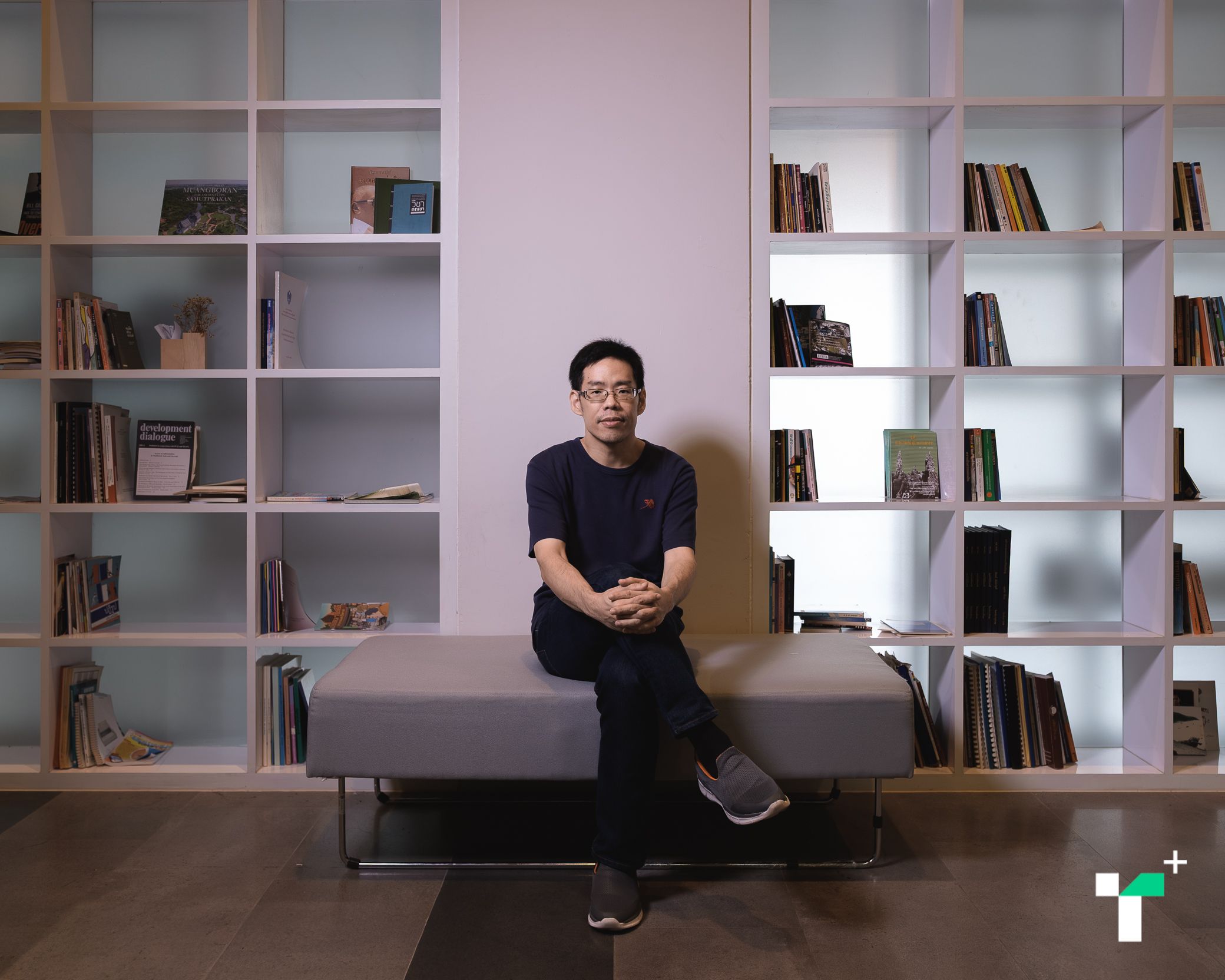
Beyond psychological adjustments, two major changes in this generation that led Kanchat to publish a sequel book were COVID-19 and AI—both reshaping the world and classrooms." ","tags":["pandemic","technology","education"]},{
"While teaching, I saw a student quietly mumbling to himself—I found out he was live streaming on TikTok." ","tags":["teaching experience","technology"]},{
"When I give the same film assignment, and all answers are identical, I ask the student if she thinks I had already asked AI the same question before." ","tags":["technology","education"]},{
Kanchat does not reject technology, acknowledging AI’s many benefits; he uses it for research. But when AI begins to analyze, critique, or interpret—tasks humans should create themselves—education loses meaning, since people rarely think independently anymore. This threatens to erode humanity’s essence, allowing AI to replace us faster, leaving only emptiness." ","tags":["AI","education","humanity"]},{
He often tells students that while we still can restrain AI use, we should do as much ourselves as possible, because although AI may replace many functions in the future, some aspects tied to 'humanity' cannot be replicated by technology." ","tags":["AI","humanity","education"]},{
"Still, I want to keep teaching because I want human connection, or something genuinely linking us to real people." ","tags":["teaching","human connection"]},{
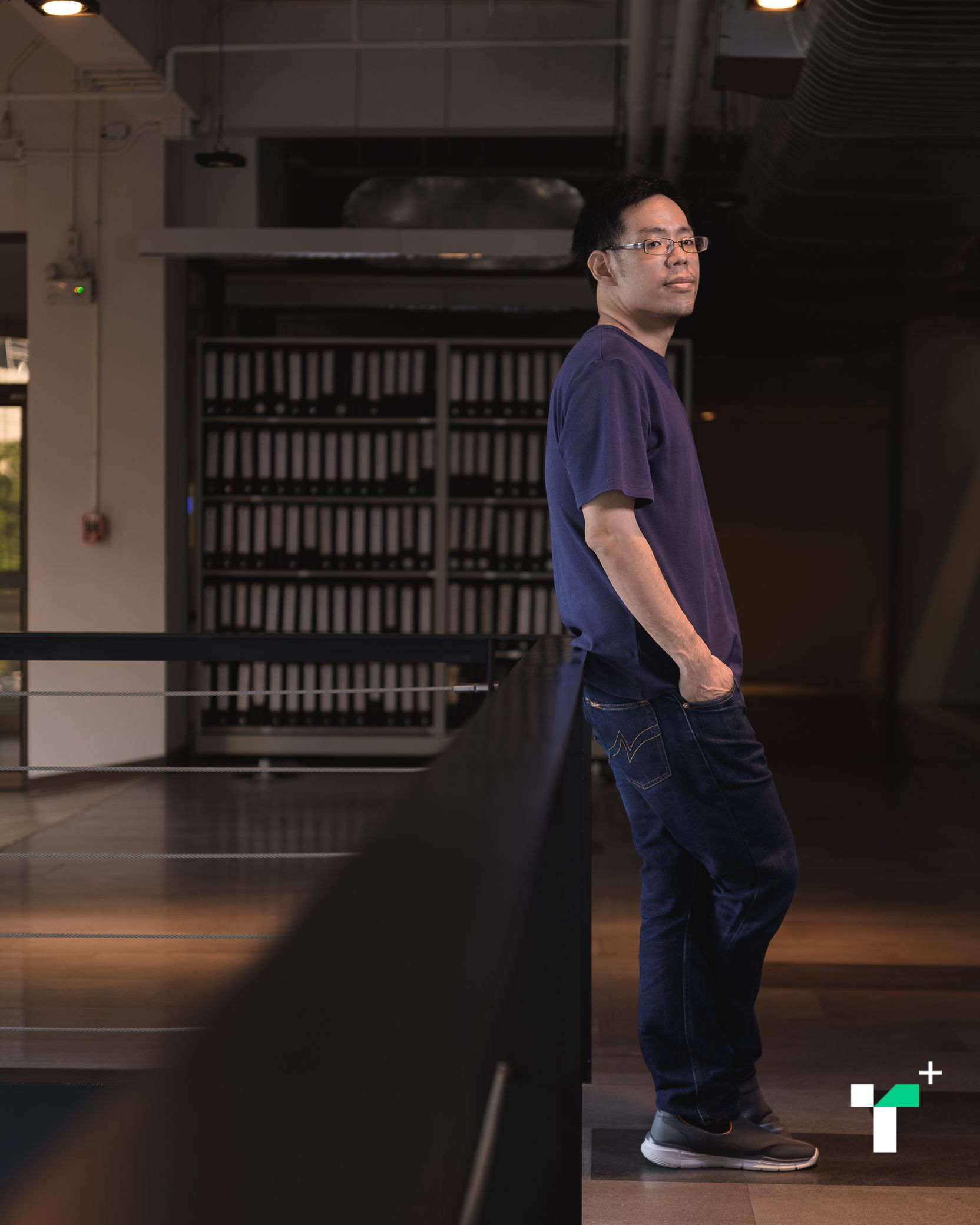
"Ryan Gosling is so handsome; the film has many close-ups. Definitely worth seeing in IMAX!" ","tags":["film review","pop culture"]},{
This is an example Kanchat likes to include in his reviews." ","tags":["film criticism"]},{
Although Kanchat is a master critic raised in an era when film writing meant serious analysis rather than mere opinion (akin to senior critic Professor Prawit Tangakorn), amid his academic approach he always values 'balance'." ","tags":["film criticism","style"]},{
Thus, in his reviews, besides solid theoretical references, he often inserts hidden meanings (subtext) and personal nuances between the lines. These layers give Kanchat the multidimensional identity we recognize today." ","tags":["film criticism","style","subtext"]},{
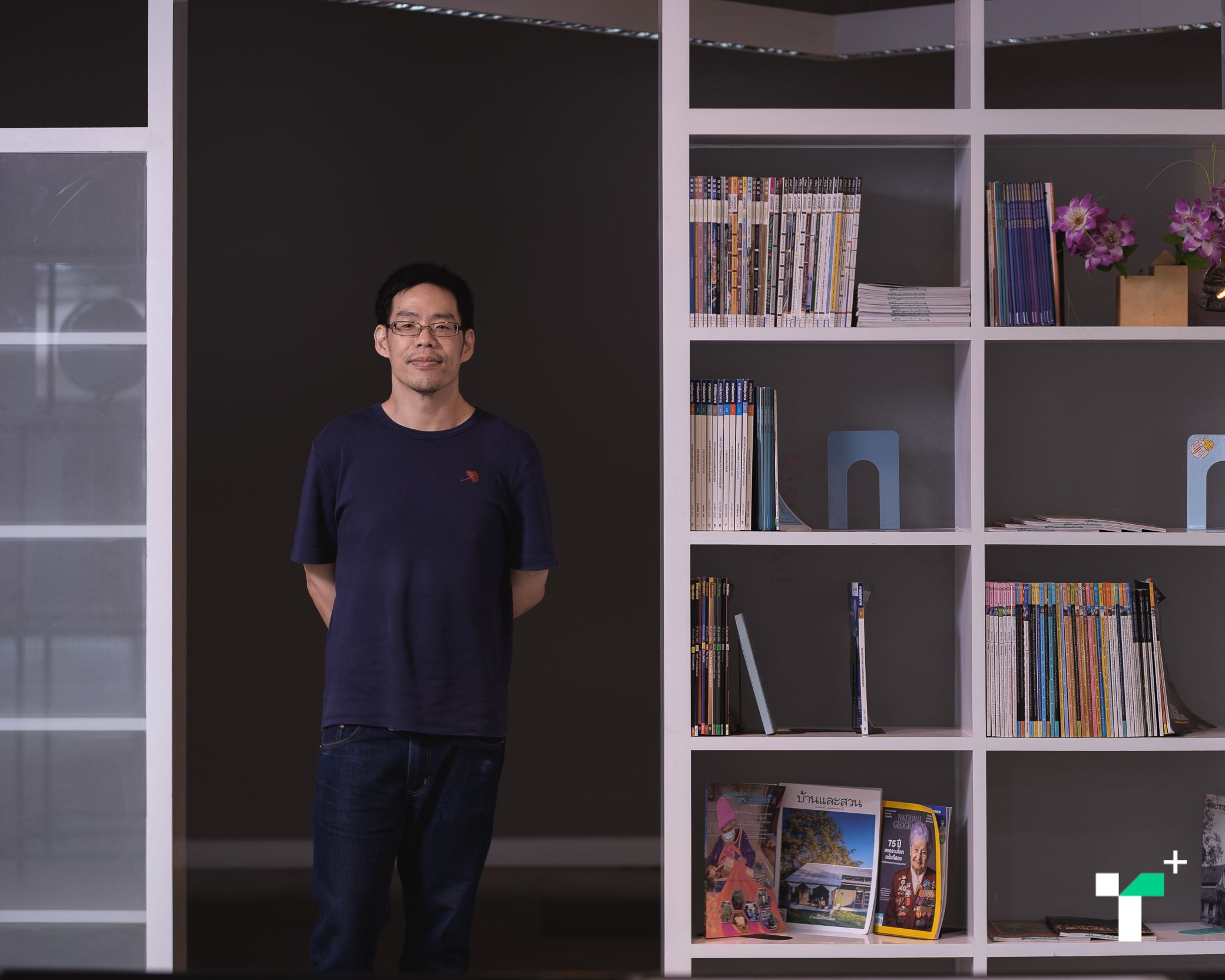
Reflecting on his roots as a critic, Kanchat says criticism involves both direct discussion of the film (textual criticism)—such as camera angles, script, or acting—and, importantly, the external context connected to the film (contextual criticism), including society and politics, since art and film are never isolated but always linked to the world." ","tags":["film criticism","context"]},{
"Watching films like this requires homework, like a good critic: we must learn as much as possible because films can tell every story in the world, even if we can never know everything. The more we know, the more details we spot. For instance, if a film shows artworks by Monet, Picasso, or Van Gogh, knowing their background helps us immediately understand why that element was chosen or what additional message is being conveyed." ","tags":["film analysis","education"]},{
But amid changing times, a major challenge is the speed of everything in today’s world, forcing some industries to review films and post on social media immediately. Kanchat admits this superficiality may not be good for people." ","tags":["film criticism","social media"]},{
However, as trends shift toward quick swipes and brief content, critics like him have tried making 'short videos' (Shorts or Reels). Previously, he planned to produce deep video essays but now faces the difficulty of making a few-minute clip that isn’t just a 'summary.'" ","tags":["film criticism","video content"]},{
"In the past, I might have thought such clips were superficial, but after making one myself, I realized producing a minute-and-a-half clip is no easy task." ","tags":["video production","film criticism"]},{
For Kanchat, whether through writing or video, the most important thing is to infuse as much of his 'authentic self' into the work as possible." ","tags":["authenticity","media"]},{

"People go through phases when they think they must read Nobel Prize-winning literature or watch Cannes films, and see Channel 7 dramas or Korean pop music as trivial." ","tags":["personal reflection","fan culture"]},{
Kanchat described this 'snobbish' phase of his youth. The turning point came around 2009 during his early teaching terms, when stress piled up and he sought escape. As K-Pop surged across Asia, he no longer resisted but joined in." ","tags":["personal life","K-pop"]},{
"As I grew older, I realized I could do both: listen to Radiohead and also Korean music." ","tags":["music","personal life"]},{
Actually, before his K-pop fandom, Kanchat already consumed nearly all art forms and was a devoted fan—just not of Korean pop but of Wong Kar-wai, the legendary Hong Kong film director. He added that this fandom helped him become a film lecturer." ","tags":["fan culture","career"]},{
But what truly marked Kanchat as a superfan was publishing the book 'SORRY, SORRY: Sorry... I’m a Fan' (first printed 2012), which revealed his behind-the-scenes journey flying to South Korea as a fan. At that time, a film critic’s image conflicted sharply with being a fan, making this a fascinating personal dimension. This also attracted media to interview him seriously about Korea." ","tags":["book","fan culture"]},{
Regarding his reason for fandom, Kanchat said he watched a street interview where a man said he disliked K-Pop because it seemed superficial, always flashy, trying to lure us constantly. Kanchat cited this because he agreed with the man—and for that very reason," ","tags":["fan culture","K-pop"]},{he became fascinated," ","tags":["fan culture"]},{in his fandom." ","tags":["fan culture"]},{
"K-pop is designed to attract our attention instantly and easily, but" ","tags":["K-pop","music"]},{in one sense," ","tags":["K-pop"]},{the structural interest of the songs offers much to discuss, and even the music videos provide many symbols to interpret." ","tags":["music analysis","K-pop"]},{
Beyond personal entertainment, his fandom also serves as a tool he uses in class, bringing Korean music videos or artist stories to engage students more openly in his courses." ","tags":["education","fan culture"]},{
Now at age 40, Kanchat remains a Korean pop superfan. He continues toupdatestories of the bands he follows regularly on social media. The appeal of K-pop lies in its constant stream of content—memes, jokes, and new material daily—adding color to his life." ","tags":["fan culture","social media"]},{
 Summary: '16 Years of Hope'" ","tags":["summary"]},{
Today, Kanchat has grown in every role he plays, cycling through many hats amid the chaotic modern world. Asked about hope, his reply was not sentimental but invited us to see the world realistically." ","tags":["reflection","hope"]},{
"We have a saying we like: Careful what you wish for." ","tags":["quote","hope"]},{
Kanchat suggests that sometimes expectations can hurt us because everything in the world includes what we can and cannot control. He chooses to view the world more resignedly rather than chase grand hopes or dreams." ","tags":["perspective","hope"]},{
Thus, for Kanchat, 'hope' may not be the core reason he survives today’s world. Instead, 'managing mental states' is most crucial. In a fast, fragile era, holding onto composure is humanity’s highest skill—one he strives for, though sometimes fails." ","tags":["mental health","survival"]},{
"Some worldly phenomena affect us, but ultimately humans are small creatures with limited control. No matter how dire our era, if we get through it, we'll stand in the 'post-' phase of that era." ","tags":["perspective","survival"]},{
At some point, the best we can do is be 'observers,' watching the times unfold. Or, in Kanchat’s ironic style," ","tags":["perspective"]},{
"We just watch to see if the world can get any more screwed up... that’s all." ","tags":["irony","perspective"]},{
For those who want to observe the world through Kanchat’s sharp, darkly humorous lens, read 'Just This Man (Still) a Special Lecturer: 16 Years of Hope (?)', his first new book in nine years, now available at the National Book Fair. Kanchat concludes with," ","tags":["book","interview"]},{"The publishing industry can still go on, and I’m not dead yet!" ","tags":["publishing","personal"]}]}