

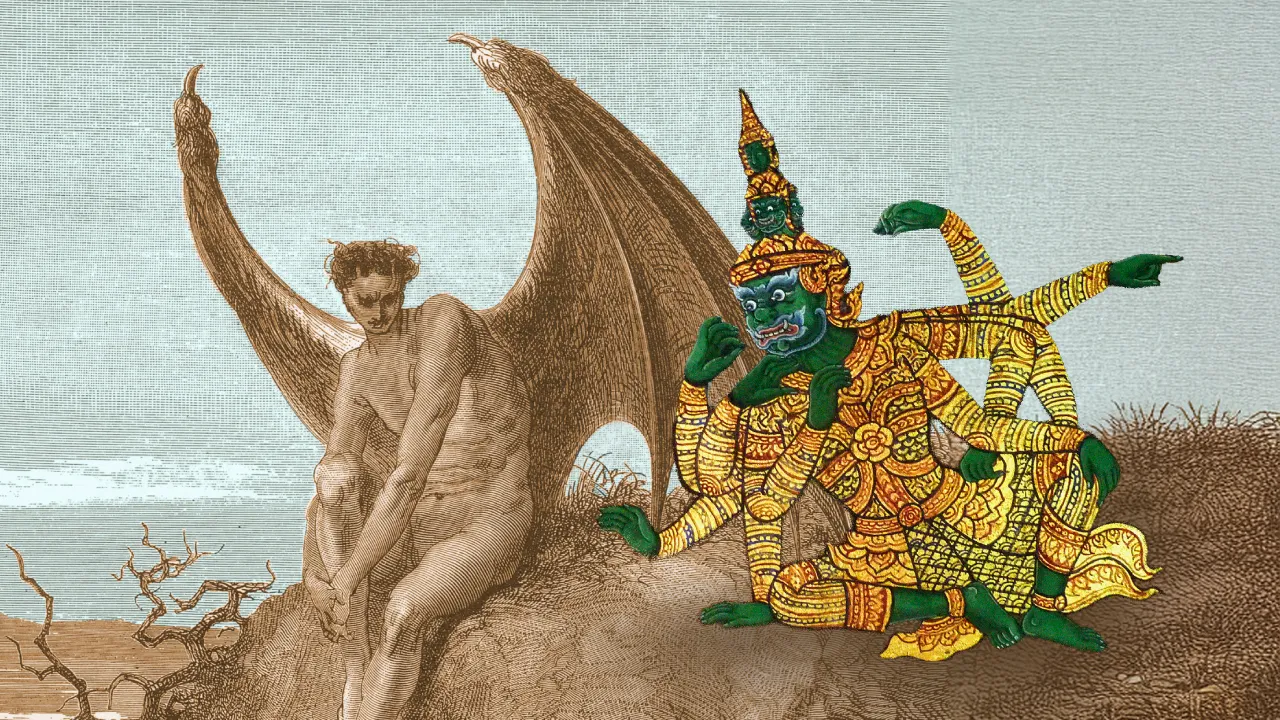
“I know I can't win against him, in the end, I always lose.”
Like Tosakanth who loses to Rama every time, no matter how good he is, he never wins Sida’s heart.”
The lyrics above come from the Thai pop song “The Villain Who Loves You” by the artist Tosakanth, which has 4.6 million streams and was performed on The Mask Singer Season 3 with 59 million views. There are about five other popular songs referencing Tosakanth, such as “Tosakanth’s Heart,” “Tosakanth’s Tears,” and “Tosakanth Mana.” Additionally, there are seven luk thung (Thai country) songs about villains from the Ramakien. Overall, in Thai music, Tosakanth appears frequently, underscoring the clear taste of listeners who find Tosakanth a highly relatable character. But why is that?
Tosakanth is a renamed character originally called Ravana from the Ramayana epic. King Rama I changed the name to Ramakien and adapted the characters and storyline to fit Thai society of that era. According to legend, Tosakanth is the reincarnation of Nontok or Nontuk, a high-ranking giant who washed the feet of deities before meeting Lord Shiva. Many are familiar with Nontok’s story: he possessed a diamond finger to seek revenge against the gods who tormented him until Lord Narayana had to subdue him. They agreed to fight one-on-one on Earth, with Nontok reincarnated as a ten-headed, twenty-armed giant and Lord Narayana incarnated as an ordinary human. However, Thai people know very well that Rama is far from ordinary.
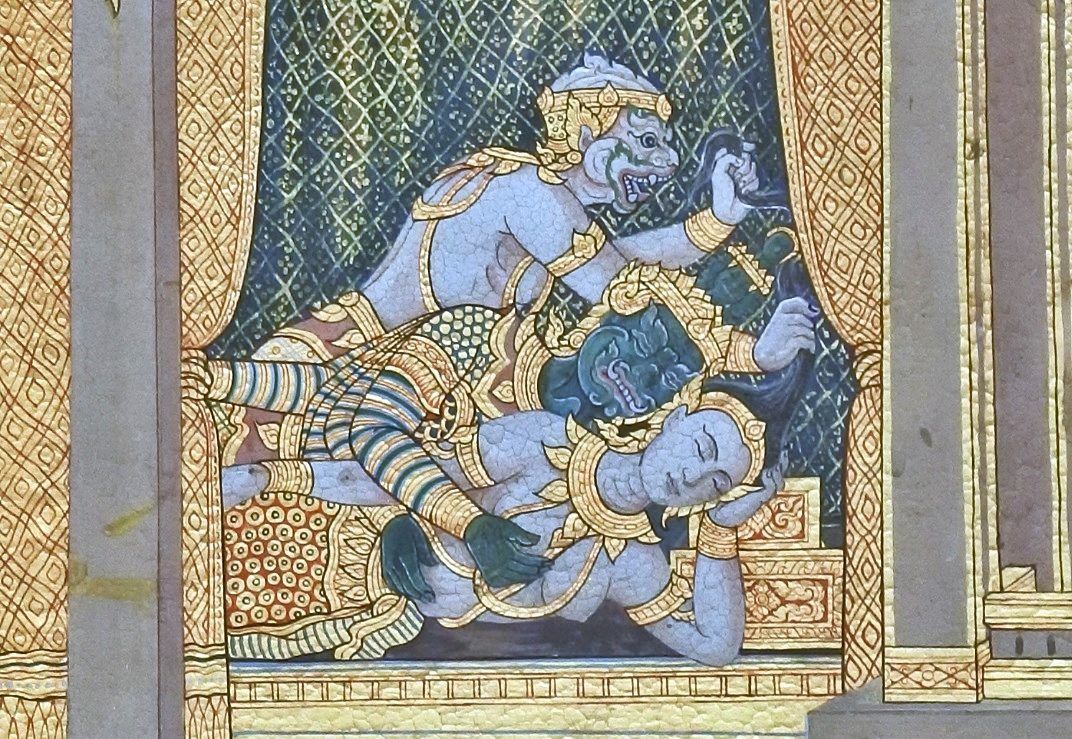 Image: Art and Culture
The Ramayana was composed to depict the battle between dharma (righteousness) and adharma (evil). Naturally, dharma prevails. The story was written when Brahmins in India promoted teachings about dharma—not as 'what is' or 'nature' in Buddhism, but as the cosmic order that must be followed. Rama symbolizes adherence to dharma in Hinduism, which was spreading in India during the 6th-7th centuries CE. This makes Rama feel like an unattainable character, like a middle-class person looking at an ivory tower, or a grassroots person told to do good. The goal of the teaching seems at the end of a dark tunnel. We see the ultimate good we should be, but we don’t know how to get there.
Meanwhile, Ravana or Tosakanth represents the common person driven by emotions. Humans crave power, envy, ego, and desire—these emotions embody humanity and are all contained within one character. Tosakanth stands as an obstacle to the cosmic order because humans are flawed and imperfect. Humans are often described in teachings as lawless, as if lost every day.
Villains in Victorian Western Literature
In literature, characters like Tosakanth, though not identical, are prominent in the Victorian era as Byronic Heroes—a term coined by Romantic poets. Lord Byron For characters who are outcasts from society and deeply complex.
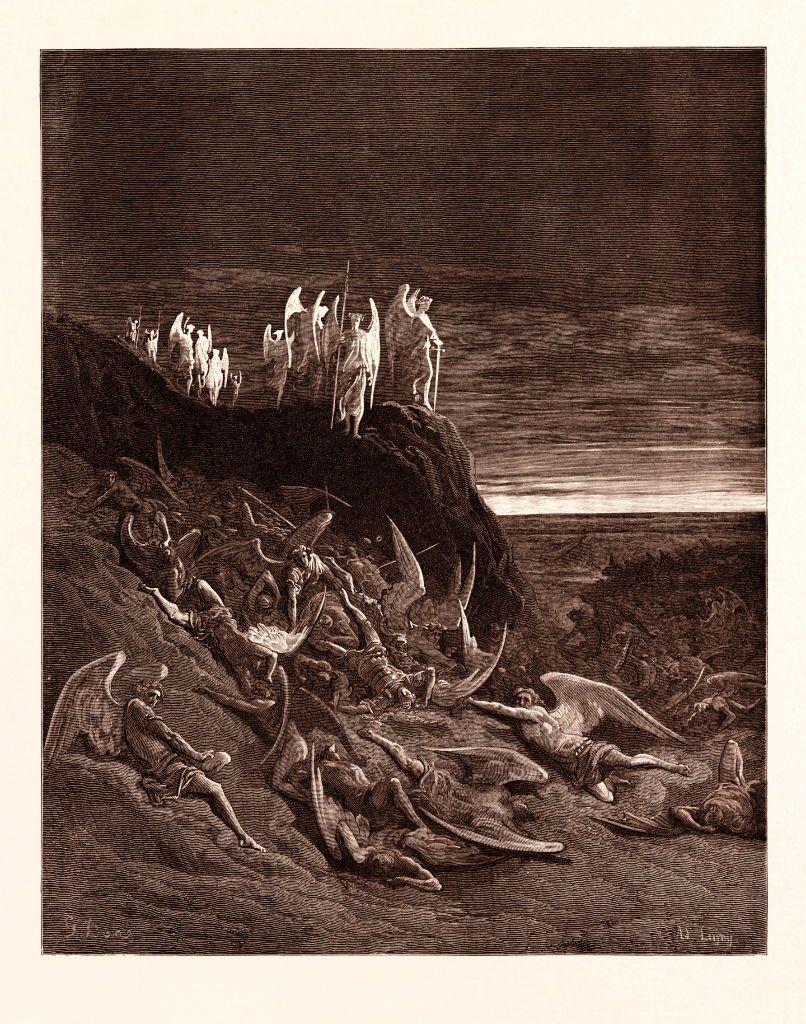
We can compare this to Satan in John Milton’s poem Paradise Lost. John Milton Like the Ramakien in the West debating morality, Milton’s work is stylistically more elegant than ancient literature. Instead of portraying Satan as purely ugly and scary, Milton presents Lucifer as a charming, rebellious angel with emotional depth before his fall from heaven. This evokes sympathy from readers, as Satan’s actions are motivated and not without reason, especially highlighted by the line,“Better to reign in Hell, than serve in Heaven.”This reflects vulnerability and freedom struggling against order.
Additionally, The Creature in Frankenstein embodies the inhumanity perceived by society despite inner innocence. Readers of Mary Shelley’s work feel special sympathy for The Creature. Mary Shelley Readers thus empathize deeply with The Creature.
Or consider Heathcliff in Wuthering Heights: despite his repulsive or misanthropic behavior, his childhood was filled with hatred. His growth is a result of his past, illustrating the idea that 'society creates villains.'
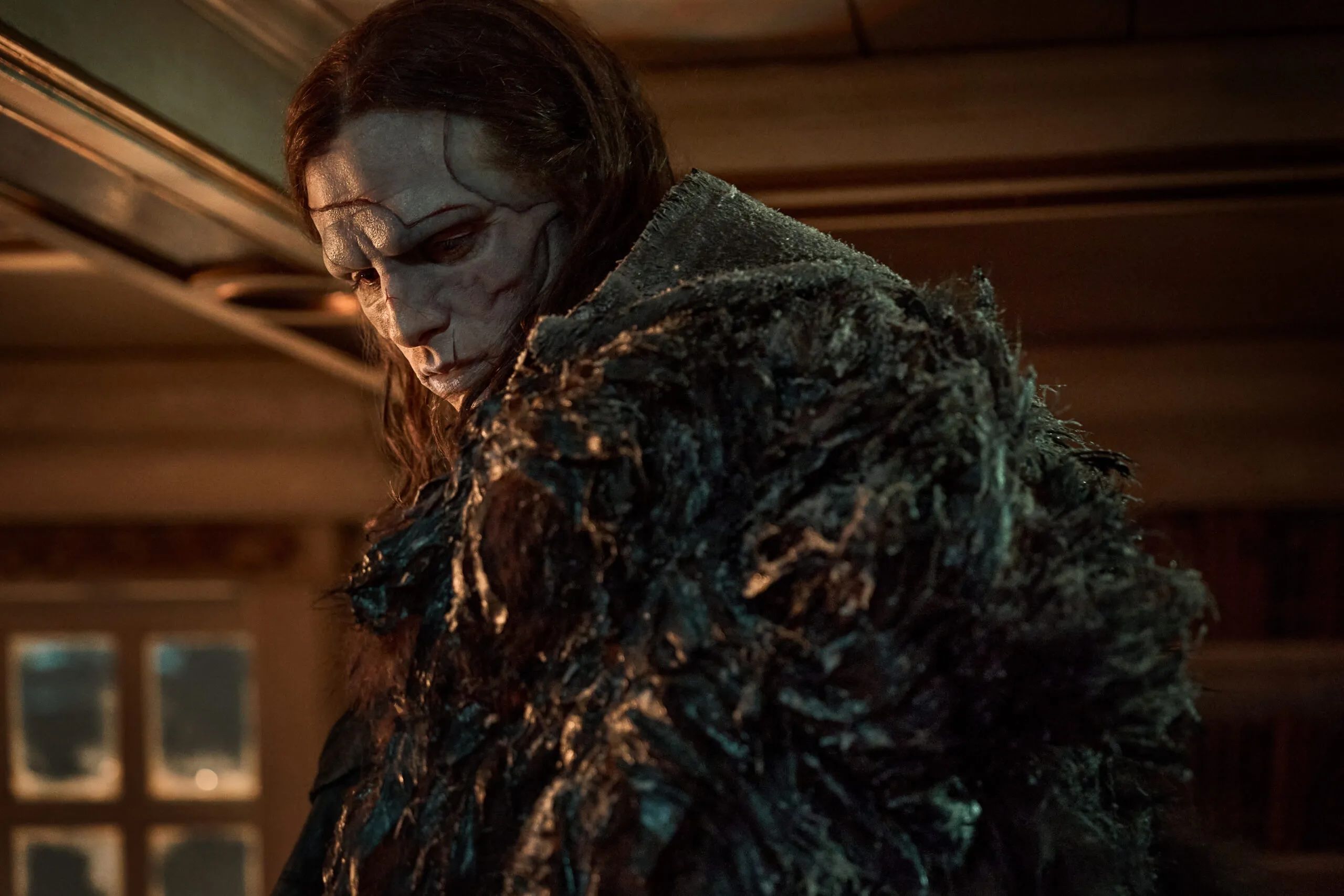
The Victorian era emphasized morality and was influenced by Romanticism, focusing more on human emotion than reason. Despite sophisticated storytelling, extremes were common, with many characters fitting the Byronic Hero archetype—mentally scarred, rebellious, moody, and arrogant. This archetype excellently presents human psychological complexity, more so than one-dimensional heroes. Readers’ sympathy isn’t for moral lessons but for exploring human conditions, the grey between black and white.
As times changed, characters like The Creature or Satan appeared less often, but still show up in films and media, like the Joker—interpreted as a product of a broken society spawning villains within the city.
However, Joker isn’t a flat villain boosting superhero narratives. He symbolizes the voice of the people amid Gotham’s corruption. We see injustices in the justice system, political corruption, and crime masquerading as politicians. Batman stories thus offer more than entertainment; they highlight society’s need for care, with characters like Joker representing forgotten citizens.
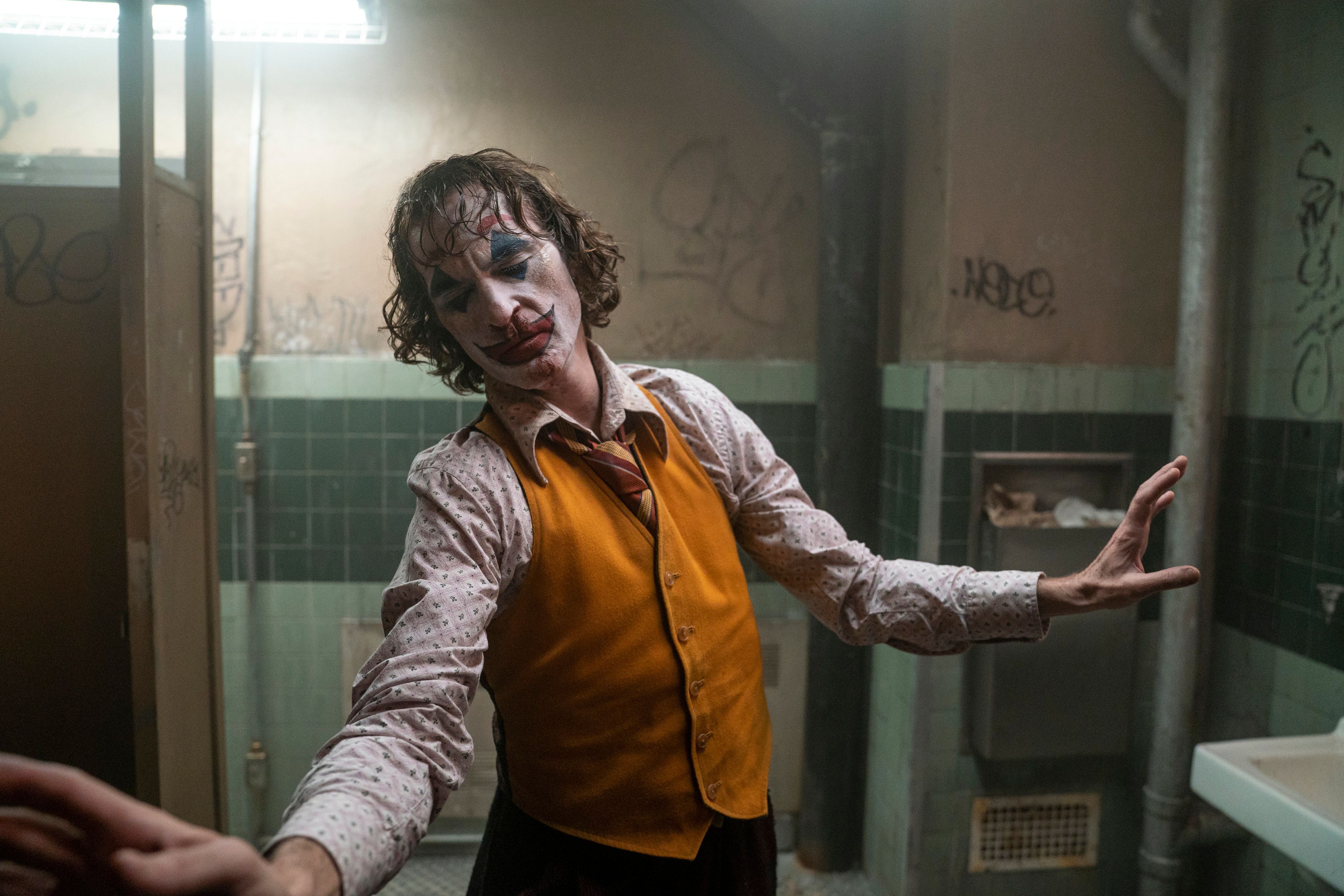
Villains are 'villains' because the word’s meaning depends on not being the hero.
This is fascinating when viewed through deconstruction theory, especially that of Jacques Derrida. He proposed that meaning arises from binary oppositions. Here, ‘good’ exists because of ‘evil,’ ‘black’ gains meaning through ‘white.’ Without opposites, words lack meaning. Society tends to value one side and diminish the other—just as Rama is seen more positively than Tosakanth.
Reversing this binary—seeing ‘evil’ as better, more positive, or more interesting—breaks the existing structure, leading to aporia (a state of puzzlement). We cannot definitively say Rama is better than Tosakanth but can understand what drives Tosakanth to be who he is. Derrida explains we exist in a middle ground where we cannot say who is better, reflecting the world’s truth and humanity’s complexity beyond single definitions.
Derrida makes us realize we never truly know a word’s full meaning, even a character’s name. We attach context embedded in literature. We know Rama can’t be the villain, but how can we be sure Rama has no darker side and Tosakanth is more than just a villain in Ramakien?
Thus, heroes like Rama, Batman, or even Captain America or the Jedi Knight are built as perfect embodiments of dharma, often feeling distant ideals we hope to achieve. But human life is not so different from villains like Tosakanth, Joker, or Satan. We carry feelings of love, greed, anger, and delusion; we make mistakes and are vulnerable. This is likely why we relate more to villains than to flawless heroes.
However, feeling closer to Tosakanth or villains doesn’t mean surrendering to or accepting our dark, flawed sides in society. Rather, it means empathizing with humanity—its fragility and mental complexity. In reality, not everyone can be like Rama. We can’t view everything in black and white or see goodness as the sole ultimate goal because along the way, we face disappointment, anger, sadness, and happiness. Understanding this helps us see that the most 'ordinary' person isn’t Rama but Tosakanth.
References: