

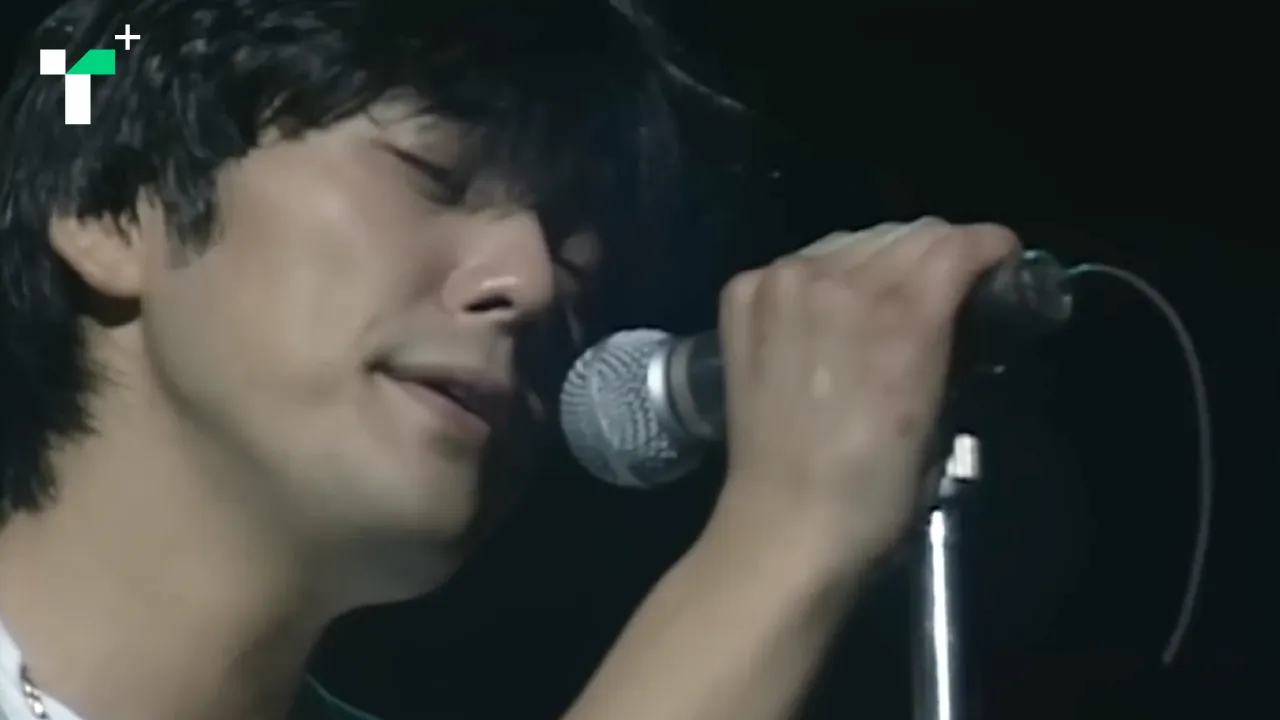
If there is an artist whose songs and voice remain vivid in Thai memories despite leaving this world prematurely, many would think of 'Joe from Pause' or Amarin Luangboriboon. Similarly, in Japanese memory, there is a legendary artist symbolizing youth rebellion in the 80s and 90s who also passed away young. The voice and name of Yutaka Ozaki still resonate deeply in people's hearts and stand as an enduring symbol of an era whose brilliance time cannot dim.
He died mysteriously at only 26 years old but left behind a declaration of youth liberation amid a Japanese society full of immense pressure and constraints.
Looking back to the 1980s, when Japan was at an economic peak during the 'bubble economy' era, material prosperity flourished, yet the spirits of the youth were left empty. Social norms and a fiercely competitive education system crushed the identities of young people one by one. In this suffocating time, Yutaka rose as a voice that sincerely and openly expressed the pain and frustrations of the new generation.
As Akira Sudo, producer at CBS Sony who developed and backed most of Yutaka's albums, said, he was not merely an artist but a fresh wound still beating and the most honest echo of a painful heart in that era.
One who bared his own imperfections.
Yutaka is remembered in J-Rock history as the young man in jeans shouting about smashing school windows in the song 'Sotsugyou' (Graduation) and the kid who stole a motorcycle in '15 no Yoru' (15's Night). People called him the prophet of rebellious youth. But looking deeper reveals a complex and fragile person; his tough exterior may have been just a shell protecting a human full of imperfections.
Behind these nicknames lay labels imposed by the media to create cultural icons. For Yutaka, the truth was that he did not seek to lead anyone through his music but used it to critique and explore himself. His depth came from bravely exposing himself through his songs and revealing his emotional wounds to the world.
This genuine sincerity without pretense was most evident on stage. Yutaka was not a professional singer with a polished voice but screamed from the first to the last song until hoarse, pouring his entire emotion into every performance—even crawling on stage floor without fear.
In 1984, his performance at 'The Atomic Cafe Fes. '84' became legendary in J-Rock history when he jumped from a 7-meter-high fire tower during the song 'Scrambling Rock'n'Roll,' breaking his left leg but rising to continue singing in pain. Critics saw this not just as recklessness but as using his body to prove the truth in his songs about pain, showing that feeling existed physically.
However, Akira, his trusted producer, noted this dangerous state: Yutaka often vomited after performances—not from physical illness but from feelings of personal failure and worthlessness. Nevertheless, the producer and Yutaka parted ways by late 1987.
Some critics believe that reaching 20 triggered a crisis of identity for Yutaka. As he grew into adulthood and left school behind, the fierce enemies he had rebelled against vanished, causing him to lose his songwriting compass. Trying to find new enemies or a new self only led him into confusion.
At his 20th birthday concert, he fiercely declared, 'This is my song; no one else may sing it,' seeing it as protecting his last true space from becoming a superficially consumed entertainment product.
These show that Yutaka was an imperfect human striving to be himself amid inner conflicts. This genuine vulnerability is the true charm of this man and the source of the deep impact his music has on listeners.
However, on 25 April 1992, Yutaka Ozaki was found unconscious near his home. Though rushed to hospital, he died at only 26. This shocked fans across Japan. Official reports state the cause as pulmonary edema, but the condition of his body and surrounding circumstances remain mysterious, prompting ongoing questions to this day.
References: