


When it comes to creating a good drama script, many may think it depends solely on the writer's talent or inspiration. However, in the entertainment industry, 'funding' is actually the foundational structure and driving force that impacts the quality of the work and the living conditions of everyone on the production team behind the scenes.
Although a good script doesn't necessarily require a high budget, nor does a high-budget production always guarantee a good script, it is undeniable that if we want the Thai entertainment industry to grow with quality and diverse genres, good living conditions supported by adequate funding are crucial variables. These lead to creating quality work and truly raising the standards of Thai dramas.
So how does a higher production budget enhance the quality and diversity of dramas? Thairath Plus had the chance to talk with 'Kru Den' Phanuwat Intawat, a director, scriptwriter, acting coach, and special lecturer in Drama Arts, known for directing the series. 'Khemjira Must Survive' and 'Phop Thoe' to exchange views from his perspective as a behind-the-scenes professional.
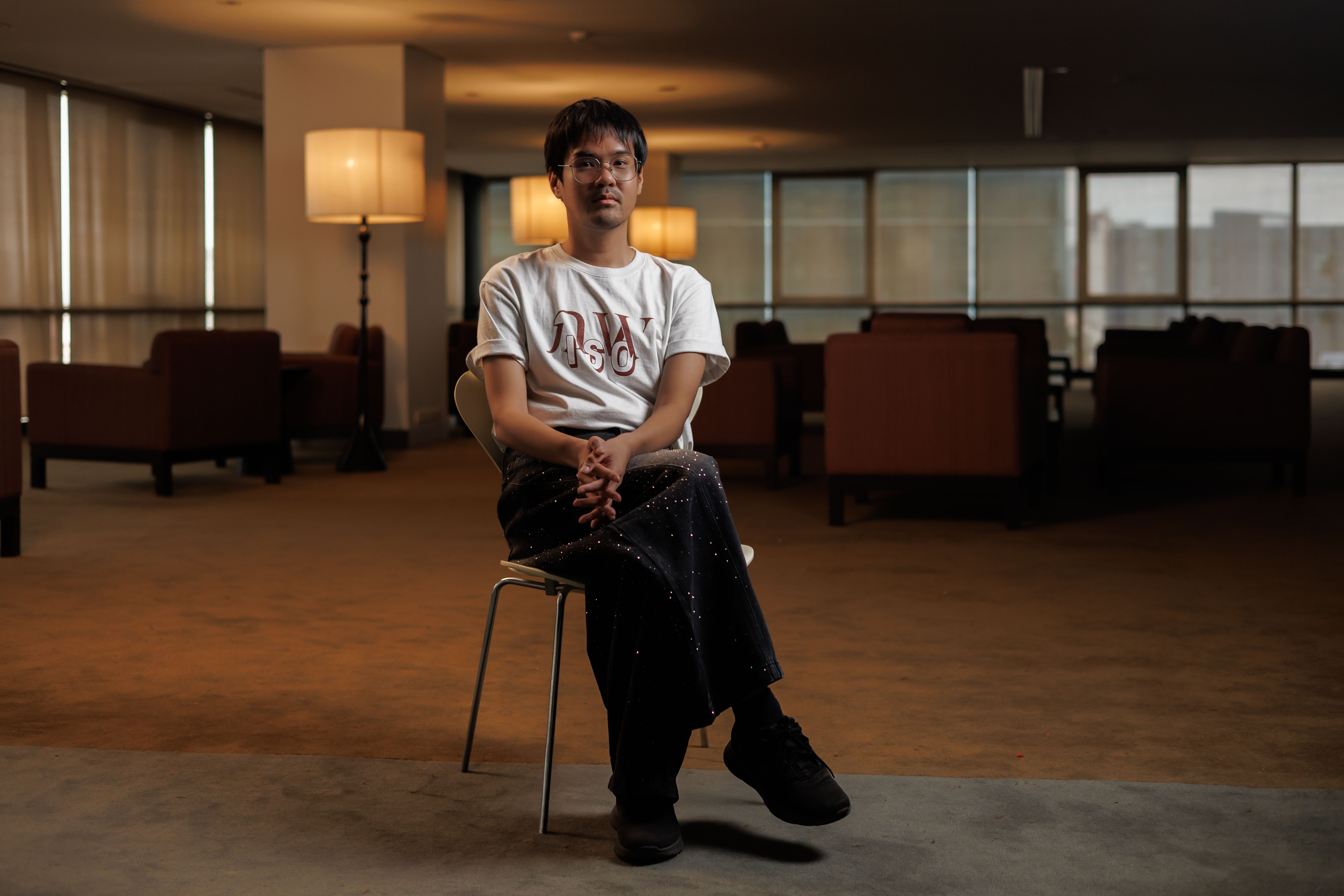
In the Thai entertainment industry, we often hear criticism about the quality of scripts and the repetitive nature of drama genres that seem similar and lack diversity. But from the perspective of 'Kru Den,' a behind-the-scenes worker, he sees these problems not as issues of creativity but rather as stemming from funding that dictates everything—from the quality of life of scriptwriters to limits on storytelling.
'If you ask whether good scripts need funding, actually a good script might have no funding at all. For example, a 10-15 minute short film shot on a phone, self-written, doesn’t require much budget but can still be well-crafted, intense, coherent, and emotionally engaging. But the more important thing is the quality of life of the scriptwriter—they must have money. And good living conditions are what lead to scripts that are more likely to be good.'
'Don’t forget that we live in a technological era. We need computers to type scripts, pay electricity bills, use the internet. Especially if the script requires research—these all require money.'
In economics, there is a theory called the Scarcity Mindset, which explains that when humans face worries, especially financial problems, the brain focuses on survival strategies for that issue instead of thinking about bigger or more important things.
Applying this theory to the current context helps us understand that the decreased ability for deep analysis and creativity may arise from financial scarcity and poor living conditions, which are realities for many scriptwriters and behind-the-scenes workers in the Thai entertainment industry. When production funding is limited, the working methods of scriptwriters become limited accordingly.
Kru Den shared his personal past experience to reflect the profession’s overall picture: he once earned less than ten thousand baht per episode but had to deliver work within just one week. Due to low pay, scriptwriters couldn’t sustain themselves on just one job and had to take on other work simultaneously, reducing time for reviewing their scripts and potentially lowering script quality.
Additionally, there are limitations in researching and fact-checking, especially for large-scale dramas with historical content. Kru Den gave examples.. Currently airing series like 'Phop Thoe,' which tells stories set in the Ayutthaya period and must rely heavily on historical accuracy, or the example in. The popular series 'Khemjira Must Survive,' where some episodes require characters to travel to Northeastern Thailand. On-site visits to observe and gather information to truly understand the area all incur costs. Without sufficient funding, writers cannot achieve their intended depth.
'Money alone may not solve all problems to improve scripts, but it plays a significant role. Improving scripts requires increased investment. If scriptwriters cannot survive in their profession, the quality of work declines.'
Teresa Amabile’s Componential Theory of Creativity explains that creativity results from the interaction of internal factors within individuals (such as scriptwriters and behind-the-scenes workers) and external contexts like environment and funding. Therefore, funding limitations can affect the diversity of story genres and constrain the imagination of drama creators.
Kru Den firmly states that funding greatly impacts the expansion and diversification of drama genres.'How can we have sci-fi movies if we don’t have enough money? How can we make computergraphics(CG) realistic and believable when it requires both time and money?'
To illustrate clearly, Kru Den gave examples from. In 'Khemjira Must Survive,' a ghost scene appears for just a few seconds but actually takes hours to film because they must shoot empty frames, human actors, ghost actors, and then combine them. Makeup effects teams need to prepare ghost makeup three hours in advance, and many crew members support this scene, which lasts only minutes in the final drama.
Or in scenes requiring computergraphics,Kru Den explained,'If we have money to hire 30 extras and then use CG to increase that to 100, the scene becomes more powerful and credible. On the other hand, with little money, we might only afford 5 or 6 extras, which diminishes the scene’s scariness. Quality and production value must come with funding.'
Compared to traditional dramas that are less complex, not historically based, centered on love triangles, or do not require location changes, the budget and storytelling methods differ significantly.
Certainly, low-budget dramas can have good scripts and earn revenue. For example, the phenomenon of the film 'Saphere 1,' which grossed over 700 million baht nationwide. This film succeeded greatly due to a strong core story and the sincere portrayal of local culture's charm.But behind this success, the team faced budget constraints that prevented many production aspects from reaching their original vision and almost caused the film not to be released due to risk of losses. This raises questions about what might have happened if
the film, with its intense script, had received sufficient funding?
The imagination of the director and scriptwriter might have been better supported, with more special effects or computergraphics, larger, more realistic production, potentially allowing the film to proudly represent local lifestyles internationally.
Increased funding also means better living conditions behind the scenes, less rushed shooting schedules, and appropriate compensation and adequate rest for crew members—from lighting technicians to art departments and welfare teams.
The success of 'Saphere' should not simply be defined as a low-budget film that made money but rather as proof that even limited-budget films can produce such good scripts if they receive sufficient funding and good welfare support.It prompts reflection on how far this film and others facing limited funding could go and how much value they could create.
The most critical issue in the Thai entertainment industry is welfare and quality of life for all team members. Low-budget productions try to reduce shooting schedules, meaning crew and actors must film multiple scenes in one day, sometimes from evening until morning. The culture is that paying overtime is considered more cost-effective than opening new shooting days.
Moreover, extremely low wages force crew members or others on set to work multiple jobs simultaneously. Many finish one shoot at 6 a.m. and start another at the same time without rest.
'We have seen many crew members die from overwork. These issues are interconnected. This isn't just talk about how life could improve with more money; it's the reality that work efficiency truly increases with better pay.'
Kru Den concluded with an interesting thought to consider:
However, when the funding system in Thailand’s entertainment industry is fair, fully supports workers, and values everyone—from writers, lighting crews, sound teams to production staff—the result won’t just be a few more good dramas but will elevate the entire entertainment industry's standards and break old molds, allowing new and diverse drama genres to emerge.