

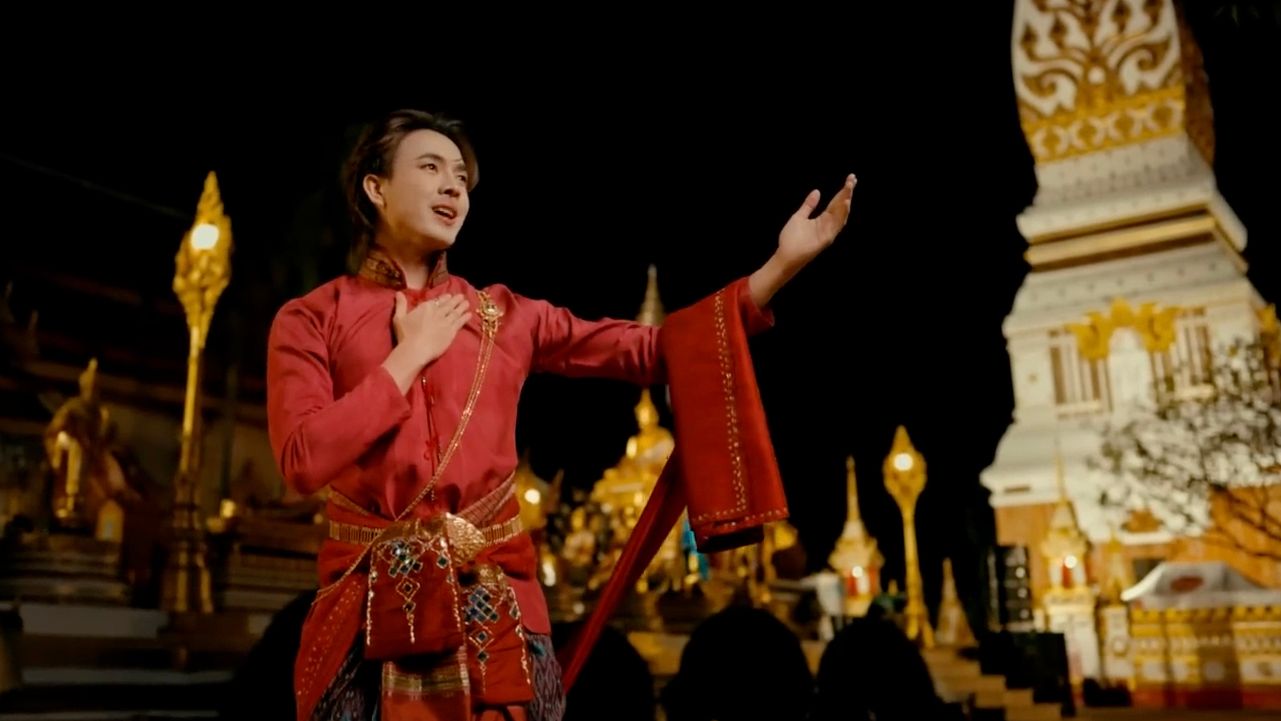
Looking back to its origins, Lai Sakkanbucha emerged from a fusion of traditional beliefs about spirits, souls, and deities of the Southeast Asian peoples with Buddhist doctrines from the past.
Originally, Isan people used music to communicate with sacred entities—for example, the Phi Fa dance for healing or musical performances at traditional merit-making festivals like the twelve-month, fourteen-requirement calendar events. As Buddhism gained greater influence and Buddhist pagodas were constructed throughout the region, folk artists elevated and refined these melodies to be more solemn, intricate, and formal, intended to offer homage to the Buddha.
This marked the birth of the Lai Sakkanbucha musical style, composed specifically for each sacred site—for instance, the Lai Sakkan for blessings from Grandfather Anantanarat, Lai Sakkan for Phra That Phanom, Lai Sakkanbucha for the Five Buddha Pagodas (Wat Pa Thammaviwek, Nong Bua Lamphu), or Lai Sakkan honoring Luang Pho Phra Sai.
The musical structure of Lai Sakkanbucha songs is distinct from lively, upbeat Luk Thung Mor Lam music. The melodies are composed at a moderate to slow tempo, exuding elegance and carrying a sense of solemnity or sacredness. The instrumentation typically features a full ensemble of traditional Isan folk instruments, including the khaen, phin, wot, saw, and pong lang.
The khaen and saw take the lead roles, supporting the melody to evoke profound calmness and depth. The rhythm is carefully arranged to align with the dancers' movements and steps, as this music accompanies the ritual worship dance, which requires synchronization and grace. These melodies regulate the pace of hundreds or thousands of devotees’ movements, uniting them into one and immersing them in a shared trance-like state.
Lai Sakkanbucha exists both as songs with lyrics and as instrumental melodies. When lyrics are present, they clearly reflect the worldview and beliefs of the Isan people. The songs are often composed in the 'klon lam' or 'phaya' poetic forms, selecting refined vocabulary, employing rhyme and alliteration, embedding moral teachings, and portraying local life, culture, and traditions.
The song structure usually divides into three main parts: the first introduces and invites deities and sacred entities to acknowledge the worship; the second narrates the history, legends, grandeur, and sanctity of the place or the Buddhist relic; and the final part offers prayers for peace and prosperity for the community, timely rains, abundant harvests, and interweaves Buddhist teachings aiming toward nirvana.
The language used is full of reverence, humility, and respect, reflecting the human stance before the great sacred forces.
In today's society, Lai Sakkanbucha songs serve to unite people. During festivals or merit-making events, the sound of Lai Sakkanbucha acts as a call for villagers to return home. It helps diminish social class, societal, and economic differences, as everyone shares the role of 'believer' in the same faith.
Additionally, creating new Lai Sakkanbucha songs to honor sacred sites and entities in each province, increasingly seen today, enhances local cultural identity, making it more distinctive and memorable.
Over a decade ago, traditional folk instrumental music was often seen as the domain of elders or niche groups. Today, however, youth, working adults, and tourists alike don traditional Isan attire and participate in worship dances amid the looping rhythms of Lai Sakkanbucha across various sacred sites nationwide.
This music’s lyrics often employ elevated vocabulary—deep regional Isan language blended with Pali-Sanskrit and ancient folk poetic forms. The use of language rarely encountered in daily life, combined with elegantly woven phrasing, makes listeners feel they are absorbing high literary art, even if they do not fully understand or cannot translate it into the central Thai language.
Isan music within the worship dance category commonly pairs sounds that evoke mystery, depth, and emotional immersion, with sound mixing adding spatial and sonic depth. Moreover, younger people incorporate Lai Sakkanbucha music into images or videos of various poses to amplify the sacred aura and enchantment. The slow yet grand rhythm creates a chilling and awe-inspiring effect, making such clips easily go viral.
Although many young listeners do not engage with Lai Sakkanbucha out of religious faith as previous generations did, they consume this work as contemporary art that satisfies aesthetic taste and offers a refuge. The solemn melodies and profound lyrics have become a new, sincere, charming, and intriguing taste that also provides emotional healing.
Ultimately, Lai Sakkanbucha songs beautifully reflect the wisdom of the Isan people by blending music, dance, and poetry to express faith. They illustrate connections between past and present, humans and sacred entities, and the identity of Isan people with their homeland.