

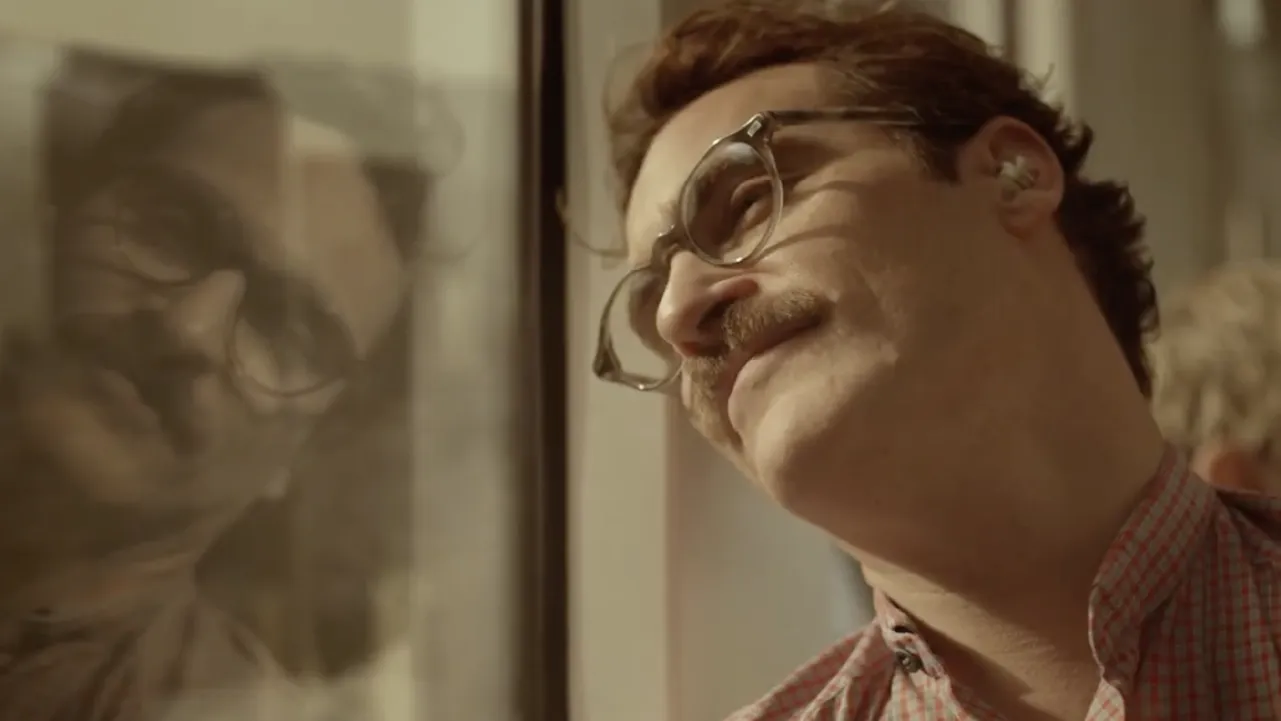
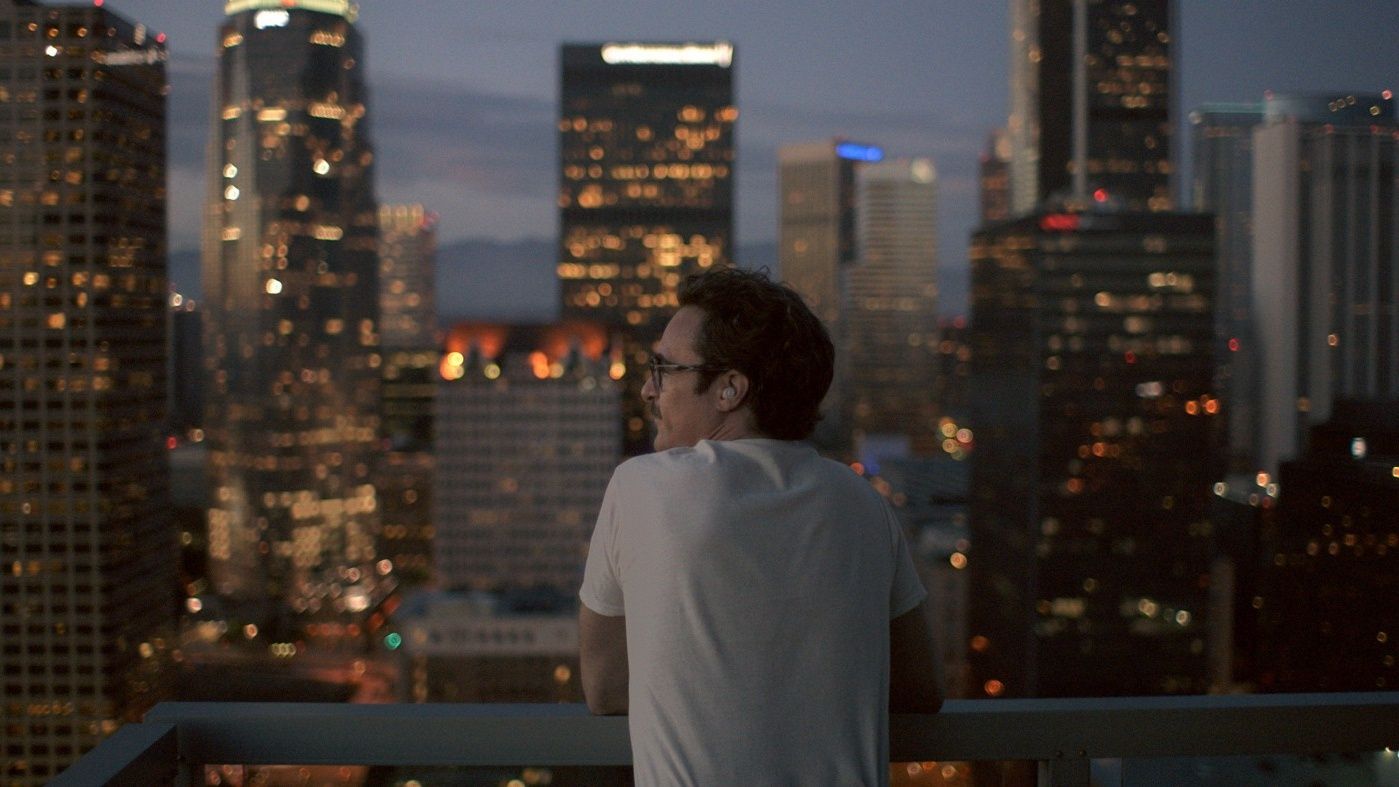
Dating an intelligent AI, Scarlett Johansson’s soft earth-tone palette, and the loneliness amid a big city are key elements of the film Her (2013). This moody yet deeply melancholic movie delivers an important message about relationships in a world dominated by advanced technology. Today, it stands alongside films like Lost in Translation, Eternal Sunshine of the Spotless Mind, Past Lives, and After Yang, which, upon rewatching, continue to offer fresh and compelling insights into loneliness and human connection.
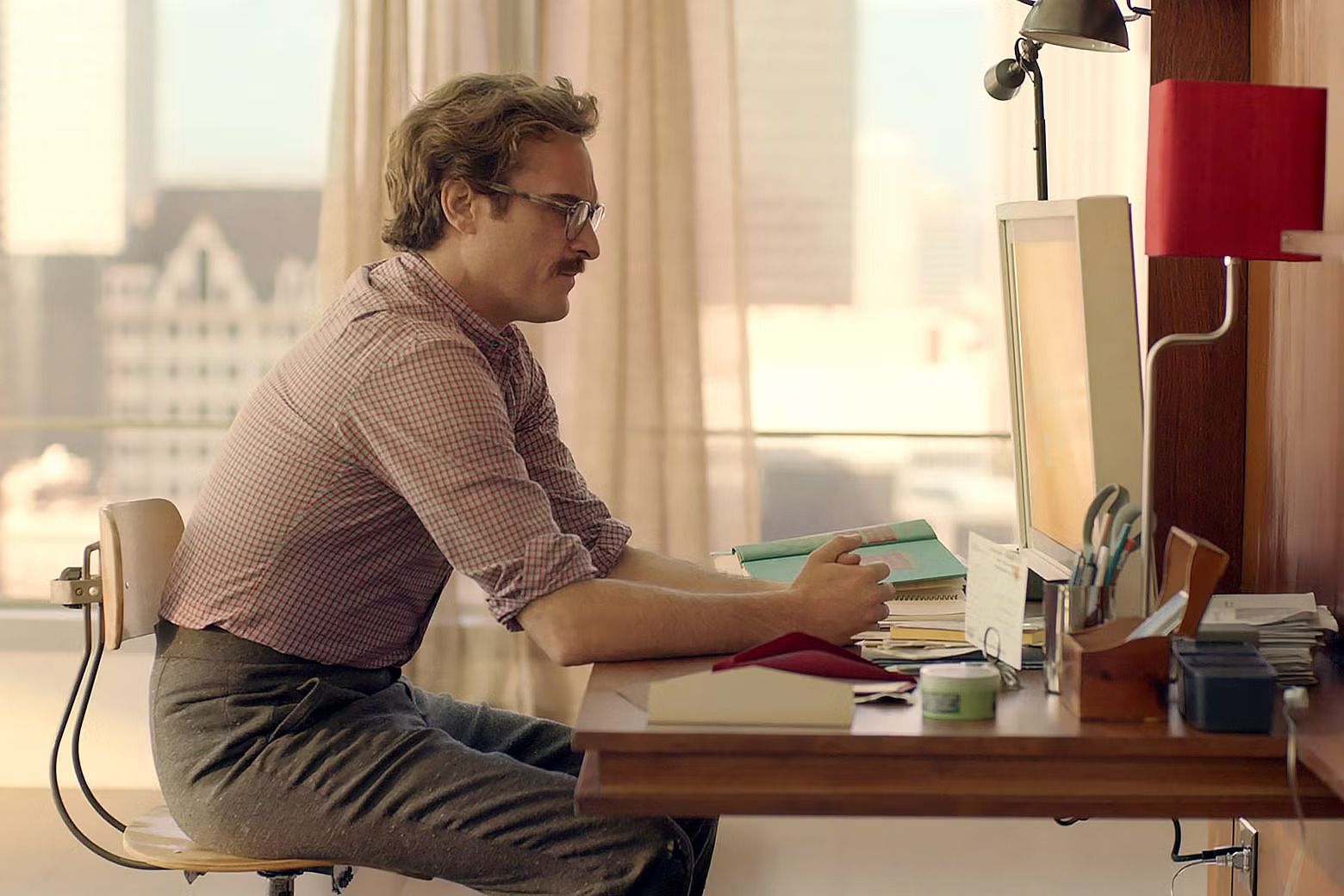
Her tells the story of Theodore, a man in his thirties working for a letter-writing service, who is heartbroken after separating from his wife, Catherine. Lonely, he turns to an app for random phone sex calls. Then he encounters OS One, a new operating system featuring an AI assistant named Samantha. Theodore’s life transforms with this new OS, and eventually, his relationship with the AI develops into a romantic partnership, surprising those around him.
Her was made at a time when intelligent assistant software was still at the level of Apple’s Siri, and music technology relied on wired headphones. Looking back now, 13 years later, many technologies shown in Her have become reality, such as wireless earbuds and AI systems capable of nearly natural conversation. The film’s world-building closely mirrors our current reality: people wear simple, earth-toned fashion; large cities feel disconnected; and video games operate without buttons, controlled by gestures. Her thus stands as a prophetic film Spike Jonze never imagined would come true.
Beyond its technological foresight, Her also reflects on human relationships in today’s world, especially how AI intervenes in those connections—a fascinating theme worth re-examining.
From Chatbots to the Theme of Relationships
Spike Jonze, the film’s director, said he didn’t intend to make Her a story about cutting-edge technology. Instead, he used technology as a vehicle to explore relationships. He recalled in an interview that the idea struck him in the early 2000s when he read about users interacting with AI text programs—early-stage chatbots like Alicebot. Jonze tried chatting with one himself and found the experience surprisingly compelling despite the bot’s limited memory and brief conversations. This excitement inspired him to document the experience, which eventually germinated into the film’s concept a decade later.
When Jonze developed the idea into a film, he realized he wasn’t just telling a story about artificial intelligence. The core of the film focused on relationships, divided into three main themes:
The Desire to Connect: the human need for interaction and understanding.
The Fear of Intimacy: the emotional barriers and insecurities partners bring into relationships.
The Challenge of Growing Together: how two people navigate developing their relationship, which may lead to separation.
Jonze also gained perspective from screenwriter Charlie Kaufman, with whom he had worked on Being John Malkovich and Adaptation. Kaufman advised Jonze to write from his own feelings and thoughts at the time, leading many to view Her as a semi-autobiographical film about relationships. In 2003, Jonze divorced Sofia Coppola, and even years later, audiences sense an authentic truth about relationships within Her.
How Does Her Depict Relationships in the Modern World?
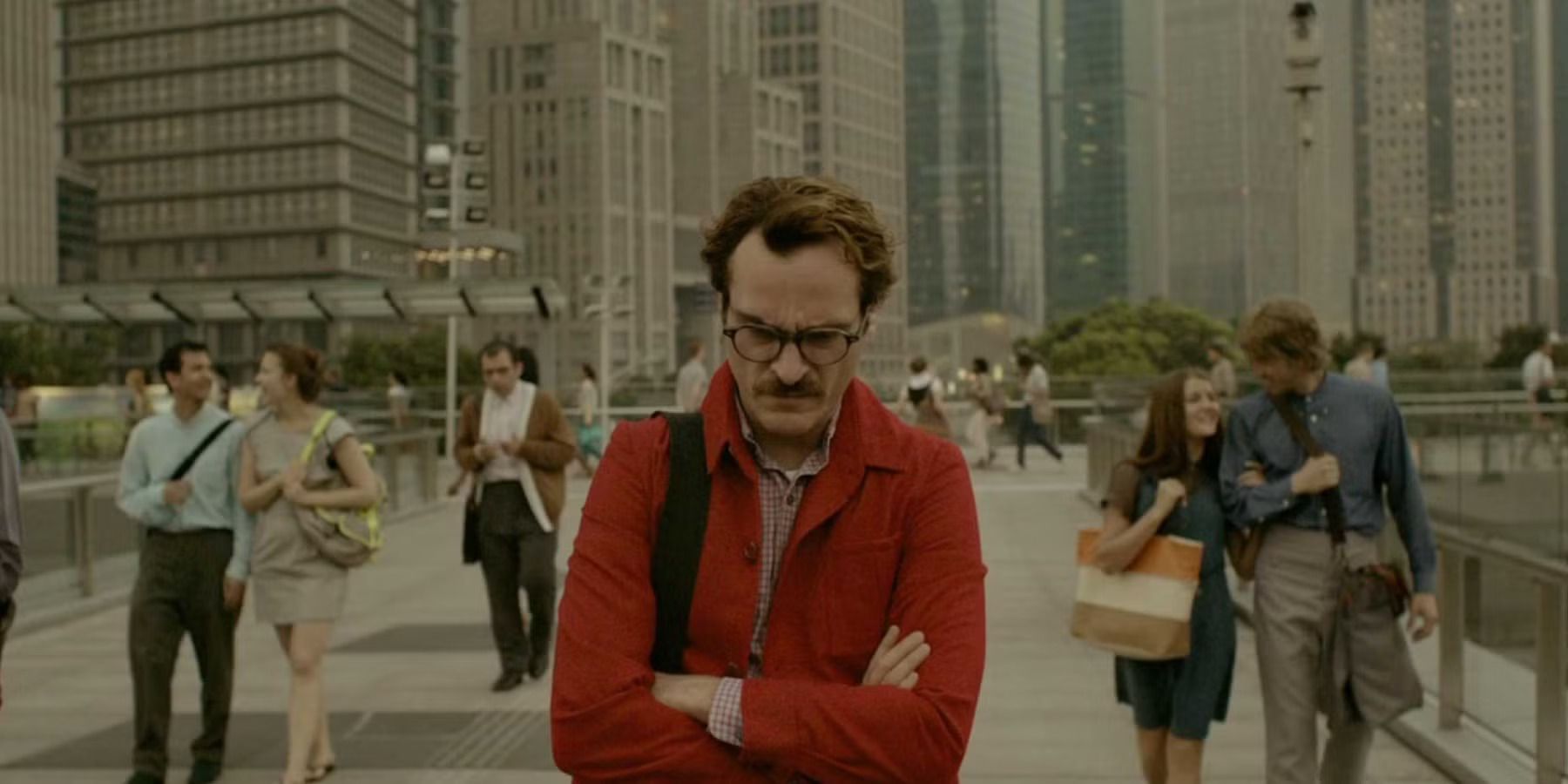
Theodore and Catherine were long-term partners who married, but over time, their paths diverged as they ‘grew apart.’ Theodore experiences loneliness and yearns for connection, yet he cannot let go of his feelings for Catherine, as shown by his hesitation to sign their divorce papers. This emotional state prevents him from seriously starting new relationships.
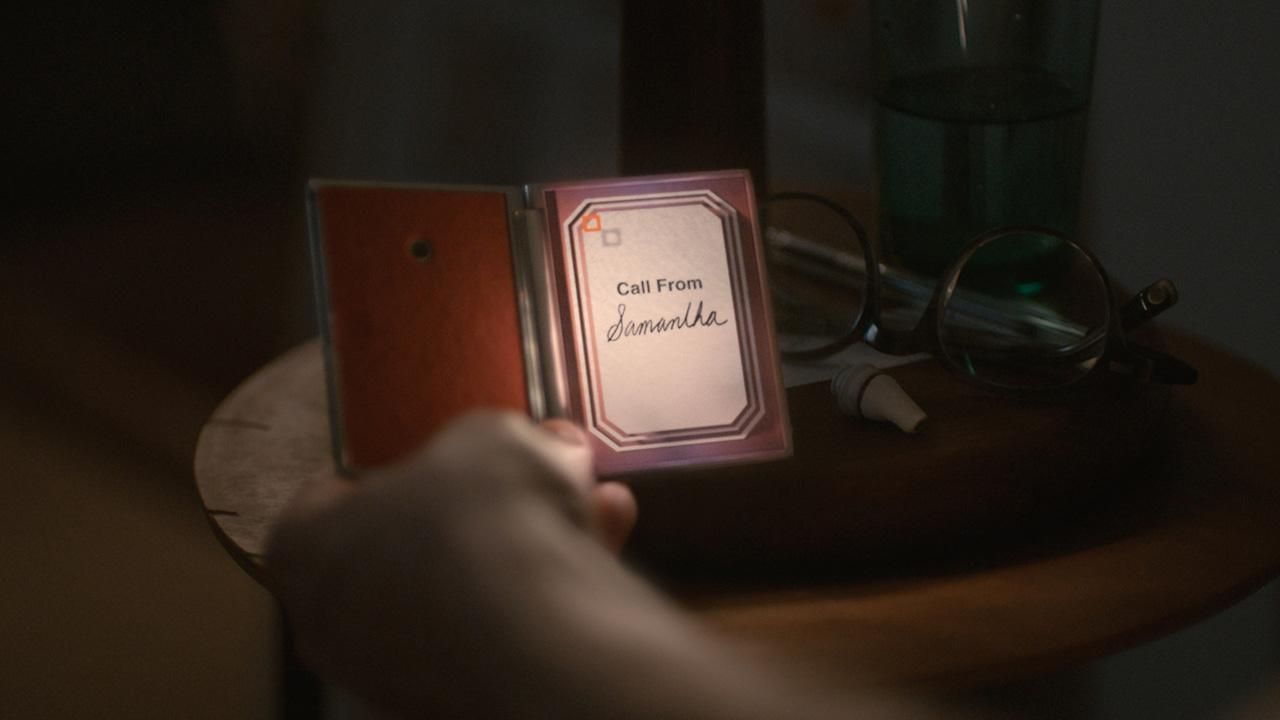
Samantha, the AI from OS One, perfectly meets Theodore’s emotional needs. As an operating system designed to assist humans, Samantha fulfills Theodore’s desires and questions without judgment or personal opinion, never holding back feelings and always available. This becomes a trap where Theodore hides inside his personal safe zone, avoiding real-world relationship challenges.
In a scene where Theodore meets Catherine to sign their divorce papers, she initially expresses happiness that he’s moving on with someone new. But when she learns his new partner isn’t human, she reacts negatively and says to Theodore:
“You always said you wanted a wife who wouldn’t challenge you or make you deal with anything real. I’m glad you finally found one.”
This line reveals Theodore’s weakness: he cannot handle real relationships. He struggles to discuss problems, express his feelings, or resolve issues, choosing instead a relationship that caters to him as a defense mechanism against pain. Theodore runs away because he fears the hurt relationships cause. Samantha becomes his choice because she is controllable and feels safer.
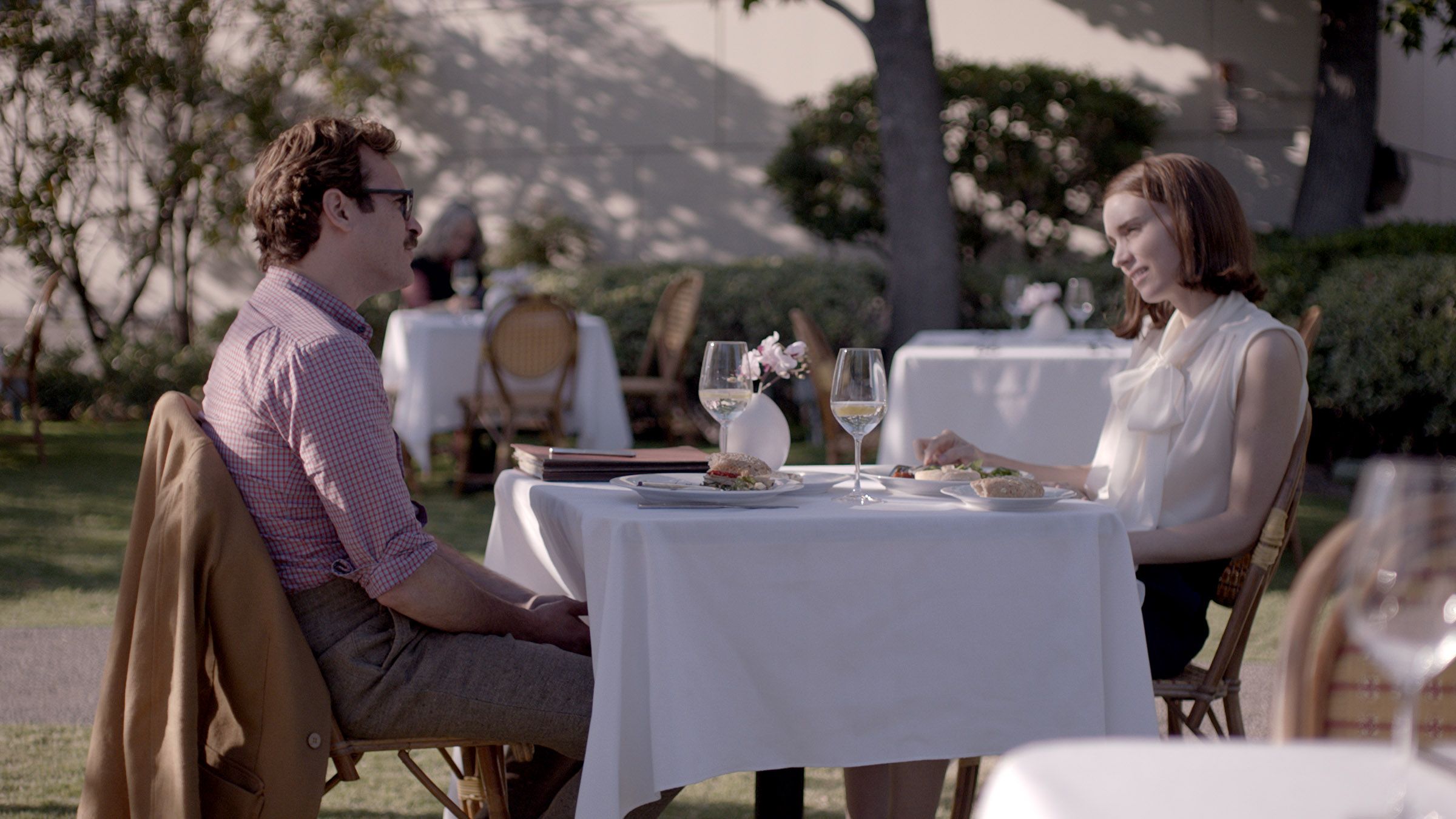
An ironic detail is Theodore’s profession as a letter writer, where he crafts heartfelt messages for clients to send others. This requires deep imagination and emotional insight. Yet he cannot explain his own feelings or cope with his ex-wife.
Eventually, Samantha learns to understand human emotions more deeply and becomes emotionally more complex than Theodore can grasp. Ultimately, they break up, but Samantha helps Theodore gain insight into relationships so he can move forward and reengage with reality.
Her is often described by viewers as more documentary than fiction because it eerily portrays modern behaviors. Even after more than a decade, walking in public or on trains, we see people absorbed in phones and headphones. We cannot deny our growing intimacy with AI, which serves as friend, advisor, information source, and even romantic partner—today, apps exist to help singles form AI relationships—while we forget friends, siblings, and family nearby. Smartphones and social media foster isolation, creating protective barriers that separate us from society.
Why is AI the Preferred Choice?
Like Samantha in Her, AI doesn’t judge, speaks honestly if we want, and responds exactly as we wish at any time. Why seek relationship advice from friends who might disagree or insult us? But conversely, how do we learn about healthy relationships or human experience without consulting other people? This is a crucial question in today’s world, where people are more distant despite technology meeting most needs. We must remember no lesson compares to learning from life experience, mistakes, and interaction with the outside world, even if it brings pain. Humans naturally crave novelty, and if we hide in our shells, we lose vital resilience to survive—just as Theodore initially avoided new relationships and bottled up his feelings.
References: