

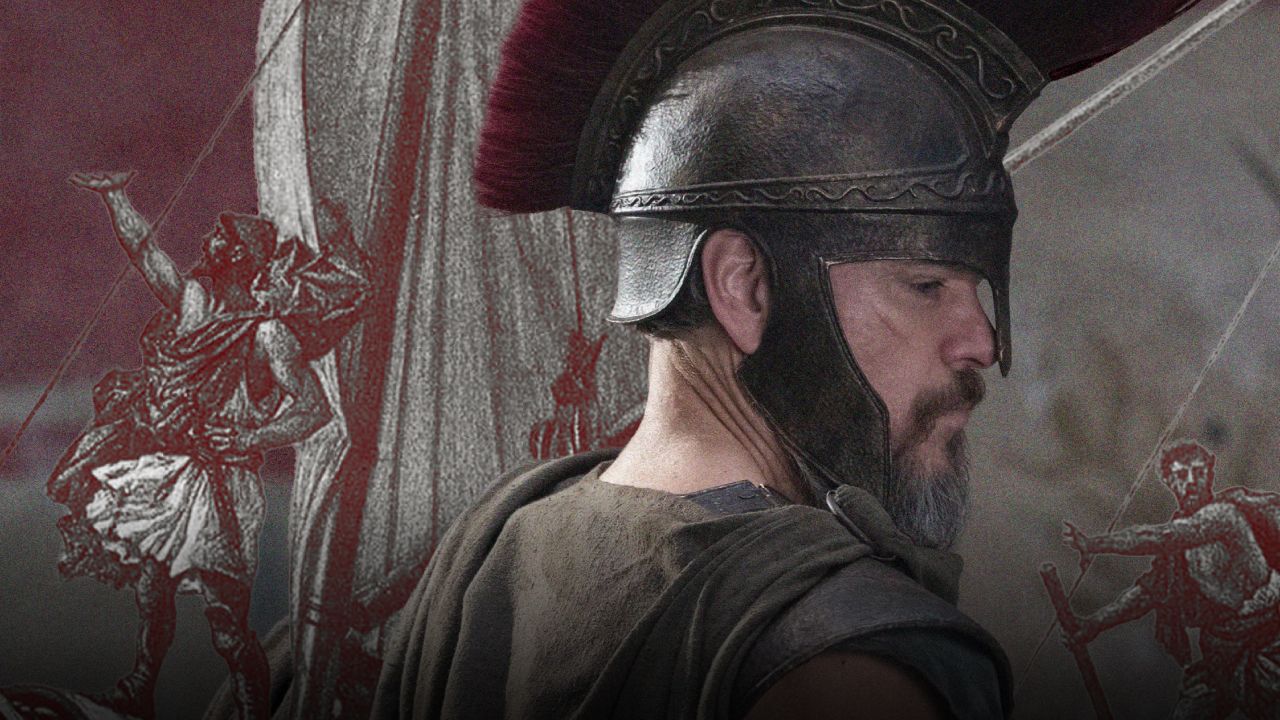
The story of the epic Odyssey is well known among readers and even the general public have likely heard of it—the tale of Odysseus (also called Ulysses), who left home to fight in the Trojan War that lasted 10 years. After the war ended, Odysseus had to spend another 10 years journeying back home, while his faithful wife Penelope and son Telemachus guarded the household to prevent it from falling into the hands of men seeking power.
During Odysseus's journey home, he faced numerous challenges—from curses by gods, mythical monsters, to forest nymphs. He had to rely on intelligence and wit to overcome these obstacles, making those ten years a life-altering adventure.
Odysseus was known as a cunning warrior but also possessed hubris. This trait showed early on, especially when he shouted his real name to the Cyclops giant, which triggered Poseidon's wrath and led to the shipwreck. Later, Odysseus learned to become calmer and more composed, realizing survival required patience and observation before action.
The Odyssey stands as a stark contrast to the hero Achilles in the Iliad, who chose death for glory and fame over peaceful life. Odysseus is portrayed as a hero willing to die with his wife rather than cling to life, symbolizing surrender to the sacred power of the gods. This can be interpreted as a message that humans are but ants amidst the unstoppable forces of nature.
From this, we see Odysseus transformed from a proud warrior to an ordinary man who considers those around him—his crew, wife, city, and son—more than himself. This is a key reason why the epic has resonated with readers since ancient times.
What is a circular narrative in literature and film?
The Odyssey’s story in modern terms is called a circular narrative: a story where the beginning and ending meet at the same place. Odysseus leaves his home in Ithaca and returns there, having grown and learned lessons through his adventures.
Although the Odyssey is not the first circular narrative in world literature, it is a foundational work in Western civilization from ancient Greece, studied continuously for nearly two thousand years.
The Odyssey is widely known and frequently referenced in mythological and Western literary studies. It inspired later works like Virgil’s The Aeneid, where Aeneas, a Trojan warrior, journeys to settle in Italy. Another example is Lucian’s True Story, considered the first sci-fi novel, which parodies the Odyssey by sending its hero on a 79-day lunar storm voyage before returning to Earth.
In modern literature, James Joyce’s Ulysses is a landmark work that condenses the ten-year journey into one day, narrating Leopold Bloom’s departure from home, facing metaphorical monsters as emotional states, and returning to his wife at night. Another is Cold Mountain, about Inman, a Confederate soldier who deserts war, crossing devastated lands to return to his beloved, while she fights to reclaim her farm.
Circular narratives are not confined to literature but also influence pop culture and film. Frodo in The Lord of the Rings, carrying the ring on a perilous journey before returning home, is a clear example. Forrest Gump’s story is also circular—starting in a safe space, venturing through intense experiences, then returning home. Sci-fi films like The Martian and Interstellar can also be seen as modern Odysseys.
Thus, the concept of "returning home" is central to circular narratives because the emotional nuance of return resonates deeply. The home the protagonist returns to symbolizes peaceful closure after chaos, like the end of turmoil.
Why do circular narratives resonate so strongly with audiences?
Many films use circular narratives because they easily provide audience satisfaction. Character development is fundamental to emotional engagement. Seeing an inexperienced character leave, grow, and return victorious allows viewers to feel growth alongside the character. For example, Edge of Tomorrow (2014) vividly portrays the protagonist’s initial weakness and subsequent transformation, culminating in a proud return to the start.
Another important aspect is that circular narratives reflect human life realities: everyone has a place to return to, whether a home or loved ones. Even homeless people return to a familiar spot for comfort. Life is a loop—like the sun rising and setting repeatedly, a cycle like seasons, or the ouroboros snake biting its tail—where every new start brings the possibility of change.
It could be said that circular narratives are a formula for screenwriting, as endings tend to be happy, leaving viewers with positive feelings about life. This consistently draws audiences and generates revenue. But it raises the question: do circular narratives really occur in our lives?
Or do circular narratives not exist in real life?
Milan Kundera, in his novel Ignorance, offers an interesting perspective on the concept of returning home and nostalgia, viewing return not necessarily as going back to where we came from, but to what we value.
Ignorance tells the story of Irene, a Czech woman returning to her homeland after fleeing communist rule for a decade. Kundera explains that nostalgia derives from Greek roots meaning “return” and “pain”—the suffering caused by longing. But in Spanish, nostalgia’s root is ignorare, meaning “not to know or experience.” Kundera prefers “ignorance” to capture his novel’s theme: the pain of longing stems from not knowing what has changed at home—who has left, what has happened. Irene feels no joy returning; many changes make her feel like a stranger, and France becomes her true home.
Kundera’s view is not to deny the joy of return in circular narratives but to say that home or safe space may not always be the place we left. Sometimes we cannot return to the start if it has shifted. Growth means accepting endless change, even if we must keep moving away from our starting point.
Though this sounds bleak—suggesting no safe haven exists—Kundera’s idea can be interpreted as home not needing to be the original house or homeland. Home can be anyone—a lover, friend—or a new place far from origins. His message encourages letting go of attachment to the notion that safety must be found only in one’s original home.