

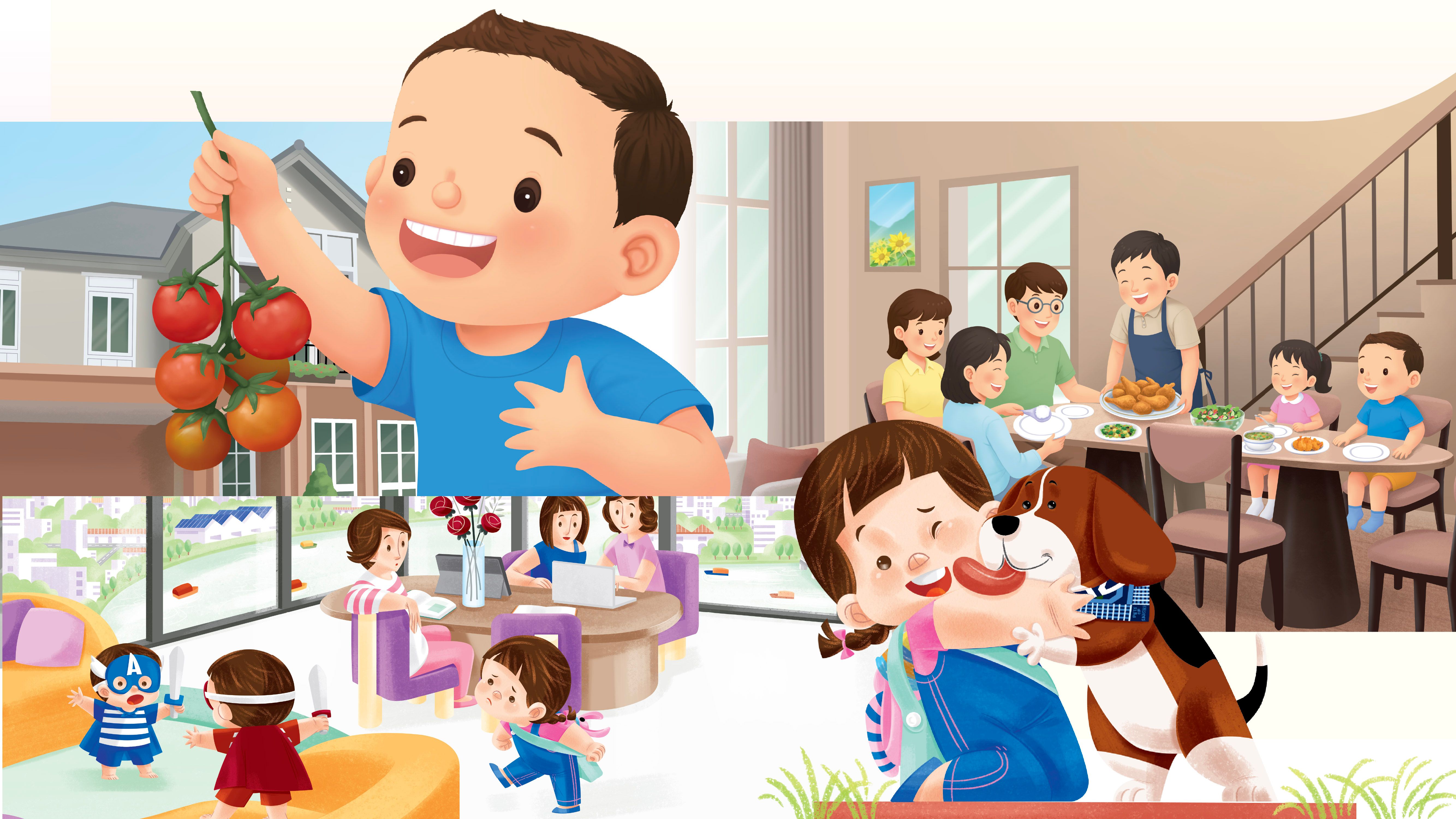
Children's learning starts with what is close to them—activities inside the home, the lawn, neighbors, and the surrounding community. Every space gives children chances to make mistakes, ask questions, and gradually get to know the wider world better.
For new parents, choosing a home often involves more than just the physical space; it requires thinking about the child's future, lifestyle, and the family's overall well-being.
This idea is illustrated through the stories of ‘Pongpaeng’ and ‘Pingping,’ two characters from the special animation project Sansiri x Pass Education Publishing, which invites us to consider the relationship between children and their spaces, people, and social interactions through the daily lives of two children living and learning in different environments.
In ‘Pongpaeng Visits Aom’s House,’ we meet Pongpaeng, a lively boy who loves exploring his surroundings. When he visits a friend’s house with wide spaces and green gardens, the home becomes a large learning environment, including playgrounds, big trees, vegetable plots, and various corners that constantly invite new discoveries.
During a day at Aom’s house, Pongpaeng meets new friends, gets close to nature, learns about the interdependence of plants, animals, and insects, values food from chemical-free vegetable plots, and understands the importance of not wasting food.
Meanwhile, the story ‘Shh! Shh! Pingping’ shows another side of growing up in a condominium, where living alongside neighbors in the same building presents different lessons—from using appropriate noise levels in public areas, understanding rules and etiquette in shared spaces, to greeting and coexisting with neighbors.
These two stories highlight how different environments shape learning and growth. Homes with space, gardens, nature, and playgrounds offer opportunities for children to learn, while condominiums provide shared spaces and social situations that teach children about community life. The key lies in choosing spaces that fit residents’ lifestyles and needs while allowing children to learn to live appropriately for their age.
This concept aligns with Sansiri’s perspective that “home is a place where family members grow their lives together,” emphasizing home design and surrounding environments through three main principles, including:
Home and communal spaces should be safe and offer children chances to move, play, and learn independently, while parents can relax, work, or manage their affairs comfortably within their own areas.
On a typical evening, a father might cook in the kitchen, a child draws at the dining table, or a mother works in the living room while the child plays nearby. Everyone does not have to engage in the same activity, but a well-designed space allows them to be near, see each other, and spend time together naturally.
Children’s growth extends beyond the home to green spaces, playgrounds, or communal areas within a project that form part of daily life. These spaces give children chances to meet friends, play with others, and gradually learn sharing, patience, and rules for living together. For parents, having such spaces near home means weekends don’t always require long trips; simply stepping outside to play in the garden can become quality family time.
Another important factor is “time.” Locations with easy access and full amenities reduce commuting time, simplify school runs, and streamline daily tasks, giving families more time to eat together, talk, and share moments.
All this shows that a ‘family home’ does not always mean the largest house or the most spacious area but a home that understands how family members live their lives.
As children grow, what they remember may not be the size of a room or the square footage of a house but the corner where they once drew with their father, the call to come eat, or an evening spent running in the garden with friends and coming home smiling.
For Sansiri, a home is more than just a place to live; as in the stories of Pongpaeng and Pingping, it is a space where each family member lives their own life while still having places to meet, spend time together, and grow together every day.
Follow the stories of Pongpaeng and Pingping and enjoy the tales at: https://siri.ly/04f76Y9. Also, explore what shapes our identities in the Behind The Design by Sansiri series at: http://siri.ly/H5fdCt9
Facebook:@SansiriPLC
Instagram:@SansiriPLC
Tiktok:@SansiriPLC
Youtube:@SansiriPLC
For Sansiri, a home is not merely a place to live but an important environment that helps children grow, learn, and create lasting happy memories with their families at every stage of life.