

Today, almost everyone knows Homer, believed to be the author of the epic Odyssey, which has recently been adapted into a film by Christopher Nolan, grossing nearly $1.7 billion worldwide. While the world watches Odysseus's 20-year journey home, people in Turkey are abuzz about a cave in the Izmir region. Locals believe this ancient cave was where Homer lived and composed the epic, based on stories passed down through generations.
The area where the cave is located is called Homer’s Valley by locals and has long attracted tourists from around the world eager to experience the atmosphere of a cave believed to have housed Homer around 700–800 BCE. This is not just local lore; researchers have studied its plausibility. Altan Altin, a Turkish researcher, stated that Homer has long been connected to the Izmir region along the Aegean coast, which in ancient times was known as the land of ancient Smyrna.
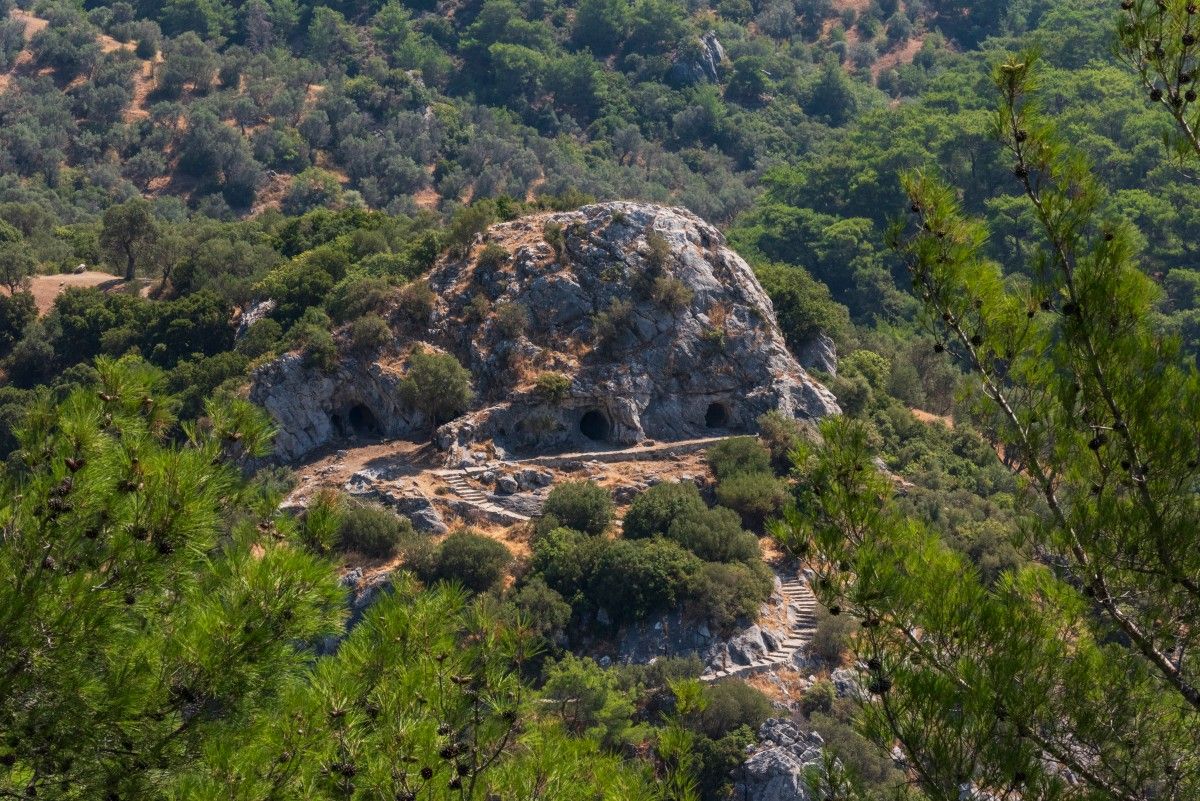
This claim adds to a debate lasting centuries about Homer's life, including his birthplace, believed to be near a river by a cave in the Bornova area of present-day Izmir. In antiquity, this region was broadly called Ionia by the ancient Greeks, aligning with historical records that attribute Homer’s origins to Ionia, according to contemporary historians.
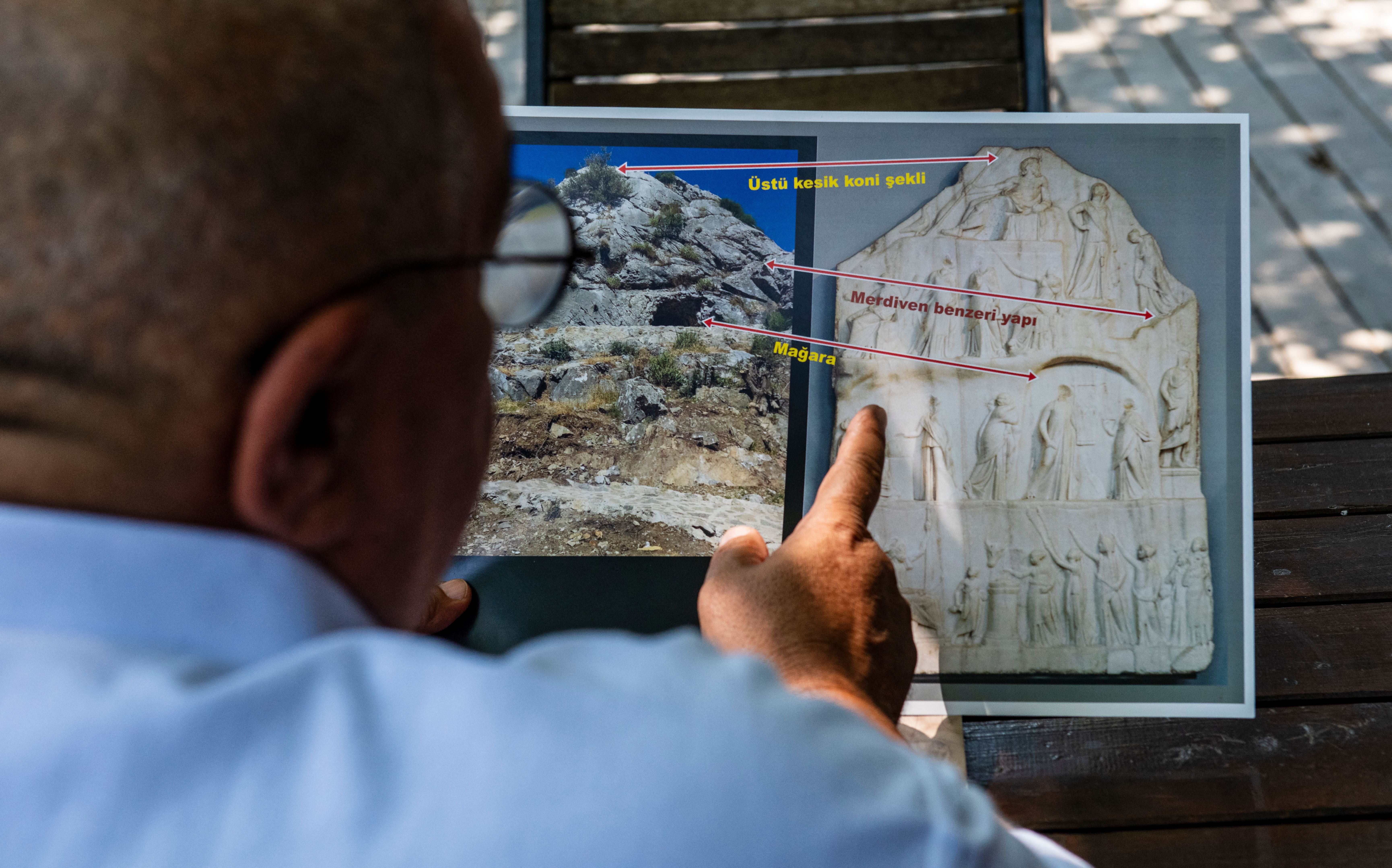
Inside the cave, the walls are not bare but bear paintings whose age has yet to be precisely determined. Altin supports this claim by comparing the cave’s features with a 300 BCE frieze sculpture honoring Homer. The sculpture’s depiction of a cave entrance closely resembles the Bornova cave. “This bas-relief has been known for a long time, but no one noticed that its details resemble the cave we’re discussing,” Altin said.
Additionally, archaeological evidence linked to Homer includes coins engraved with his face, indicating that Smyrna’s inhabitants (modern-day Izmir) regarded Homer as a local figure. Altin added that even the language used in the Iliad and Odyssey is Ionic and Aeolic Greek, suggesting Smyrna and Bornova as Homer’s true homeland.
Interestingly, Homer might have been Anatolian or closely associated with Anatolia (the western coastal region of modern Turkey), since his epics contain more geographic details about Anatolia than ancient Greece. If authors write about what they know best, as seen in the Iliad’s focus on Anatolian rather than strictly Greek narratives, it suggests this connection. However, no conclusive evidence confirms whether Homer was an Ionian Greek who recently settled in Anatolia.
There might have been more than one Homer.
Although the idea of Homer’s cave is intriguing, academic circles analyzing beyond historical evidence suggest Homer was not a single individual but rather multiple poets collaborating, as linguistic inconsistencies and conflicting details in the epics indicate.
Bernard Knox, an American scholar of ancient Greek and Roman culture, explained in the introduction to Robert Fagles' translation of the epics that the works include multiple dialects. Notably, descriptions of armor alternate between bronze and iron materials, and switch between Classical Greek and Mycenaean styles. These details imply the epics were continuously revised, with additions ceasing around 300–400 BCE in the Classical Greek period.
Some researchers argue Homer may have composed an original, much shorter work, with later expansions by subsequent poets. Yet this theory conflicts with the fact that before the Classical Greek era, writing was not widely used; transmission was oral, passed down through storytelling rather than written records.
It is somewhat ironic to consider that the inspiration for Homer’s tale of the cyclops in a cave may not have come from inherited legend alone, but from the very cave in Bornova on Turkey’s coast where he composed the epic.
References: