

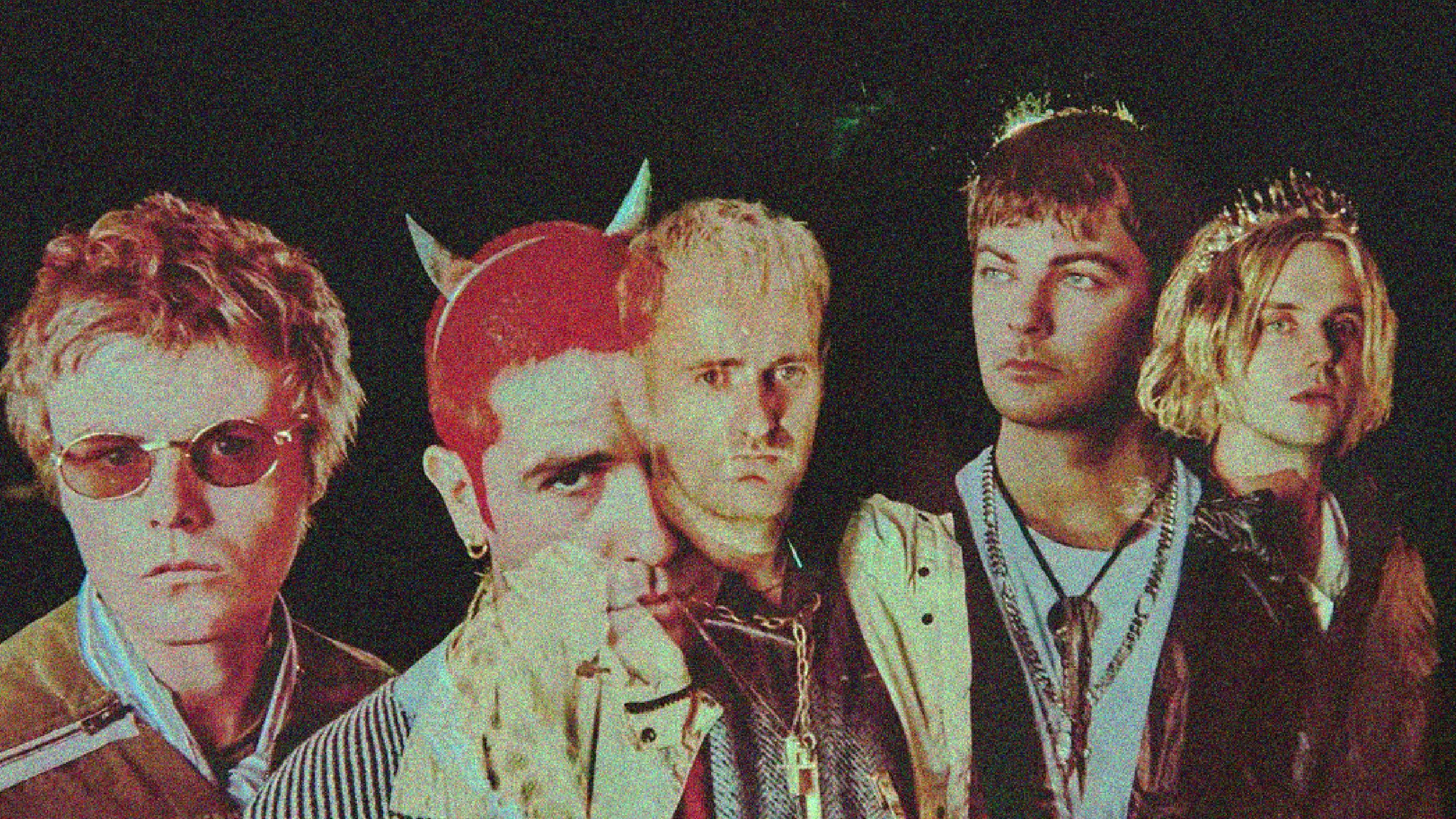
Amid the 11 tracks from Dopamine Chamber, Fontaines D.C.'s fifth studio album, I distinctly remember attending a Listening Party hosted by Beggars Asia – Thailand, managing PR for XL Recording, the band's label, which allowed a small group of media and fans to hear the album before anyone else. From the first listen, my personal favorite song was "Demolition," the fifth track on this album.
If asked what makes this song stand out, I have my own perspective without needing to research further.
Firstly, it is one of the most melodically beautiful songs compared to the band's usual indie rock and post-punk standards. The distorted guitar sound does not evoke raw punk energy; instead, the dynamic melody, paired with keyboard chords as background, unmistakably recalls top art rock bands like The Velvet Underground and Arcade Fire, and art punk and new wave bands like Television. The somewhat spoken vocal style also brings to mind early Kasabian works.
Fans who have followed Fontaines D.C. since the beginning will see clearly that "Demolition" transforms the Irish alternative rock band's sonic landscape so drastically they almost sound like a different band. Equally intriguing as the musical structure is the lyrics, which blend clear storytelling with subjective questions about spiritual safety: in this modern world, "Can love alone sustain relationships amid so many changes?" These changes range from uncertain inner feelings, hopes, morals, anxieties, politics, to economics.
With such overwhelming changes in life, can love alone transform a home into a refuge that shields a couple from life’s hardships? Forget about furniture or household conveniences.
Though straightforward, the lyrics carry a biting irony that painfully reflects today's happy-go-lucky society, especially in the lines: "Thanks for being a home, thanks for being alone. Thanks for stalking my zone, thanks for leaving me prone. Had the prettiest day, if you want me, I'll stay. We can make it okay, live forever this way."
Simply translated, this verse says: "Thank you for being a home to me, thank you for leaving me alone, thank you for intruding into my space, thank you for leaving me vulnerable here." The lyrics mention "space," but more deeply refer to our "position" in society. Here, home is not just a dwelling but a space of happiness, and this happiness is even more nuanced.
In the modern world, private spaces have implicitly become public (social media, numerous CCTV cameras, state surveillance). Your home is no longer truly yours, as nearly all your actions are tracked by others and technology, leaving behind digital footprints. The 'collapse' experienced by today's youth is not physical but the theft of their identity.
Similarly, love and relationships suffer this way. The song questions: "When humans can no longer distinguish what truly brings happiness from what is self-destructive, can we still call what we chase 'happiness'?"
All these align with the album’s core idea explained by frontman Grian Chatten: as privacy diminishes to nearly nothing, temporary relief comes from seeking love from others who may have mixed intentions in a threatening world. Escaping harsh reality by abandoning one's identity to please others is one form of seeking happiness, but it’s tragic that we must sacrifice ourselves for acceptance.
James Ford, producer who has worked with Pulp, Arctic Monkeys, Blur, Geese, Gorillaz, and produced Klaxons' Mercury Prize-winning album Myths of the Near Future (2007), as well as Fontaines D.C.'s previous album Romance (2024), told Musicradar:
"During the album's creation, each member wanted to craft something unpredictable. You know their new songs surpass expectations. It wasn’t easy, as members pulled the music in different directions. Differing opinions made the process tense, but ultimately, the work will prove itself."
Fontaines D.C. have truly matured, both conceptually—no longer focusing on typical youth themes—and musically, with a deeper, more contemplative sound on the new album. Dopamine Chamber’s sound often expresses people whose humanity has been diminished by various factors in today's tech-driven world. The first song I want to highlight is "Six Shot Morning."
The synthesizer sound in this track feels futuristic, suitable as a soundtrack for cyberpunk sci-fi films like Ridley Scott’s Blade Runner or Mamoru Oshii’s Ghost in the Shell. The atmosphere is rich with gothic, darkwave from 90s European new wave, and industrial sounds reminiscent of bands like Girls Under Glass, Love Like Blood, and Bauhaus.
Personally, I never imagined a post-punk revival band starting with Dogrel (2019) could evolve so far musically in just seven years. Remarkably, Fontaines D.C. have not abandoned the post-punk spirit, which still resides in Grian Chatten’s voice. Although guitars are less prominent than before, the synthesizer-driven music retains its post-punk essence.
The core of this genre lies in "If we choose not to follow traditional rules, how can we create a new musical language?" Post-punk rejects rock formulas: bass and rhythm replace guitar as the main structure; every instrument can shift roles. This has always been Fontaines D.C.’s approach, inspired by bands like Gang of Four, Talking Heads, Wire, and of course, the iconic Siouxsie and the Banshees.
Fontaines D.C. reinterpret post-punk by substituting punk guitars with synth sounds. The song "Six Shot Morning" references Silicon Valley (the global tech and innovation hub in California) and a decaying world. Here, Silicon Valley symbolizes not just tech companies but a system that turns humans into profit resources. When technology is optimized, humans may be reduced to mere data, representing a structural loss of humanity.
"Mimesis" carries strong 80s synth-pop and late 70s new wave vibes, reminiscent of the ambiguous brightness in Joy Division's Unknown Pleasures (1979), electronic rock like The Cars, and synth-pop acts like Soft Cell, OMD, and Gary Numan.
Delving deeper, this song addresses existentialism—the philosophy that humans exist first and then create their own meaning. "Mimesis," meaning imitation, invites interpretation that humans follow societal patterns so rigidly they unknowingly lose control over their own lives. This inverts existentialist philosophy.
This challenge to human freedom philosophy aligns closely with Albert Camus, the French Nobel laureate author, who believed life is inherently meaningless, but the struggle to overcome that meaninglessness is true value.
Grian Chatten told the LA Times that using synthesizers as the main instrument fits the album's theme of modern world decline caused by humans being swallowed by "binary technology systems."
"I dislike the term dystopia because it feels too hopeless, but our world now is a sketch of a dystopian future. I want this album to be like a more advanced version of Romance. To me, its essence is Bionic—biological systems integrated with machinery."
The integration of string instruments with synthetic elements reflects this Bionic concept significantly. The overall sound resembles a film score, as Chatten sees these elements as representing the world and nature—the main inspirations for the album. A major influence on Dopamine Chamber is Italian jazz legend Mina, praised by Louis Armstrong as the greatest white female singer ever. Her three-octave soprano represents humans overcoming natural limits—if not trapped by fake happiness first.
In my opinion, the song closest to psychological loss on this album is "Marianne." It depicts escaping reality to seek pleasure and shows how happiness can become a tool for detaching oneself from the world.
Chatten explains the album and this song’s idea: "Humans must force themselves to feel occasional happiness, hiding the world’s evils privately to carry on living." He sees this as self-deception and a survival mechanism in modern times, when happiness and suffering often overlap more than ever in human history.
Listening repeatedly, I noticed not only the album's concept reflecting technological progress eroding humanity and trapping people in limited spaces of happiness, but also this idea permeates the creation of complex, dark, and beautiful melodies.
"One Man" features vocals recorded inside Chatten’s specially arranged soundproofed Airbnb in Palermo, designed to capture resonant, dimensional singing. To achieve a distinct sound, producer James Ford used multiple mattresses and cushions for soundproofing. The bedroom symbolizes modern people’s sleepwalking into dreams, unaware that outside is a nightmare turning into a new hell for youth. The song includes children playing near a nearby cathedral to represent innocence being destroyed.
Chatten added, "While writing this album, terrible news emerged worldwide—from Epstein documentaries, environmental crises, wars, to stories that made us lose faith in democracy. I felt life was meaningless and powerless to improve. I wanted the album to feel like an apocalypse—not a single person’s end, but humanity’s life replayed as a last vision."
Another major inspiration was the book Land Sickness by his friend Nikolai Schultz, a semi-fictional exploration of global environmental anxiety affecting all humanity.
Chatten’s baritone vocals on "Where Is Gone" recall Richard Hawley (former Britpop alternative rocker from Longpigs) and Paul Banks of Interpol. The chamber pop and baroque pop arrangement, along with the enchanting female vocals of Rosalía, create a hypnotic atmosphere.
This is a melancholic orchestral ballad that cannot fully overshadow hope and happiness. Another special mention is the song "Japan."
Japan captivates all visitors with unforgettable charm across many dimensions. Unlike other songs discussing people's positions injected with fake happiness from innovation, "Japan" centers not on place but on the distance between humans.
Sophia Coppola's film Lost in Translation portrays failed communication and loneliness between a middle-aged man and a young woman unable to connect. Foreigners isolated on an island surrounded by ocean live close but fail to understand each other. This paradox gives the song "Japan" a meaning beyond the country name: an illusion we create to block reality and indulge in fantasy. Its dream pop sound underlines this essence clearly.
From this perspective, an ideal world may not always be visibly collapsing. What’s crumbling is our capacity and immunity to love, empathy, and accepting another’s pain without turning it solely into our own happiness story. Sadly, our world is heading toward a path where we care only for happiness from science, innovation, and selfishness, ignoring how those whose happiness we seize suffer.
Dopamine Chamber is a rather pessimistic album, but if we accept the truth, it views the modern world as humans being undermined by technology eroding morals and ethics more than ever since civilization began 6-7 thousand years ago.
Isn’t it sad that our happiness spaces are so small we must keep moving to find what truly gives us human worth? Does such a place truly exist, or must we search for it our entire lives? This philosophical question is left by Dopamine Chamber, from a band that has matured both as humans and artists creating music that thoughtfully reflects modern social issues.
References