

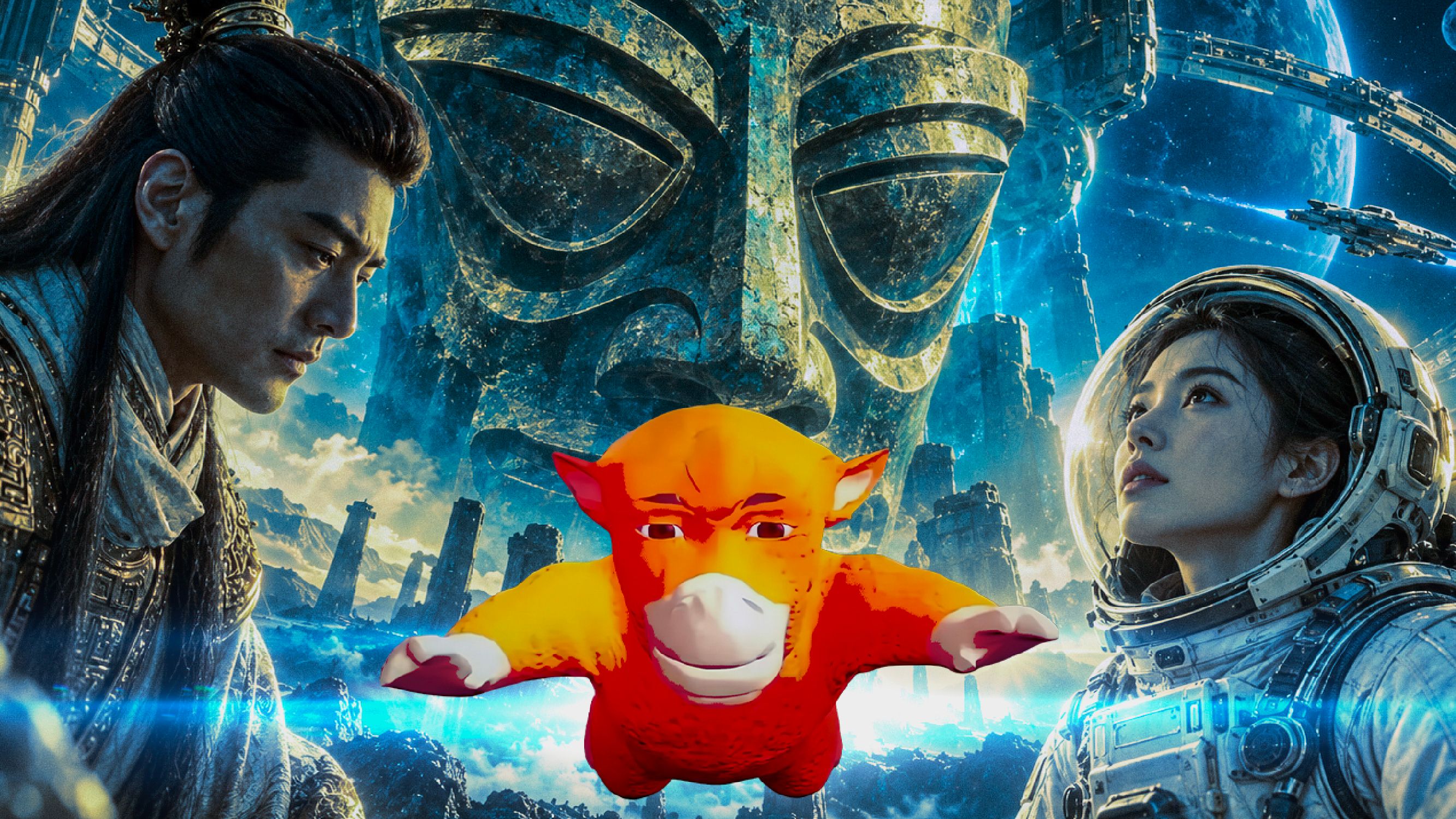
Nowadays, AI-generated short videos and series are increasingly prominent as a new form of entertainment, receiving positive public response. A Chinese film crew then boldly invested in a feature-length film using this new technology, aiming for a serious theatrical release. Hearing this news might not surprise us much, since China seems outwardly indifferent about AI usage. However, the AI film suffered a heavy loss, reminding people that human-crafted creative work remains highly valued.
The film, titled Sanxingdui: Future Past, is a sci-fi thriller blending ancient Chinese elements with a futuristic world. It draws inspiration from the Sanxingdui archaeological site in Sichuan Province, China, dating back roughly 1200 to 1000 BCE, famous for its bronze mask-like statues. The story explores questions like who created this civilization, why it vanished quickly, and whether they had contact with extraterrestrial beings.
Sanxingdui: Future Past was produced by Bona Film Group in collaboration with an AI development team, reportedly one of the first officially registered AI film companies. The production involved nearly 100 staff over two years, with a 10 million yuan budget (around 50 million baht). Yet, after advance ticket sales opened, the film earned only 1.21 million yuan—a very low figure considering China's population—alongside widespread criticism of its visual quality and character portrayal.
Jiang Taofu, chairman of Bona Film Group, candidly remarked that although the company was among the first authorized to bring AI films to theaters and test audiences, one undeniable fact is, “It was not easy at all.”
It would be inaccurate to say AI markets are unpopular in China, since AI video creation ranks as the world’s second-largest AI economy. On Douyin, short AI drama series amassed 2 billion views in just September alone. Surprisingly, Sanxingdui: Future Past’s reception was underwhelming. Independent director Zhang Jun, who uses AI tools, told AFP that the large AI video viewership is due to these platforms being free. However, if viewers must pay to watch AI content, they likely won’t.
Globally, AI is being integrated into various industries, especially entertainment—actors, singers, and to streamline tedious production tasks—offering time savings but potentially harming certain jobs.
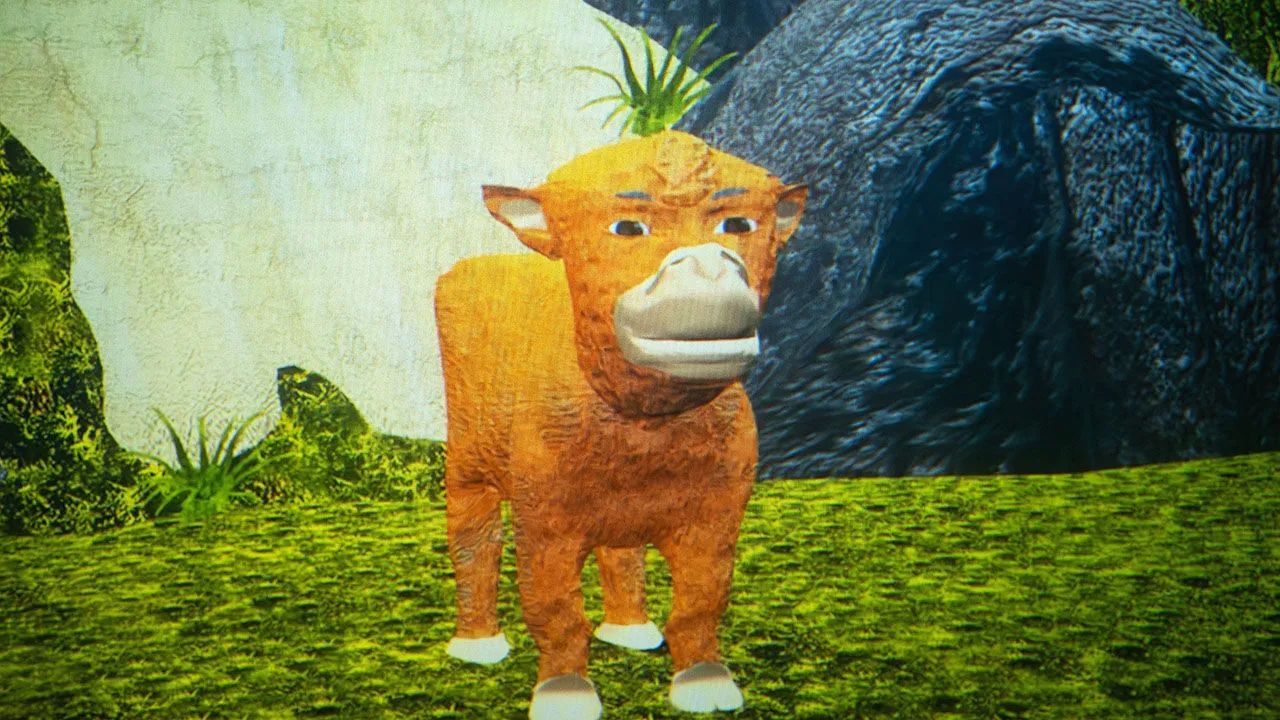
In Sanxingdui: Future Past’s case, many recalled the recent viral low-budget film Niu Lai, featuring a rough-looking animated cow that earned many times its production costs. It received praise for portraying more humanity than the flood of AI videos, despite being made by just two people—a mother and her child—without a large team.
People question whether AI films will ever truly win audiences’ hearts. While AI has proven capable of amusing feats—like making Will Smith eat spaghetti (a meme from older AI models that failed at such tasks)—some actors and film experts argue that AI cannot replace human actors. Ultimately, the best conveyance of human emotions comes from humans themselves, with a rich range of subtle expressions and gestures.
It is possible that AI media may serve as an alternative viewing option, forming a distinct category that cannot be directly compared to traditional films due to differing audiences, messages, and production approaches. The industry might not drastically change or disappear due to AI, but human-driven cinema could lose prominence and be overlooked since it is no longer the sole source of moving-image entertainment.
Meanwhile, we may have to heed the audience’s response to Niu Lai: despite AI’s widespread presence, Chinese viewers have not fully embraced AI films. The failure of Sanxingdui: Future Past thus briefly reignites the notion that human-made creative works still hold meaningful value.
References: