

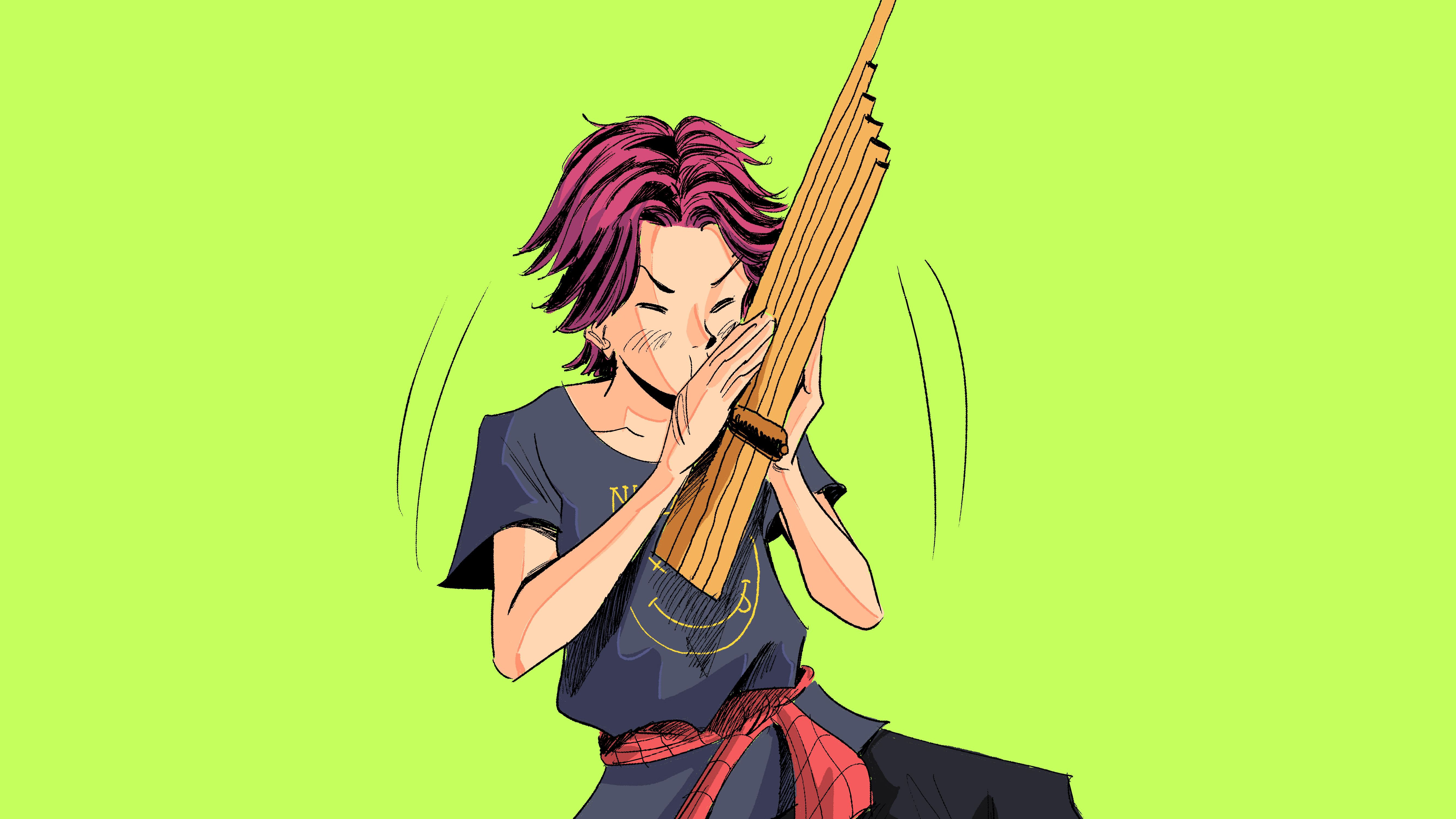
Nowadays, wherever we go, we hear Isan music everywhere—specifically Mor Lam, especially the Mor Lam Sing style. Even on social media feeds, Mor Lam songs are abundant. It seems Mor Lam music has permeated everywhere, raising the question of why Isan music is so widespread, even in the capital city Bangkok. The enjoyment of Mor Lam isn't limited to one age group; young people also join in the fun. At various events, Mor Lam music adds color, and young people enjoy it even if they aren't from Isan or don't originally listen to Isan music.
There are many theories explaining why Isan music is so popular among young people, many of which are easy to understand. Many say, “Because Isan people are everywhere,” which explains the music's widespread popularity across regions. With over 20 million people, about 33% of the country's population, although not a majority, due to geography, limited job diversity, and economic hardship, Isan people migrate for work—from laborers and farmers to taxi drivers and restaurant staff. What they never forget is the music, which serves as a portable representation of home. Some places provide space for community music performances, making such events centers of unity for displaced people.
“Isan people are everywhere—in cities and abroad. They bring their identity and weave it into what they do,” said Ton Tontrakul Kaoyong, a lecturer in Popular Music at the College of Music, Mahidol University, and member of the band ASIA7, on the program Songtopia. “I think the Isan sound reflects identity and the Thai-Lao culture with its distinctive character.”
Talking about music theory, Mor Lam or Isan music features distinctive rhythms that are easy to imitate, especially the pentatonic scale, which is a five-note scale easy to understand. Once grasped, it can be adapted or played immediately.
Main instruments can be identified as the phin and khaen, with some areas using the pong lang as a primary instrument. Next come the melodies and rhythms, which express local identity. Generally, the phin and khaen are two main instruments that can blend smoothly with other music styles. Thus, modern songs incorporating electronic instruments can also include Isan instruments easily. But none of this would be possible if Isan music had a "musical barrier." This is a key reason why Isan music has spread across all regions.
“Because Isan constantly adapts—music, culture, everything—Isan is flexible and free to evolve. There isn’t a barrier that kills the art or music, so Isan survives.”
Compared to other traditional Thai instruments that are more ceremonial with strict playing styles, Isan music instruments and melodies can be played informally for entertainment and enjoyment without strict rules. Isan music seems designed to uplift spirits, temporarily easing fatigue and pain to immerse in the moment. People often compare Isan music to African American blues—not because of severe oppression but as a reflection of the hardships of displaced workers in cities who feel alienated from society and their hometowns. Over time, this spiritually connected music has evolved into more universal songs.
“Because emotional boundaries don’t separate what is Isan or Thai; it’s universal. You don’t have to be from that culture. Outsiders who aren’t Isan can incorporate Isan elements into their music naturally. That’s why it’s popular,” Ton explained.
Isan instruments have even reached abroad, especially the khaen, which gained attention after Chris Martin, lead singer of Coldplay, learned to play khaen with Hal Walker, an American artist who plays khaen with a new style. Subsequently, many independent musicians have brought the khaen into contemporary music, showing that Isan culture has no borders and can be developed not only by people from different regions but also by foreigners experimenting with it. Within Thailand, Mor Lam has become music of fun and entertainment, playable anywhere anytime for vitality and fostering harmony through rhythms at various events and occasions.
For those wondering where to join the fun, on 14 November 2026, Thairath will host "Thairath Na Harn" at the plaza beside Future Park Rangsit. Get ready for a blast at the Mor Lam-Luk Thung festival with art, delicious food, and fast dancing at Na Harn, with tickets priced at 199 baht for single entry (down from 300 baht) and 699 baht for a group of four (down from 999 baht).
Tickets can be easily purchased through two channels:
Buy via Zipevent
Or purchase directly through Facebook Inbox: Thairath Na Harn