

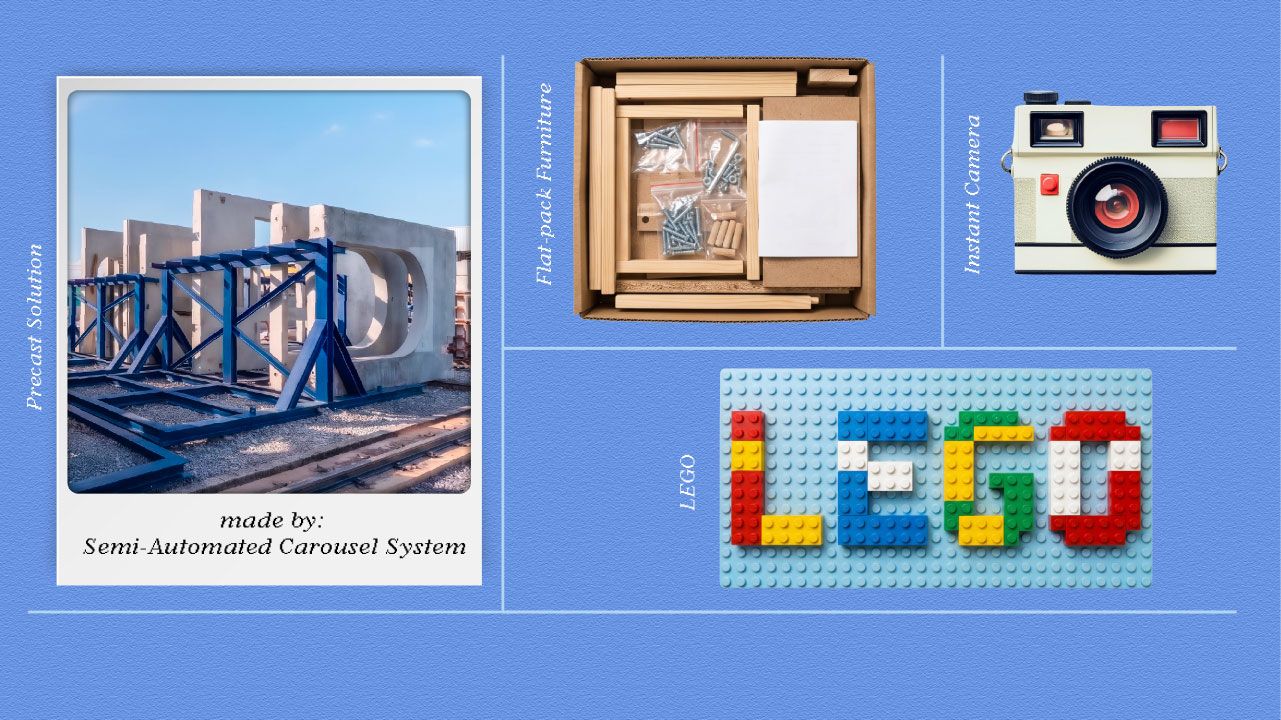
Many everyday objects are carefully crafted to look simple and straightforward, as if without complexity. In reality, achieving the right proportions and desired usability often requires multiple rounds of calculation, experimentation, and refinement.
Design involves factors as important as appearance. It requires consideration from material selection, sizing, component placement, to assembly and practical use. Everything must fit together precisely; any misalignment can reduce the item's effectiveness.
The more components an item has, the more meticulous coordination is required. Designers test various configurations before finding the ideal solution. Sometimes, shifting by just a few millimeters can change the outcome.
This time, we explore familiar pop culture items that, beyond their iconic looks, have fascinating design and engineering behind them—from internal mechanisms to precisely coordinated component systems.
One charm of the instant camera is watching a photo gradually appear right before your eyes after pressing the shutter and pulling out the film. In no time, the captured moment becomes a tangible photo instantly.
However, to produce one image, instant film undergoes multiple chemical processes contained within the film itself.
When a photo is taken, the camera exposes the film’s imaging layer to light. Then, rollers squeeze the film pack, breaking the reagent pouch and spreading chemicals across the film’s surface. The resulting reaction gradually forms the complete photo. Details like roller pressure, reagent volume, and chemical spread affect image quality; uneven distribution or mistimed mechanisms can cause defects or color distortions.
Users don’t need to understand the entire process; pressing the shutter initiates all steps automatically. Designers must meticulously plan these details before the camera reaches users.
The image of flat furniture boxes containing wooden panels, nuts, screws, and assembly guides is familiar to many from IKEA, a brand that popularized flat-pack furniture as a modern home decor staple.
This furniture concept solves a seemingly simple but multifaceted challenge: how to make large furniture disassemblable for easy transport and storage, while allowing sturdy reassembly. Beyond appealing shapes, every component must be thoughtfully designed.
Details like ensuring panel sizes correspond, hole placements align with fasteners, screws and connectors suit the materials, and that all parts fit within packaging boxes must be considered.
When customers assemble furniture at home, all parts must fit as per instructions without cutting, drilling, or altering pieces.
Anyone who has played with LEGO knows its charm lies in combining pieces from various sets to create new designs. Blocks bought years ago still connect perfectly with the latest pieces—a result of LEGO’s uniquely engineered connection system.
In 1958, LEGO patented the Stud and Tube Principle, designing studs on top of blocks to interlock securely with hollow tubes underneath. Pressing pieces together creates firm connections for building structures, yet allows easy separation for reconfiguration.
Size precision is critical. Blocks must maintain standard proportions and connection spacing. Studs that are too big or small, or tube dimensions that deviate, would prevent proper fitting.
LEGO’s manufacturing rigorously controls these details to ensure compatibility across production batches and years—creating a consistent, standardized system.
Instant cameras, flat-pack furniture, and LEGO handle details differently but share a common challenge: designing every part to coordinate perfectly and anticipating real-world use before reaching consumers.
Building a house involves far more complexities than typical objects, as many components—walls, beams, floors, stairs, openings, fences, and decorative elements—must work together seamlessly.
In related contexts, homes utilize 'precast' construction: concrete components reinforced with steel are molded in factory molds, quality-checked, then installed onsite. This allows production and site preparation to proceed simultaneously, reduces repetitive work onsite, and enables systematic construction planning. Sansiri’s housing projects exemplify prioritizing design as a core element.
Precast involves more than producing prefabricated parts for later installation; it requires planning each piece’s size, shape, function, and connection points with other building parts. Engineering knowledge integrates into overall design, detailing components, and calculating feasibility for production and installation.
For example, each precast wall not only divides interior space but aligns with door and window placements, beams, and floors. Size and connection points must be coordinated with other elements from the design stage.
After engineering designs and details are finalized, components enter factory production—an essential step in precast systems, allowing controlled environments and systematic workflows unlike outdoor onsite fabrication.
Sansiri employs a Semi-Automated Carousel System in production, managing workflow sequences and moving components through stations. Engineers and quality teams inspect parts at each phase—from mold preparation, material placement, to manufacturing and final checks. Every step must align with design specs because produced parts are not interchangeable; each has specific size and installation positions.
After inspection, parts are delivered onsite following installation order. Transport planning coordinates with construction sequencing to prevent workflow disruptions if parts arrive out of order.
A house may seem just a living space, but it hides extensive engineering and planning details—from part sizing and connection points to production and installation sequences.
When everything is carefully designed and planned from the start, construction follows clear procedures, and each component performs its role within the complete home.
Behind The Design invites everyone to explore Sansiri Precast Solution’s approach, elevating construction with internationally standardized precast innovations. Learn more at:
For Sansiri, a home is more than shelter; it’s the starting point for a better life. They prioritize the 'quality' of every home and the 'confidence' of residents above all. Choose a home ready to begin your new chapter with assurance. Find projects and homes suited to you at:https://siri.ly/lZiYCfB
Facebook:@SansiriPLC
Instagram:@SansiriPLC
Tiktok:@SansiriPLC
Youtube:@SansiriPLC