

Less than two months have passed since the Election Commission officially certified the results of the #Election69, and Thai politics is already entering a new, vibrant phase with strategic moves by various political parties, especially the phenomenon of shifting roles from the "legislative branch" to the "executive branch." Tags: [Thai politics, Election Commission, legislative-executive shift, political strategy]
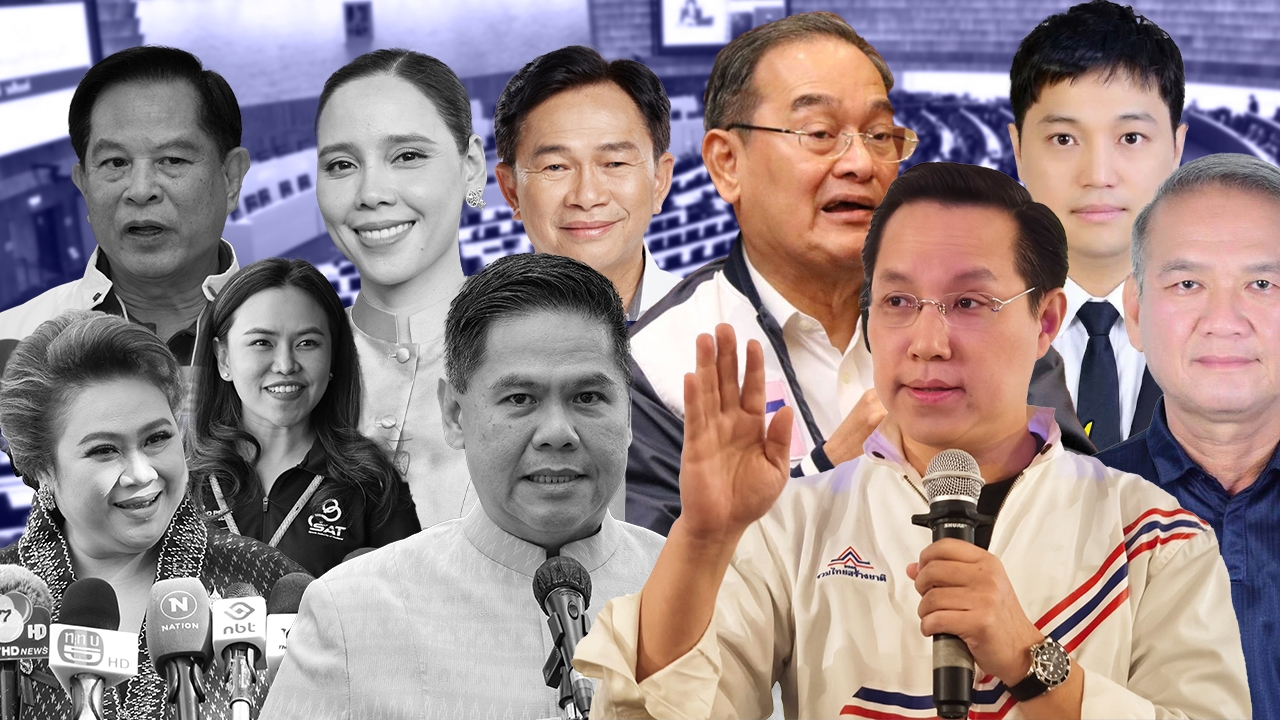
Recently, five party-list members of parliament (MPs) have submitted their resignations. Under the party-list system, such resignations immediately trigger the elevation of the next candidates on the party's list to take their seats in parliament.Tags: [party-list MPs, resignation, parliamentary succession, election system]

The main reason for relinquishing these prestigious parliamentary seats is not conflict, but that these individuals have been appointed as "ministers" in the new government, which holds a strong majority expected to endure long-term.Tags: [ministerial appointments, government formation, political strategy]
A closer look reveals that four of the five MPs who resigned are key leaders from the ruling coalition party, Bhumjaithai. This move reflects internal party management aiming to allow ministers to devote their full time and energy to managing their ministries without the distraction of parliamentary sessions, while also giving opportunities to next-in-line party candidates to fully demonstrate their legislative abilities.Tags: [Bhumjaithai Party, internal party strategy, ministerial focus, legislative opportunity]
However, among Bhumjaithai ministers, only three senior leaders currently hold dual roles as both party-list MPs and ministers, namely:Tags: [Bhumjaithai Party, ministers, dual roles]
Anutin Charnvirakul, Prime Minister and Minister of Interior.Tags: [Anutin Charnvirakul, Prime Minister, Interior Ministry]
Chaichon Chidchob, Minister of Digital Economy and Society.Tags: [Chaichon Chidchob, Digital Economy, Society Ministry]
Akanat Promphan, Minister of Energy.Tags: [Akanat Promphan, Energy Ministry]
Regarding Akanat Promphan, there are reports he might resign as well, but he has not yet confirmed this.Tags: [Akanat Promphan, potential resignation, ministerial positions]
Looking back at the timeline, the first to spark this wave of resignations was not from Bhumjaithai but Peerapun Salirathavibhaga, leader of the United Thai Nation Party, who caused a stir by submitting his resignation even before officially reporting to parliament.Tags: [Peerapun Salirathavibhaga, United Thai Nation Party, early resignation]
In this election, the United Thai Nation Party secured only two party-list seats. Peerapun's decision to resign is seen as a strategic move to allow Attawit Suwanpakdee, a young and capable politician with strong rhetoric, to rise and become the party's key voice in parliament.Tags: [United Thai Nation Party, strategic resignation, political succession, Attawit Suwanpakdee]
Some may wonder why certain ministers elected from constituencies do not resign to separate their duties as party-list MPs do.Tags: [ministerial roles, constituency MPs, resignation question]
The answer lies in constitutional rules: if a party-list MP resigns, the next candidate on the party list can immediately replace them seamlessly; but if a constituency MP resigns, a by-election must be held in that district.Tags: [constitutional rules, party-list vs constituency MPs, by-elections]
By-elections not only create financial and logistical burdens for the party but also pose a significant political risk that the party may lose the seat to a rival. Therefore, ministers who are constituency MPs must tightly hold both positions to maintain the party's parliamentary strength and stability.Tags: [by-elections, political risk, party stability, constituency MPs]