

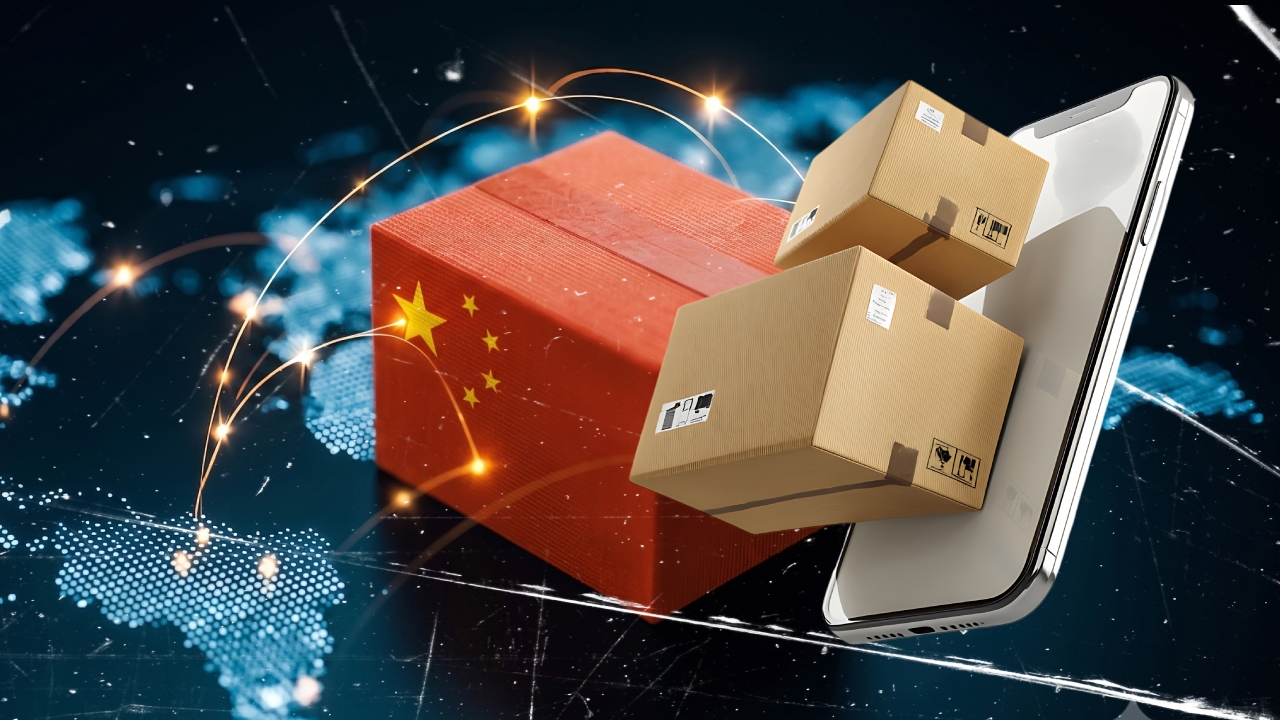
The growth of Chinese e-commerce platforms is shaking Thai entrepreneurs, severely pressuring SMEs to close down gradually, causing labor impacts, while Thai businesses remain without solutions.
Cross-border e-commerce refers to international business activities using e-commerce platforms for buying, payment, and shipping goods through cross-border logistics. China is a global leader in building comprehensive structures, regulations, and management systems for e-commerce. In recent years, China’s cross-border e-commerce has developed positively, mainly divided into three types: B2B, B2C, and C2C.

According to Chinese customs data, in 2025 China’s cross-border e-commerce import-export value reached 2.75 trillion yuan, up 46.34%. Exports were 1.3 trillion yuan, down 12.16%, while imports rose 263.26% to 1.45 trillion yuan. It is forecasted that from 2026 to 2030, China’s cross-border e-commerce market will grow rapidly, with total market value likely to exceed 15 trillion yuan.
Key export products via China’s cross-border e-commerce include clothing, bags and footwear, jewelry, mobile phones and electronics, home decor, and office supplies. Major imports include cosmetics, perfumes, skincare products, food, supplements, medical equipment, and infant formula.

Clothing and footwear products.
Electronic products.
Household appliances.
Health and beauty products.
Food and beverages.
Together, these categories account for more than 70% of the total cross-border e-commerce trade value.
Chinese e-commerce platforms are diverse, each with distinct strengths. As users become familiar with online shopping, many use more than 3-4 platforms, such as:
Tmall Global.
Main products sold include brand-name goods, popular imported products from various countries, and Tmall Direct items.
Suning International.
Main products sold include mother and baby items, apparel, and electrical appliances.
JD Worldwide.
Main products focus on high-quality goods to build customer trust.
VIPSHOP INTERNATIONAL.
Main products include cosmetics, mother and baby products, and apparel.
Jumei Global Store.
Main products include cosmetics from Korea, Europe, and America.

As China’s e-commerce market grows, it impacts Thailand. According to the Electronic Transactions Development Agency (ETDA), Thailand’s e-commerce value in 2024 reached 14.7 trillion baht, with B2C comprising the largest share at 53.87%, showing that Thailand is also growing in this market.
The most popular online sales channel in Thailand is e-marketplaces like Shopee, Lazada, and Kaidee, which account for 24.6% of the commerce value.
(1) High internet access, with 88% of the population online, ranking among the world’s highest, compared to the global average of 66%.
(2) Smartphone penetration at 77.2%, above the global average of 69%, enabling convenient mobile online shopping and increasing social commerce influenced by social networks.
(3) Diverse online payment options support convenient, low-cost online retail. Thailand has high mobile banking and mobile payment usage rates at 68% and 45% of internet users, respectively, ranking among the world’s top.
Data from KKP Research.
While e-commerce benefits consumers with lower prices, Thai producers face negative impacts from competition with Chinese goods. KKP Research assesses the effects of Chinese products on Thai industry as follows.
1. Thai business revenue and labor decrease. SMEs cannot compete on price with Chinese factory-produced goods. Thailand’s industrial GDP growth has slowed from an average of 3.5% (2015–2019) to only 1.0% currently, due to weaker competitiveness and slower adaptation compared to Chinese capital.
2. Non-performing loans in industry are rising, especially in sectors where Thailand has large trade deficits with China, such as textiles, clothing, and steel, as well as traditional retail businesses. Labor faces layoffs due to factory closures or stagnant income.
3. Trade deficit and currency depreciation. Thailand previously had trade surpluses of 5%–8% of GDP, now reduced to 1%–2%, with a risk of long-term trade deficits. Chinese cheap products replace Thai exports, even in key sectors like automobiles and electronics, potentially weakening the baht over time.
4. Low inflation. Thailand’s inflation fell fastest globally, after peaking in 2022 at 7.9% general inflation and 3.2% core inflation. By mid-2022, general inflation dropped to 0.2% and core inflation under 2%, now near zero. Cheap Chinese imports partly cause this prolonged low inflation.
5. Government tax loss. Payments for online purchases on these platforms go directly to foreign businesses, so revenue does not circulate domestically. Additionally, multinational platforms are not registered in Thailand, preventing tax collection by the government.