

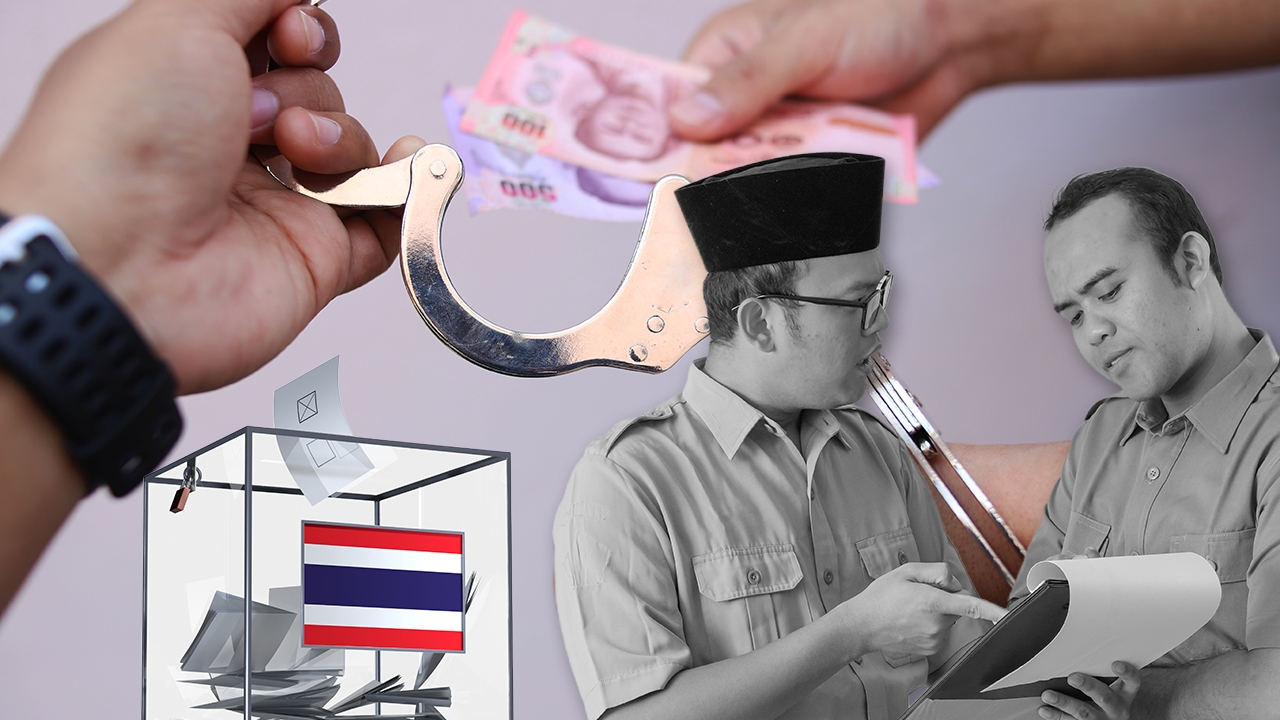
Watch 4 hot political issues in Thailand at the end of 2026 affecting stability and determining the fate of "Anutin's government." This title highlights four key political challenges threatening government stability.
By late 2026, Thai politics is heating up again with “Anutin’s government” facing four major storms. Each issue is a crucial variable that could impact the government's stability.
The first and most intense issue is the ongoing investigation into allegations of collusion in the Senate member elections. The case is in its final phase as the Election Commission (EC) decides whether to refer it to the Supreme Court for trial.
Meanwhile, civil society groups and opposition MPs are pressing hard, threatening that if the EC decides “not to prosecute,” they will disclose key information publicly, which would immediately backfire on the credibility of the independent agency.
Although this case does not directly involve Anutin’s government, it is widely known to target the “blue Senate faction,” which may be linked to ministers and MPs from the Bhumjaithai Party currently. The worst outcome could mark the end of this political regime.
The complaint regarding the barcode on ballots from the 8 February 2026 general election is under review by the Constitutional Court, which is currently “gathering evidence.” The Court is scheduled to hear and rule on this matter on 28 September.
If the ruling is the worst-case scenario—that the 2026 election is annulled— Anutin’s government will immediately lose its mandate and must start over with a nationwide election. Given the current popularity, which is not as strong as before the last election, winning again would be quite difficult.

Another case shaking the regional support base is the corruption in local civil service examinations, which the National Anti-Corruption Commission (NACC) has declared a special case.
Currently, the NACC is urgently investigating over 6,000 individual cases. So far, financial trails and evidence reach only to the level of “department heads,” and have not implicated high-level politicians yet.
This issue may not directly threaten the government’s stability but undermines public confidence. If investigations eventually involve politicians from the ruling side, expected within about six months, likely early 2027, some information might leak beforehand, as this case attracts significant public attention.
Between September and October, the opposition sees this as an opportune time to launch a no-confidence debate, deciding whether to use Article 151 (a vote of no confidence) or Article 152 (a general debate without a vote).
Reports indicate plans to bring up all questionable issues—including local corruption, TH-Ai Passport, and Senate vote-rigging—to topple Anutin’s government.
Although the government currently holds an overwhelming majority in the House of Representatives, if the evidence presented is substantial and convincing, it could lead to a government shift. A key factor will be the coalition partner, the Pheu Thai Party.
Historically, no no-confidence motion has succeeded in toppling a Thai government; only dissolutions of the House have been used as survival tactics. Given the current situation, the government is unlikely to choose that route.