

Damaged crops and lost income force work stoppages, yet debt interest continues unabated. This overlapping crisis for villagers along the Cambodian border has them hoping for a swift end to the conflict.
Following the latest outbreak of clashes along the Thai-Cambodian border, hundreds of thousands of villagers have been displaced to temporary shelters. Their crisis is not only fear for personal safety and property but also loss of income, as many must stop working and abandon their farms and gardens. Yet debt interest does not pause. Amid this situation, many villagers hope the conflict will end soon so they can return to normal life, care for their property, and resume their livelihoods.
Santivith PhrombutDeputy News Editor of the SEE TURE team at Thairath News Agency, who has been covering the situation in Surin province, reported that official data shows over 70,000 people have evacuated to various shelters near the conflict zones. The majority evacuated in greater numbers than during the previous clashes, leaving behind only those responsible for village security and those concerned for their livestock.

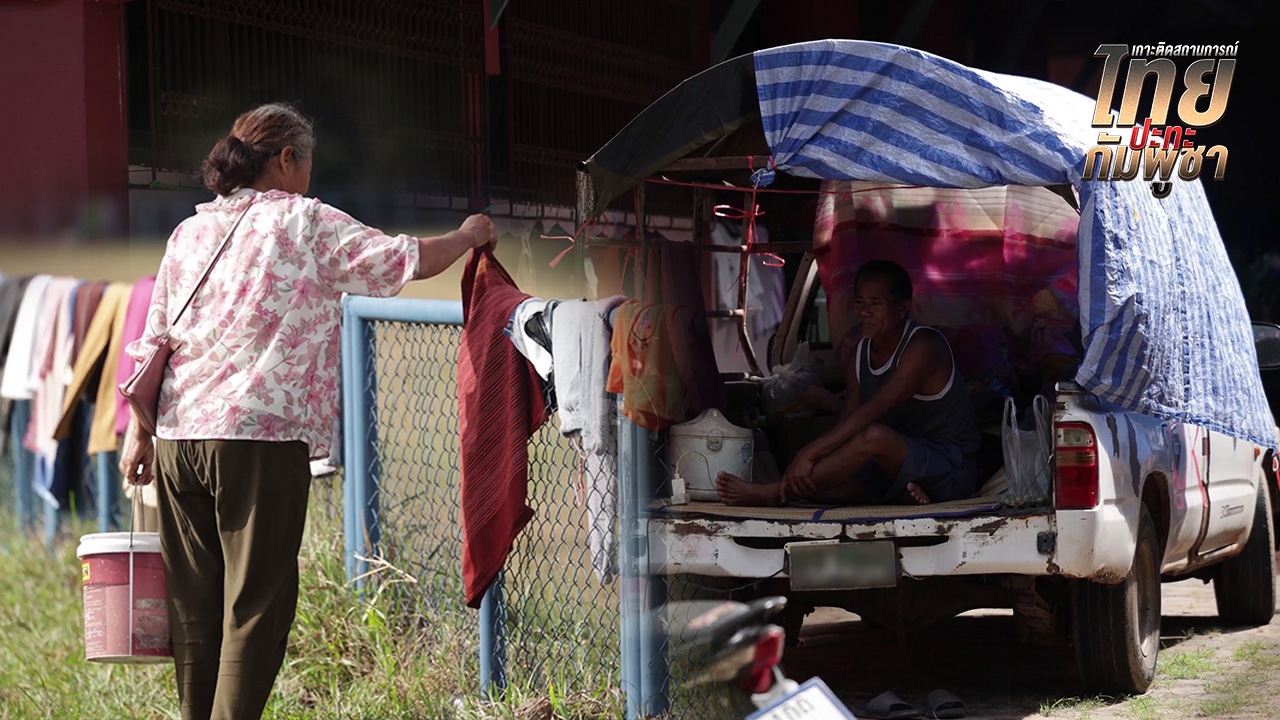
At the shelters, villagers sleep in buildings, cars, and on lawns. Some set up tents or large plastic sheets found locally to shield from sun and dew, sleeping outdoors or in vehicles because the buildings are full. Some say the buildings are too crowded, and the vehicles offer more comfort. However, many villagers told him they want to return home and live without constant fear, unlike before. Since the first ceasefire, they have been uncertain when fighting will resume. Therefore, after this conflict, if negotiations occur, they want a definitive settlement dividing the border clearly without further fighting.
Another major worry for villagers is how to resume making a living. Many families have no savings and rely on income from harvesting crops, especially now during the sugarcane harvest season. Rice harvest has just finished, but after subtracting costs like harvesting and fertilizer, little remains. Once rice harvesting ends, some villagers seek additional work tapping rubber plantations, either as owners or laborers, all of whom have had to flee to shelters due to the fighting.

Many merchants and traders who must borrow from informal lenders have had to stop trading, but interest continues to accrue and creditors keep demanding payment. Even formal debts continue to accumulate interest. Meanwhile, displaced villagers have no income. Many he spoke with said their family economies collapsed during the first fighting. They tried to recover but were forced to stop everything again and now face an uncertain future. This is a secondary worry for displaced villagers after the fear of conflict itself, raising questions about how the government plans to assist.
Additionally, villagers have highlighted smaller issues the government should address. After the previous fighting, many homes had their electricity meters removed due to unpaid bills. Villagers hope this will not happen again this time. They want, when leaving shelters to return home, their houses to remain intact and their electricity meters not removed.
Yuwadee One affected villager, Yuwadee, revealed she evacuated from Bakdai subdistrict, Phanom Rak district, Surin province, and has been staying at a shelter for six days. She noted that after following news of negotiations between President Donald Trump and Thai officials, she believes the Thai prime minister has not yet ordered a ceasefire because Thailand did not initiate the conflict; it was Cambodia that began the clashes. Thus, Thailand had to respond accordingly, as they could not allow unilateral aggression without reply.

Yuwadee shared that some villagers in her village have not evacuated due to concerns about their property and daily living. However, after hearing news of BM-21 rockets landing in nearby villages, she worries for neighbors’ safety and urges everyone to evacuate together so officials can better manage and provide assistance.
Since the previous ceasefire, she and many villagers have lived in fear and uncertainty. Traveling is difficult, and on days when fighting news arises, they constantly verify whether it is true or false. Some agricultural areas have been declared off-limits due to safety concerns.
The unrest has caused many local residents to lose income, as they cannot work normally. This period is typically sugarcane harvest season, which they cannot perform. Living in shelters halts income while expenses rise.
Yuwadee expressed that she and everyone else want to return to normal life and work, not live in constant uncertainty, running from danger and evacuating repeatedly.
“I really want to go home. I miss my home, but we have to stay here for our own safety. Life comes first. Everything else can be dealt with later. You can replace things, but you cannot replace your life.”

An elderly woman at a shelter said her son remains at home. When danger arises, he must ride his motorcycle to the village bunker for safety, while she stays in her car at the shelter. During the previous unrest, she evacuated to the village school.
This latest unrest has caused income loss and forced farmers to stop working. Crops like rice and cassava have been damaged since they had to evacuate and cannot tend or harvest them.
“I had sown rice and was about to harvest, but when they ordered evacuation, I had to leave, and now the rice has all spoiled.”
The elderly woman added she wishes the border tensions would end quickly so everything can return to normal. She hopes Thai property will be returned to Thai hands and likewise for the other side, enabling all villagers to live peacefully in their homes.
The previous ceasefire did not bring a lasting peace, leaving villagers anxious. Currently, she does not know when the situation will improve.

A 76-year-old farmer said he works cutting grass, gardening, and pig farming. Since evacuating, he follows news closely each morning to monitor where unrest occurs, as his village is only about 10 kilometers from the border and near the Ta Kwai temple area.
Regarding the previous ceasefire, he said he felt uneasy because the fighting resumed and lasted longer than before. The first episode lasted about four to five days, but this time it has extended much longer, causing anxiety and sleepless nights.
He also revealed that the pigs he raises recently gave birth to 20 piglets, which remain locked in the pen. He entrusted officials with their temporary care, and all piglets are still alive.

“It’s tough, but my pigs have given birth. I worry they might wander, fall into water, or get stuck in ponds. I try to stay strong, but I can't sleep well because I keep thinking about the piglets—they’re newborns.”
Living in the shelter is difficult but better than staying in risky areas. However, he hopes the unrest ends soon because many want a clear resolution to avoid prolonged tension. He also sends encouragement to front-line workers: “I send my support to the brothers and sisters on the border. Keep fighting.”