

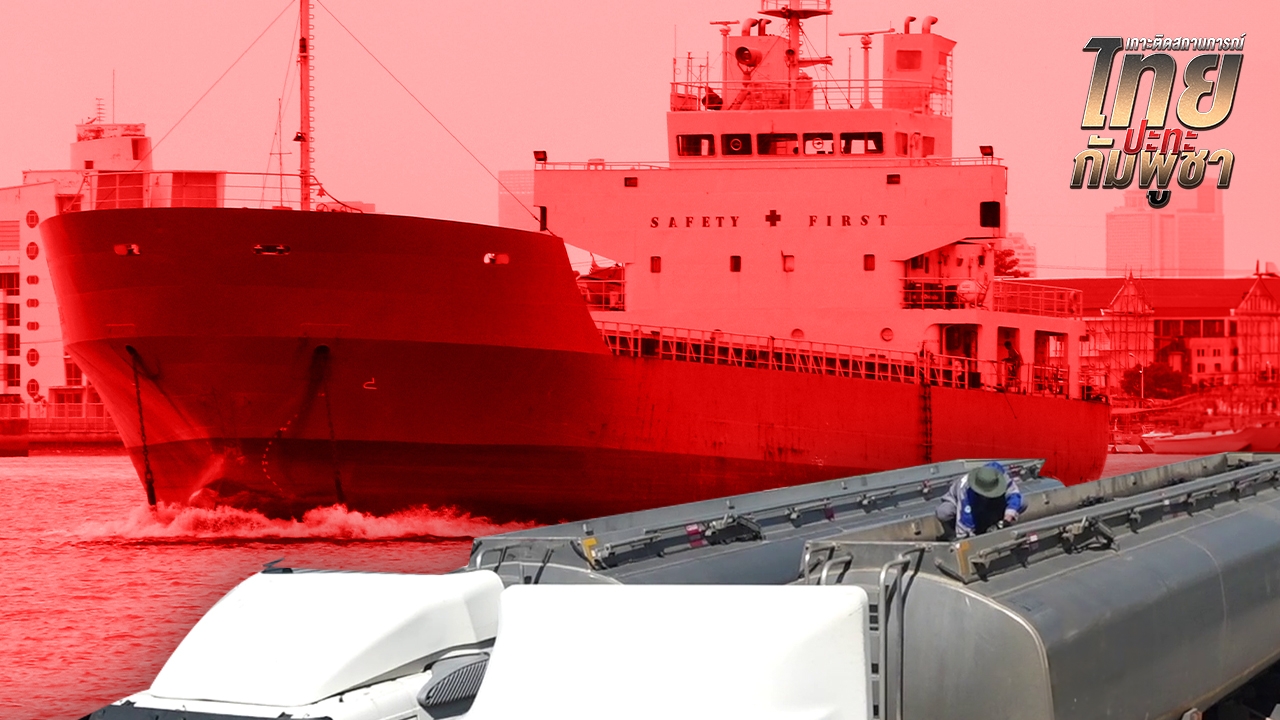
Suspicious shipments of fuel to Cambodia may be reinforcing their combat strength—could this put Thailand at a disadvantage? A military source advises close monitoring of covert oil transfers at sea, which may be more common than overland routes.
Military affairs “Oil” Oil is a key strategic resource that supports warfare. However, recent reports indicate that while Thai troops have been engaged in combat along the border, fuel shipments to Cambodia have continued unabated.
Including both transporting fuel overland through Laos. There are suspicions about an unusual increase in fuel trucks, suggesting possible onward delivery to Cambodia. On 14 Dec, the 2nd Army Operations Center issued an order suspending the export of all fuel types and military equipment at the permanent border checkpoint at Chong Mek, Chong Mek Subdistrict, Sirindhorn District, Ubon Ratchathani Province, resulting in many fuel trucks being stranded.
As well as fuel shipments by sea, on the same day, the Thai Armed Forces Headquarters and the Military Command Center issued orders suspending fuel and military supplies shipments to Cambodia.
A high-ranking military source told the Thairath Online special news team that overland fuel shipments to Laos via the Chong Mek checkpoint have been routine. This can be verified by comparing fuel import-export volumes before and after clashes to see if there are irregularities or if quantities exceed the capacity of Laos's fuel storage. The source also suspects that attention on overland fuel shipments might be a distraction from more critical maritime fuel transfers that deserve closer scrutiny.
The source revealed that maritime fuel transport is believed to involve ordering fuel from Thailand to Singapore but transferring it mid-route to smaller vessels that then proceed into Cambodia. It is unlikely that the fuel is routed around via Singapore.
“It is unclear exactly where the fuel is being transferred. Patrol vessels have seen this activity but lacked orders to intervene at the time. Now that controls are in place, we need to closely watch how this situation develops.”
Currently, most fuel used in Cambodia comes from Thailand, with some from Vietnam, which itself imports from Singapore, leading to limitations and higher prices. Thailand has oil refineries, so Cambodia has traditionally imported fuel from the Thai side.

In the latest update on 16 Dec 2025 GMT+7, Chatchai Bangchuad, Secretary-General of the National Security Council, said the NSC resolved to have the Center for the Protection of National Maritime Interests coordinate with relevant agencies. This includes notifying Thai vessels entering risky areas and working with the Marine Department to inspect Thai vessels, especially those transporting goods that could support warfare in Cambodia. Controlled cargo on Thai ships is a particular focus.
Regarding military equipment and war supplies, the Ministry of Defence has been tasked with regulating controlled items sent to Cambodia, particularly military goods, following the 1981 Border Goods Control Act as the operational framework.
Regarding the fuel trucks stranded at the permanent Chong Mek checkpoint in Sirindhorn District, Ubon Ratchathani Province, Prasert Sinsukprasert, Permanent Secretary of the Ministry of Energy, clarified that the Ministry has investigated and confirmed there are no fuel exports from Thailand to Cambodia by land or sea. This confirmation comes from fuel traders, the Customs Department, and related agencies.
Concerning the Chong Mek checkpoint shipments to Laos, overall fuel volumes have not increased and remain at about 100 million liters per month, which is normal. November to April is the dry season, when Laos consumes more fuel for mining operations that cannot be conducted during the rainy season. Traders confirm the fuel is used in Laos and not forwarded to Cambodia. Laos has already reported impacts and discussions are planned on how Thailand can ensure that fuel sent to Laos is used domestically.
Cambodia does not purchase fuel from Thailand but imports from Vietnam, China, and Singapore. Regarding rumors of major private companies exporting fuel to Cambodia, these are denied. All shipments must pass through customs, and maritime shipments must be approved by the Marine Department. Sellers must report production and destinations, and no irregularities have been found. The public is advised to beware of fake news.

Following the rumors, several energy companies have confirmed they do not export fuel to Cambodia.
On 15 Dec 2025 GMT+7, PTT Public Company Limited issued a statement saying that despite media reports and social media claims of fuel exports to Cambodia, PTT and its group companies confirm no fuel exports to Cambodia. They have maintained a policy of suspending exports since June 2025, consistent with the Ministry of Energy’s policy prioritizing national security and the welfare of Thai citizens.
On the same day, Bangchak Corporation Public Company Limited also clarified that the company has no fuel business in Cambodia and does not transport fuel by road or sea there.
Fuel shipments to neighboring countries are conducted according to official orders and proper commercial documentation, with destinations strictly as specified. This complies with government regulations requiring import-export and cross-border fuel transport to have licenses and customs procedures, prohibiting onward shipments to third countries. The company emphasizes its commitment to national security and energy stability.
Similarly, Star Petroleum Refining Public Company Limited (SPRC), the sole licensee operating under the Caltex brand in Thailand, stated it does not export fuel to Cambodia nor engage in fuel transport to that country by land or sea.
The company operates strictly in accordance with laws, regulations, and government policies, prioritizing national energy security, sovereignty, and the interests of Thailand.