

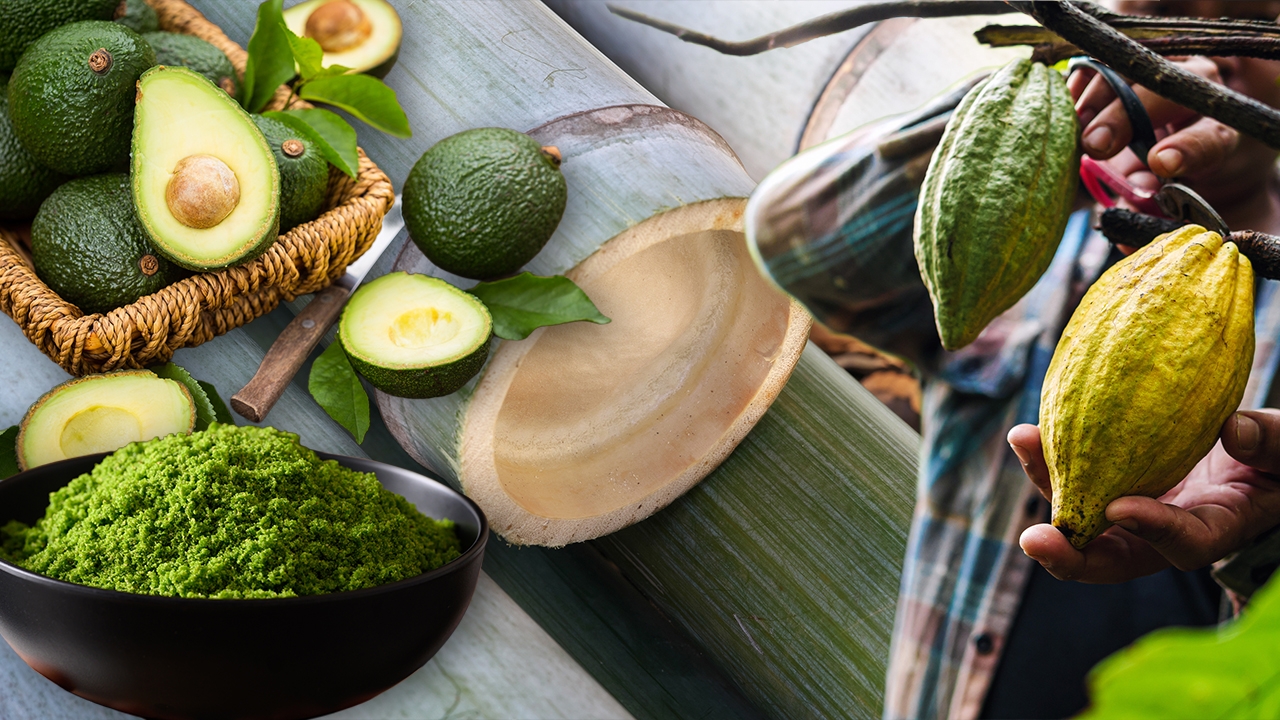
In 2026, Thailand's agricultural direction focuses on "Future Crops," addressing health (Superfood), sustainability (Green Economy), and high-value processing industries, particularly crops used as raw materials in the rapidly expanding Plant-based Meat and Plant-based Milk markets.
Here is a list of 10 high-potential economic crops for 2026.

A tiny aquatic plant very high in protein, in strong demand in alternative protein markets.
Cultivation method: Grown in plastic or cement ponds with still water, supplemented with organic fertilizer or bio-fermented water, protected from intense sunlight. Harvest every 7–10 days.
Highlights: Requires very little space and water, can be grown across all regions of Thailand.

With rising demand for craft chocolate, Thai cocoa has strong export opportunities.
Cultivation method: Prefers hot, humid climates; intercropped with shade trees initially. Proper pruning and seed fermentation are essential for premium quality.
Highlights: Year-round harvesting and longevity spanning several decades.

A crop yielding returns of tens of thousands of baht per kilogram, with new heat-tolerant varieties being developed.
Cultivation method: An orchid requiring 50-70% shade (grown in net houses), with hand pollination needed in the morning.
Highlights: Very high market demand in confectionery and fragrance industries.
A healthy fat fruit that has become a staple of modern health foods.
Cultivation method: New varieties like Buckaneer and Peterson are adapted for lowland areas; prefers well-draining soil and dislikes waterlogging.
Highlights: Prices remain stable with strong demand in premium markets.

A versatile economic plant promoted by the government for use in construction, furniture, and paper industries.
Cultivation method: Easy to grow, drought-tolerant in various soils; planted at 4x4 meter spacing; produces both shoots and timber.
Highlights: Acts as a carbon sink (Carbon Credit), aligning with green economy trends.
Focused on CBD extraction and fiber use in textile and high-grade materials industries.
Cultivation method: Requires loose soil and precise nutrient management; commercial cultivation is easier now under licensing.
Highlights: High value in pharmaceutical and cosmetic industries.
Especially soybean and mung bean to supply raw materials for plant-based protein factories.
Cultivation method: Grown after rice seasons, helps enrich soil by fixing nitrogen, uses less water than off-season rice farming.
Highlights: Key raw materials for Plant-based Food, which Thailand is promoting as a hub.
Cassava remains a staple crop, with 2026 focusing on disease-resistant, high-starch varieties.
Cultivation method: Prepare loose soil with raised beds; use certified clean cuttings from the Department of Agriculture.
Highlights: Continuous demand from clean energy (ethanol) and food processing industries.
A GI product recognized worldwide and classified as a Superfood.
Cultivation method: Grown in lowland areas with clay or sandy loam soil and abundant water sources; planted at 6x6 meter spacing.
Highlights: A rising export product with Thailand as the global market leader.
Focus on organic cultivation for export in concentrated extract form.
Cultivation method: Grown in loose, well-drained soil using organic fertilizers to maximize active compounds.
Highlights: Meets the demand for preventive healthcare trends.
Crop Group | Example Crops | Market Applications | Cultivation Difficulty |
Superfood | Wolffia, Avocado | Health markets, restaurants | Medium |
New Industry | Vanilla, Cocoa | Confectionery, beverages, cosmetics | High |
Sustainability | Bamboo, Various Beans | Construction, bioplastics, alternative protein | Low to medium |
Upgraded Staple Crops | Coconut, Cassava | Export, energy | Medium |