

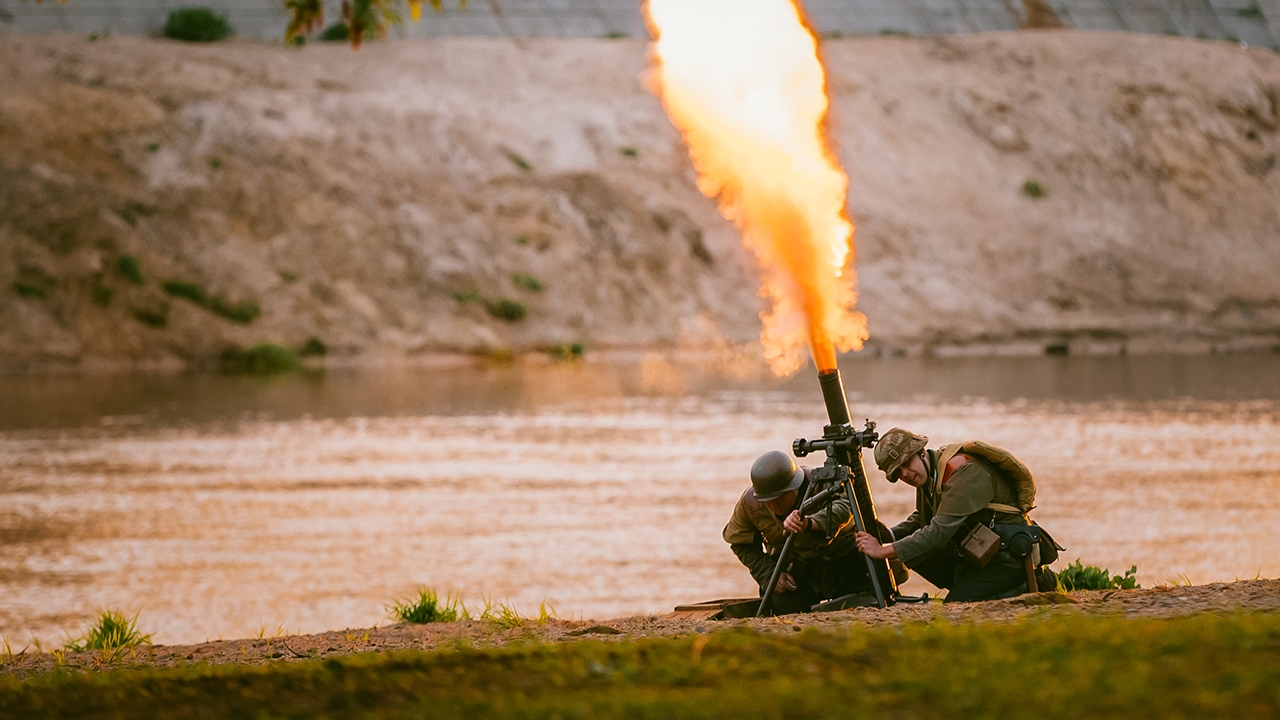
The Mortar, known in Thai as ปืน ค. (short for ปืนครก), is an old yet highly effective curved-trajectory weapon still widely used in modern battlefields, especially at battalion and company levels. Soldiers commonly refer to it as "ปืน ค." because its usage and shape resemble a "mortar" used for grinding chili paste, characterized by a short barrel angled steeply upward.
The Mortar is a smoothbore weapon that fires shells in a high, curved trajectory. It launches projectiles into the air at steep angles (usually between 45 and 80 degrees) so they descend vertically onto targets.
Operation: The shell is loaded from the muzzle. When dropped into the barrel, the base of the shell strikes a firing pin at the bottom, igniting the propellant and propelling the shell outward.
Key feature: It can fire over obstacles such as mountains, buildings, or into bunkers and trenches unreachable by direct-fire weapons.

Despite advances like drones and missiles, the Mortar remains the "heart" of combat along the Thai-Cambodian border for these reasons:
Terrain: The border areas are mostly mountainous and densely forested. The Mortar's curved trajectory is highly effective for firing over ridges or treetops.
Low cost and ease of production: Mortar shells are far cheaper than missiles, allowing sustained bombardment to pressure the enemy.
Lightweight and mobile: Small mortars (60mm or 81mm) can be broken down for soldiers to carry on foot, suitable for guerrilla tactics or fighting in remote areas.
Immediate firepower: Infantry units can carry mortars themselves without waiting for artillery support, enabling rapid response.
The Mortar is among the oldest weapons in military history:
Early era: Evidence shows use as early as the 15th century of wide-mouthed cannons firing stones or curved trajectory bombs during sieges.
Major development: The modern Mortar evolved from the British Stokes Mortar used in World War I (1915) to address challenges of trench warfare, where long-barreled guns couldn't hit enemies sheltering underground.

The Mortar's impact lies not only in explosive force but also in its shrapnel and directionality:
Area weapon: It doesn't aim for direct hits on individuals but targets the center of enemy formations. The shrapnel disperses in all directions within an effective radius (for example, an 81mm mortar has a casualty radius of about 30-40 meters).
Psychological effect: The whistling sound of incoming mortar shells creates significant fear among enemy troops.
Versatility: Various shells can be used, such as high-explosive (HE) for killing, smoke for concealment, or illumination rounds to light up the battlefield at night.