

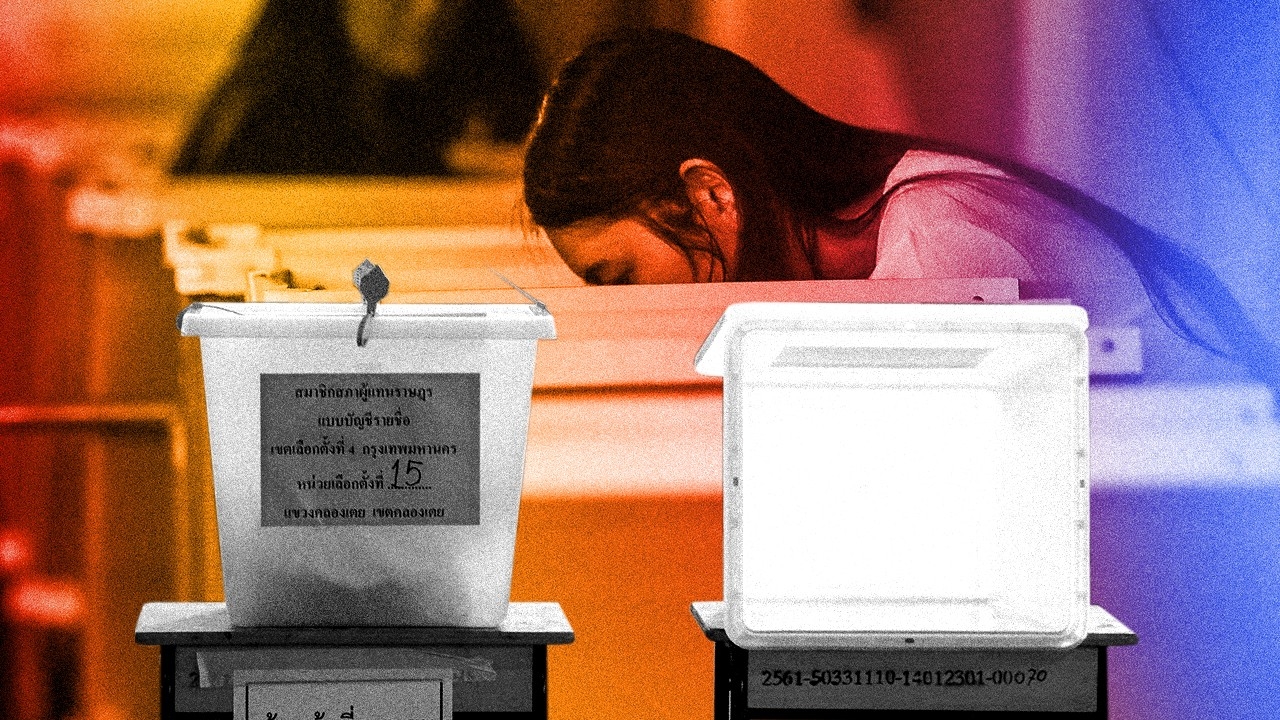
The phenomenon of political fandom changing allegiances is shaking up the final stretch of the 2026 election. "Academics" see psychological impacts that increase strategic votes, boosting the "party-list" vote count.
Regarding the case of the post “From Yellow Shirt supporter, why am I cheering for Orange today?” by Dr. Suravech Namhom of the Faculty of Medicine, Ramathibodi Hospital, whichwas postedon his personal Facebook page with over 20,000 followers on 29 Jan 2026, explaining why he now supports the People’s Party in this election. The post went viral and was shared more than 38,000 times (as of 3:00 pm, 30 Jan 2026).
This led to posts from celebrities both inside and outside politics, as well as the general public, who widely expressed opinions on the post—some supporting, others questioning whether it was a campaign strategy. Meanwhile, many shared their own experiences or stories about “changing colors” to support political sides seen as “opposing factions” or rival parties within groups viewed as “sharing the same ideology.”
Thairath Online’s special news team discussed this issue with Asst. Prof. Dr. Wanwit Boonprong of the Faculty of Political Science, Rangsit University, who said the phenomenon of "political fandom changing colors" whether from genuine support or as a political strategy, has psychological effects. The viral post about switching from yellow to orange likely reflects that the poster is now an Orange Party supporter, aiming to show that those voting for Orange are not opposed to the monarchy. It’s fair to say many ordinary citizens are fed up with old politics but still respect and revere the institution, choosing to give the People’s Party a chance to address structural problems they see as long-standing and unresolved.
“We must be fair to those supporting the People’s Party, but sometimes it’s a cautious game to prevent critics from attacking the party on these grounds. Also, it creates a shockwave forcing conservatives or critics of the People’s Party to rethink their strategies and question why such a mindset has emerged.”

Asst. Prof. Dr. Wanwit believes this phenomenon in the final week before the election could especially impact party-list votes, potentially generating organic vote gains close to or matching those of 2023, or as much as possible.
Regarding the People’s Party, Dr. Wanwit sees the core base that remains loyal as stable, but the party aims to attract voters who were previously disappointed and switched to other parties back to support them, or to win over undecided voters to cast both their constituency and party-list votes strategically, since the last election saw many split votes between constituency and party-list ballots—this is a deliberate tactic. “It’s a strategic choice,” to capture as many votes as possible from the same side, something conservatives are also doing.
Compared to the 2023 election, Dr. Wanwit notes that the social media battle has become more intense and more negative, with increased disparagement and discrediting, leading to more coordinated attacks. Meanwhile, positive trends are quickly shared and spark back-and-forth comments. When many comments align, it psychologically influences public perception.
“Having many supportive or opposing messages on a platform creates a group of people with similar tastes or opinions, psychologically signaling that the majority either likes or dislikes a party.”
For the upcoming election, he believes all Thais should use discernment, verify the digital footprints of each party—what they have done, what they can or cannot do, and what they plan to do—and use this information to guide their voting decisions.