

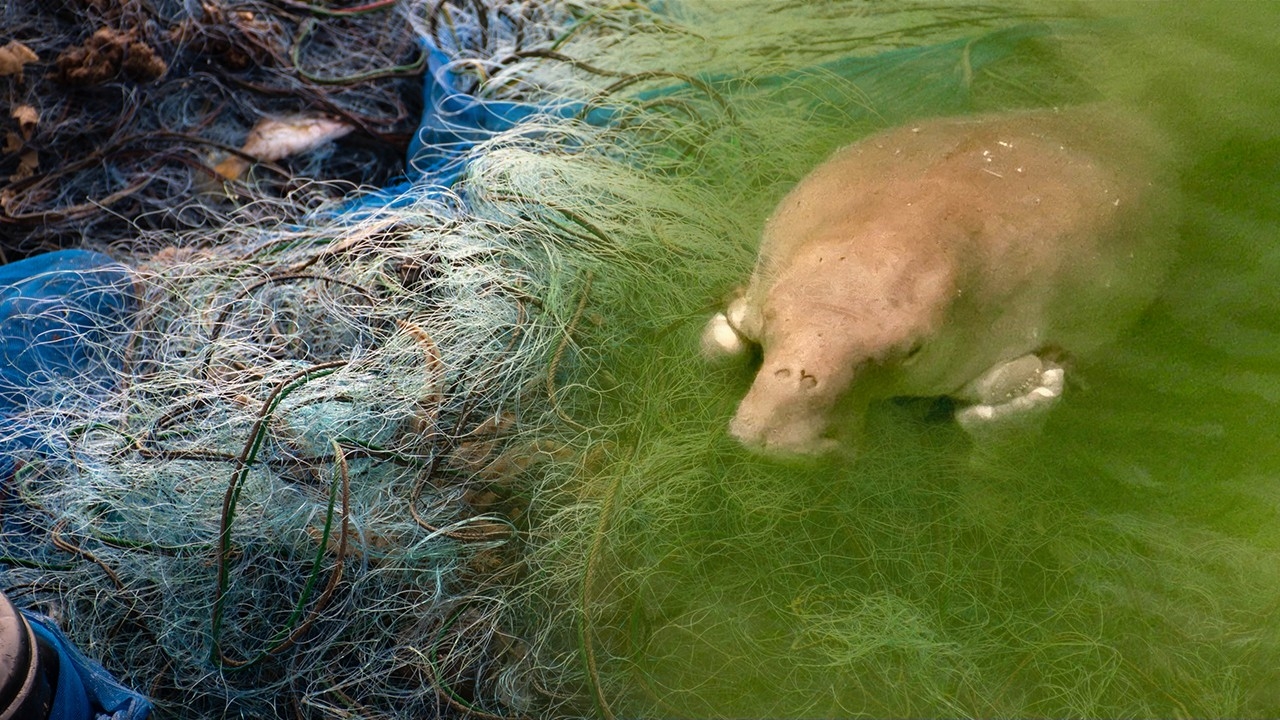
A dugong on Libong Island was found with both fins deeply entangled in fishing nets. Rescue efforts are being prepared to prevent severe infection. Experts indicate the dugong is in its adolescent stage and must be carefully captured and treated in its marine environment. Previously, most cases involved nets entangling the tail, but this case requires urgent attention before it impacts the animal's feeding.
Today (16 Sep 2025 GMT+7), Dr. Kongkiat Kittiwatanawong, a specialist in marine and coastal ecosystem research at the Department of Marine and Coastal Resources, posted on his personal Facebook, Kongkiat Kittiwatanawong, that the dugong’s arms are deeply cut by the net ropes, raising serious concerns. If the ropes are not removed, the dugong may die. Avoiding capture to remove the nets is impossible, and the next steps will include assessing and treating the severely swollen wounds. A rehabilitation plan within a nursery area may be required, which is a significant task before deciding to release it. Previously, many dugongs showed signs of rope and fishing net injuries, mostly around the base of the tail, which is less risky than this case.

Thairath Online’s special news team inquired with Dr. Kongkiat about the rescue. Initially, the dugong found in the Libong Island area has fishing nets embedded deeply in both arms with clear inflammation. Officials are currently assessing and monitoring the dugong.
Treatment will likely require a cautious capture because careless handling might cause the dugong to drown. Dugongs are quite powerful animals, so poor planning could endanger staff. The dugong’s sex is not yet known, but it is believed to be adolescent.
The treatment plan after capture involves medical staff cutting the nets from both arms, assessing medication needs, and reducing inflammation. Initially, treatment may include creating a simulated sea pen as a recovery area.

“The difficult part is tracking this dugong. The team must monitor when it surfaces near Libong Island to capture it without disrupting its natural behavior,” Dr. Kongkiat explained.
In the Andaman Sea area, dugongs are commonly found with nets entangled on various body parts, especially the tail, which is more frequent but less dangerous. Tail netting can be cut off, sometimes removing parts of the tail without severe impact. However, nets on both arms are more dangerous because these are vital for swimming and feeding. Severe injuries there could impair the dugong’s future ability to feed.
Photo credit: Andaman Coastal and Marine Resources Research Center