

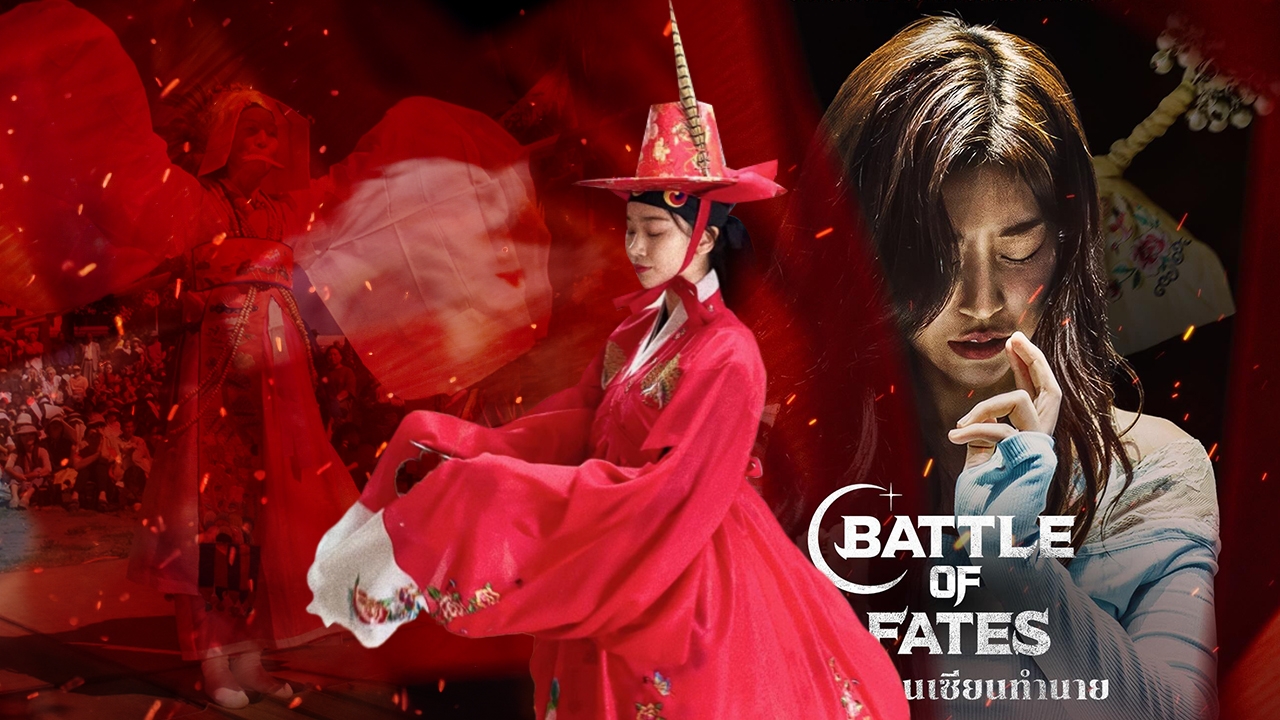
"Mudang," Korean shamans, have journeyed from a marginalized belief system to starring in a popular reality TV show, launching "Noh Seul-bi," a Gen Z shaman, into the spotlight.
Once regarded as mere superstition, the beliefs and rituals surrounding Mudang have been brought into public view through the reality show Battle of Fates, where Korean shamans are presented with a fresh image. The emergence of new-generation shamans like Noh Seul-bi not only challenges old stereotypes but also revives societal interest in the shaman’s role, previously seen as distant or irrelevant.
When many think of Korean shamans, they imagine solemn rituals, colorful costumes, and spirit possession amid dramatic music. However, on Disney+ Thailand’s reality show Battle of Fates, one young woman breaks these stereotypes completely—appearing simply in a long-sleeve shirt and jeans, delivering remarkably accurate predictions.

Among over 49 fortune-tellers competing in this challenging contest, Noh Seul-bi stands out as one of the most watched. Dubbed the “Gen Z shaman” for her modern image and straightforward, precise readings, she performs without ritual props or mysterious theatrics, captivating audiences with her calm presence and accurate divinations.
Her life path has not been easy. A shaman for only two years, she once suffered a tumor in her left breast and grew up in a family with an alcoholic, abusive father. Her parents separated when she was about 16 or 17, leaving her mother to raise her alone.
Her life changed dramatically when a man contacted her after seeing her free fortune-telling posts on social media. He accurately predicted her past before coercing her through psychological control in an isolated place, resulting in her pregnancy at just 19. After giving birth to a daughter named Daon, their relationship collapsed as her ex-husband took another partner. After their divorce, he even called to falsely claim their child had died, wanting to exclude the child’s name from the family registry.
She started anew as a single mother while embracing her role as a shaman, a path she believes emerged after a spiritual possession experience. To build a future for her 8-year-old daughter, Noh Seul-bi balances motherhood with her shamanic duties.

Her rise has renewed public attention on the role of Mudang (무당), Korean shamans who serve as intermediaries between humans and the spirit world within the traditional shamanistic belief system rooted in animism—the belief that all natural things possess spirits.
According to teaching slides by Dr. Supatcha Intusophon from Thammasat University’s Korean Studies department, Mudang are experts who perform religious rituals honoring deities, such as the Gut ceremony, which conveys human wishes to gods and relays divine intentions back to people. These ceremonies blend music, singing, dancing, and spirit possession. During rituals, Mudang enter trance states believed to host spirits or gods, making their words considered sacred messages rather than ordinary speech.
The Korean terms for shamans vary by gender and context. Common terms like Muin, Mu, Mugyeok, or Munyeo typically refer to female Mudang, highlighting women’s prominent role in the belief system. Male shamans have distinct titles such as Paksu, Hwaraengi, or Yangjung.

Mudang are mainly classified into three types. The first, Kangshin-mudang, are shamans believed to be directly chosen by deities, often experiencing mysterious illnesses called Shinbyeong and undergoing the Naerim-gut ritual to fully assume their role.
The second type, Seseup-mudang, inherit their craft through family lines from childhood, focusing on musical skills and ritual arts. The third type, Jeomjaengi, are fortune-tellers who predict fate without performing major ceremonies, similar to contemporary psychics.
Historically, shamanism has existed since prehistoric times, with Mudang serving as spiritual leaders for hunting communities. During the Three Kingdoms period, shamanism intertwined with state power as leaders legitimized authority through rituals. With Buddhism’s arrival, these beliefs merged, but by the Goryeo era, Mudang’s political influence waned, though their roots remained strong in communities.
A turning point came in the Joseon era when Confucianism became state doctrine, and shamanism was dismissed as superstition. Mudang were marginalized socially. Despite 20th-century pressures from Western influences and Christianity, shamanism saw a cultural revival after the Korean War as its heritage value was recognized.

Today, while South Korea’s government and most citizens do not officially recognize shamanism as a religion, it is honored as an important cultural heritage. Mudang still play roles in significant life events—from weddings and funerals to advising on career, investments, and critical life decisions.
No official figures exist on current shamanism adherents. However, the largest shaman federation in South Korea, the Korean Kyungsin Federation (Gyeongcheon Shinmyeonghoe), estimates around 300,000 Mudang nationwide. Though widely cited, this figure lacks formal verification due to no government statistics or systematic surveys, making it an approximate estimate from related organizations.
Mudang’s influence extends beyond individuals and has impacted politics, notably in the scandal involving former President Park Geun-hye. It was revealed that a close confidante, perceived as a shaman and spiritual advisor, influenced decisions ranging from speechwriting to policy matters. This revelation sparked major protests and public debate over supernatural beliefs within state power structures in Korea.
Meanwhile, belief in fortune-telling has adapted to modern life through digital platforms and apps like “세모점” (Semojeom), which aggregates various diviners including Mudang, Saju, Tarot readers, and Feng Shui experts. Users can book consultations and receive readings via smartphones, showing how ancient beliefs are reformatted to suit younger generations’ lifestyles.

These developments illustrate that Mudang are not merely symbols of ancient rituals but remain active parts of contemporary society, evolving alongside technology and the daily lives of South Koreans.
In a world driven by reason and science, sacredness has not vanished but persists as a space of questions and uncertainties humans seek to understand. Mudang thus represent more than ritual practitioners; they reflect efforts to comprehend the unseen and fulfill what reason alone cannot fully explain. Consequently, Mudang remain foundational spiritual and cultural elements deeply rooted and enduring in South Korean society to this day.