

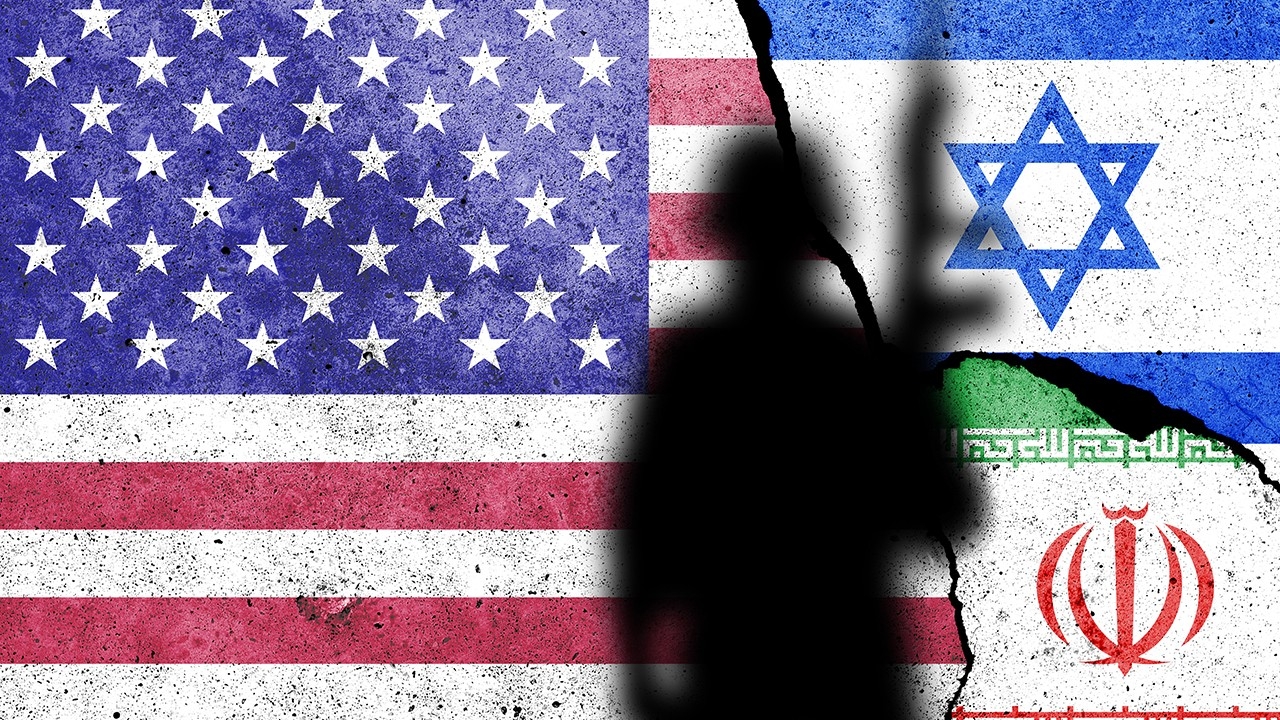
Tensions between Israel, the US, and Iran escalated into full-scale war today (28 Feb 2026) after the Israeli Defense Forces (IDF), in coordination with the US military, launched air and missile strikes targeting strategic sites in Tehran and key cities across Iran.
In this confrontation, both sides have deployed their most advanced weapons, each with distinctly different strengths:
Israel and the US: Air Superiority and Stealth Technology
F-35 Lightning II & F-22 Raptor: The US and Israel use fleets of Stealth fighters to evade radar and destroy deep nuclear facilities and missile stockpiles, supported by aerial refueling planes enabling continuous cross-border operations.
Arrow 3 & Iron Beam Air Defense Systems: Israel employs the Arrow 3 to intercept ballistic missiles beyond the atmosphere and has begun deploying the "Iron Beam" laser system to shoot down drones, conserving missile ammunition costs.
B-21 Raider (Projected): The US may deploy the latest strategic bomber model to target Iran's most fortified underground bunkers, such as those at Fordow.

Fattah-1 & Kheibar Shekan: Iran’s hypersonic and long-range missiles pose significant challenges to air defenses due to their high speed and maneuverability during flight.
Proxy Network: Iran’s secret weapon is its armed proxy groups in Lebanon (Hezbollah) and Yemen (Houthi), prepared to open multiple fronts simultaneously to weaken adversaries.
Foreign news agency experts suggest there is a high likelihood this will be a "prolonged but intermittent" war.
Incomplete Destruction: Despite superior US technology, Iran’s vast territory and strategic sites hidden deep within mountains mean limited air strikes cannot fully eliminate its military capabilities.
Counterattacks: Aware it cannot win direct confrontations, Iran will focus on striking US bases in the Middle East and conducting cyberattacks against opponents’ infrastructure, potentially extending the conflict for months or years.

The clashes on 28 Feb 2026 sent immediate shockwaves worldwide:
Energy and Economy: Brent crude oil prices surged over 10% immediately (reaching $80–90 per barrel). If Iran blocks the Strait of Hormuz, a critical oil transit route carrying one-third of the world's oil, prices could spike to $130, triggering severe global inflation.
Regional Security: The war risks escalating into a "Great Middle East War," drawing in other Arab nations and proxy groups, potentially creating a new refugee crisis.
Global Power Polarization: China and Russia have strongly condemned the US and Israeli strikes, possibly leading to covert arms or resource support for Iran, heightening tensions among the world’s great powers to critical levels.