

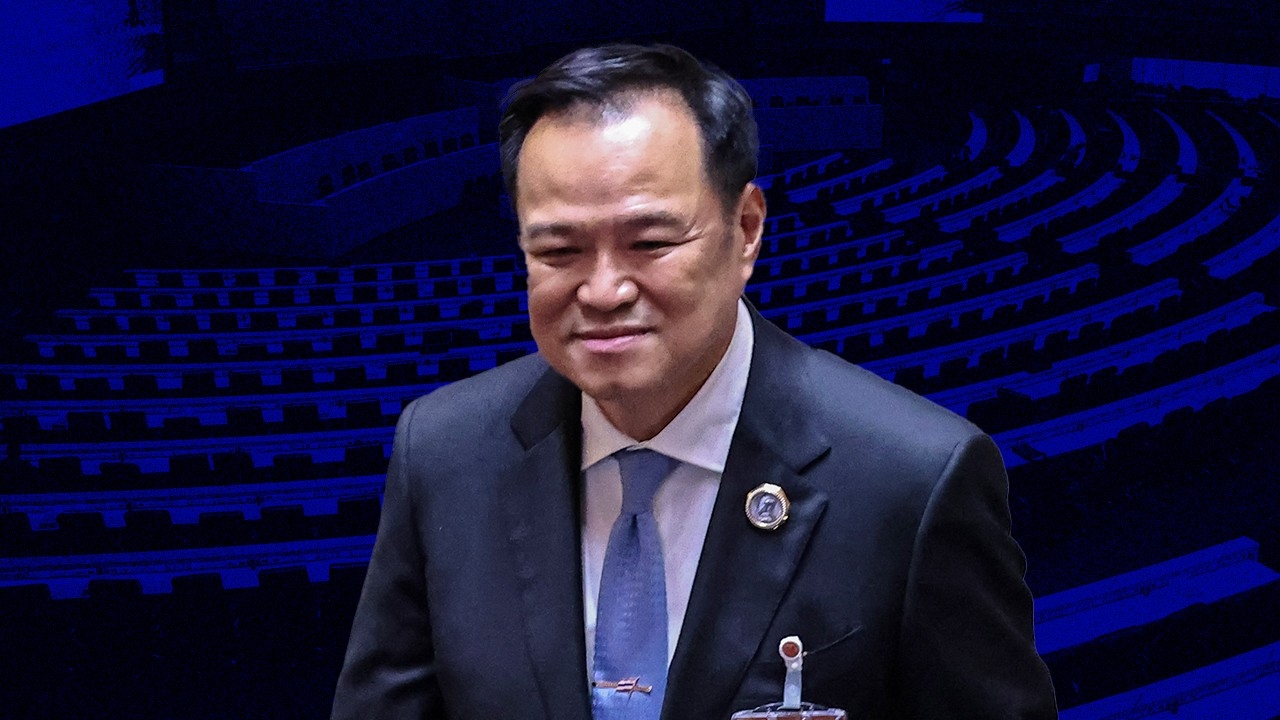
Civic groups are concerned that the new government is extremely conservative, with a new constitution draft designed to monopolize power and ignore the voices of rural villagers.
On 6 Mar 2024 GMT+7, the NGO Coordination Committee (NGO CC) together with citizen networks nationwide held a press conference titled “The People’s Movement X Thailand at the Crossroads of Human Rights under Extreme Conservatism and Ultimate Capital.” They reflected on real human rights violations occurring locally and declared their stance for advancing Thai society going forward.

Lertsak Kamkongsak, chairman of the NGO Coordination Committee (NGO CC), said this is a crucial turning point as a conservative party takes power. He predicted that citizens demanding rights in various areas will face increased harassment from rights violations and governance by conservative politicians. The NGO CC network and people’s movements from many regions clearly reflected that Thailand is confronting a situation of state power centralization and the extreme expansion of large monopoly capital. The resurgence of conservative ideology and governance is merging with state mechanisms while continuously restricting citizens’ rights and freedoms. This is significantly impacting community rights, the environment, and the safety of human rights defenders across many areas nationwide. Based on community and people’s movement feedback from various regions, this forum summarized urgent issues and key trends in people’s struggles to communicate to the public.
Although the referendum reflected the will of over 22 million people, the formation of the conservative government is seen as "stealing the people's victory." This gathering is a long-term strategic move toward the 100th anniversary of the Siamese Revolution (1932–2032) to define the people's movement's position and prepare immediate actions after the government’s policy announcement to respond to both capital groups and international organizations that will play roles in the future.
Lertsak added that regarding constitutional amendments, the people will not remain passive waiting for the government's announcement next month but will begin mobilizing immediately to propose solutions. They are concerned about the drafting mechanism possibly monopolized by only 35 commissioners or a handful of people, which seriously severs connections with the public.
"We cannot accept a constitution created by just a few people. If this government completes its full four-year term, the people will closely monitor and mobilize by all means to ensure the people's constitution amendment succeeds," said Lertsak.
Meanwhile, Teeranet Chaisuwan, vice chairman of the People’s Movement for a Just Society (P-Move), expressed serious concerns about election transparency and the government's formation. He said they are deeply worried about suspicions of election irregularities and demand an open, transparent, and verifiable investigation to restore confidence in democracy and the true meaning of the people's voice. The government being formed is not merely a political seat distribution but a centralization of power between monopoly capital groups and a conservative state apparatus tightly integrated under appealing terms like "stability" and "development." Meanwhile, ordinary citizens bear the political, rights, and freedom costs. They are highly concerned that state policies under such power structures will directly impact community rights, natural resource protection, public participation in shaping their own and the country's future, and fundamental human rights and freedoms for all citizens.

Orcha Chandet, from the Prachin Strong Network, spoke on the warning about 'monopoly capital, Chinese capital, and gray capital' pushing development projects that burden communities. Feedback from many areas nationwide consistently indicates rapid expansion of industrial, mining, energy, and special economic zone projects, driven by the connections of large monopoly capital, foreign capital, and gray capital, merged with state mechanisms to accelerate large projects. However, the "costs of development" are borne solely by communities, including land loss, environmental damage, health impacts, and disruption of traditional livelihoods, leading to escalating conflicts in several regions. Examples presented include Prachinburi Province and the Eastern Economic Corridor (EEC), raising concerns over environmental impacts and resource use; the wind farm project in Phu Yung Forest, Mukdahan Province, affecting community food sources, ecosystems, and headwaters; the Southern Special Economic Corridor (SEC) and the Land Bridge project potentially changing the region’s economic structure, ecosystems, and people's lifestyles. Community struggles to protect vital waterways, such as the Pak Mun Dam and Patani rivers, were also highlighted. Therefore, the "right to development" must be the people's right to determine their own future, not development imposed from above by the state and capital, while communities directly affected have no say in decision-making.

Jutamas Srihatphadungkij, a female human rights defender from the People’s Network of Mineral Owners, spoke on ending laws that restrict freedoms and intimidate rights defenders through the justice system. She said that over recent years, many laws have been continuously used as tools to control and limit public movements, especially the 2015 Public Assembly Act and strategic lawsuits against public participation (SLAPPs) targeting citizens, human rights defenders, and activists exercising constitutional rights. The justice system is being used as a political tool, burdening people with legal costs and fear, making exercising freedoms a risky act and placing citizens at a disadvantage economically, socially, and psychologically simply because they defend human rights.
The NGO Coordination Committee and civil society call for the repeal of the 2015 Public Assembly Act to align with human rights and democracy principles; reform laws and justice processes used to restrict freedoms and block political participation; promote community rights, land bank, progressive land tax, and agricultural land protection laws to establish structural justice for the people; and review land and forest laws used to displace communities who have long inhabited and cared for their lands. Laws must be tools to create justice, not to control and silence the people.
