

"Chinese fruit hubs," fruit collection and sorting centers supported by Chinese capital, have become major players in Thailand's fruit supply chain. They have moved beyond merely purchasing fruit to controlling the process from upstream (orchards) to downstream (retail markets in China).
Here is a list of fruits where Chinese hubs are heavily expanding their influence and future trends (updated for 2025-2026):
1. Fruits dominated and expanding under Chinese hub control
Fruit | Current status | Behavior of Chinese hubs |
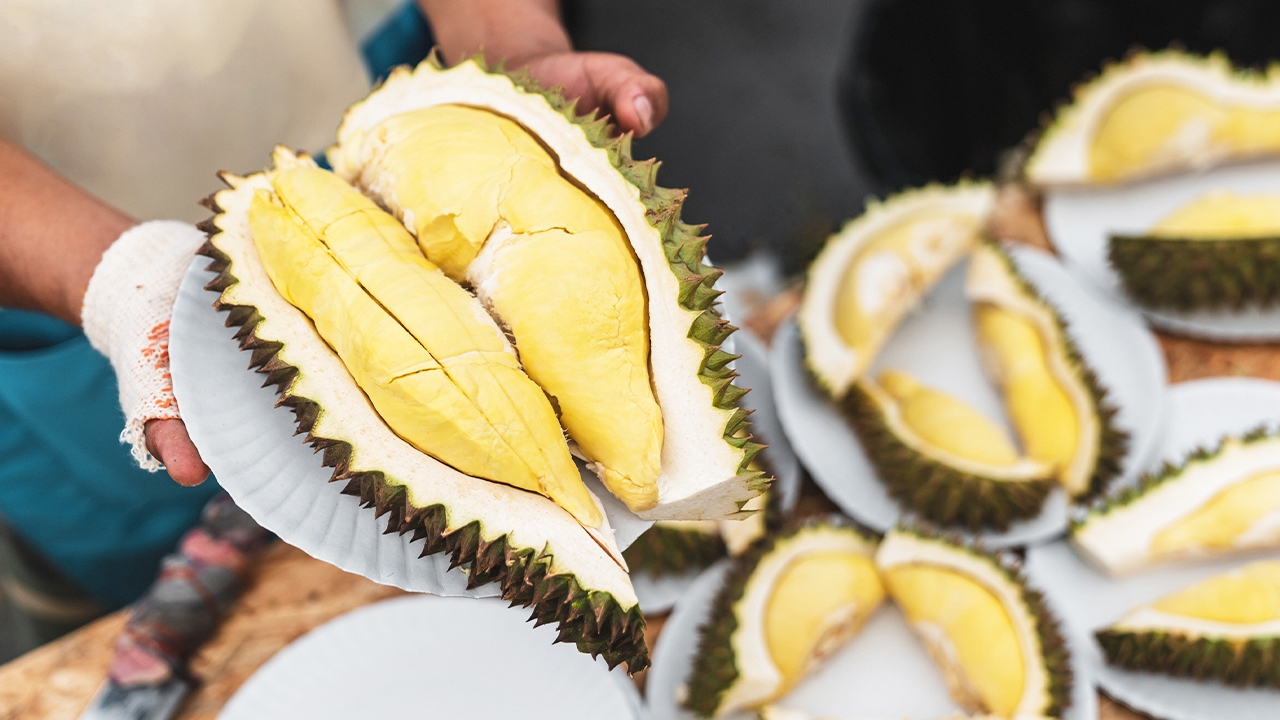
Durian | Complete market control | They control the process starting from advance "orchard lease" contracts, employing their own labor for harvesting, and using proprietary logistics systems to deliver directly to wholesale markets in China. |
Aromatic coconut | High growth | Reports indicate Chinese investors have begun using "nominees" to purchase coconut orchards in Ratchaburi and Nakhon Pathom provinces to control prices and export volumes. |
Mangosteen | Seasonal control | Chinese hubs establish bases in the eastern and southern regions according to the season to compete for premium-grade fruit exports, making it increasingly difficult for small Thai operators to compete on price. |
Longan | Main stronghold | Especially in northern Thailand, Chinese hubs have controlled both fresh and dried longan for many years, effectively setting the local market's benchmark prices. |
2. Future trends (2026-2028)
According to recent analyses, Thailand’s fruit market is at a critical turning point:
Price wars and rising competitors (The Rise of Vietnam): Thai durian is losing market share in China to Vietnam due to lower transport costs and shorter shipping times. Chinese hubs in Thailand may begin lowering purchase prices to stay competitive with Vietnamese durian.
Expansion into orchard "nominees": A concerning trend is that Chinese hubs are not just setting up sorting and packing facilities but are managing orchards through Thai representatives (nominees) to control quality and reduce production risks, potentially reducing Thai farmers to mere "laborers on their own land."
Increased domestic Chinese cultivation: China has successfully cultivated durian in Hainan and Guangdong provinces. Although quality is not yet comparable to Thailand's, this will reduce demand for general-grade imports, forcing Thailand to focus on the super premium market segment.
Stricter standards enforcement (Zero Tolerance): Chinese authorities (GACC) will tighten regulations on pesticide residues and pest control. Wealthier Chinese hubs will adapt faster than Thai operators, potentially squeezing small Thai exporters out of the market.

3. Adaptation and solutions
The government and relevant agencies (such as the Department of Internal Trade) have begun implementing "Eight Fruit Management Measures for 2026" to respond:
Risk diversification: Accelerate opening new markets like India, Japan, and the Middle East to reduce reliance on China alone (currently, up to 96% of Thai durian exports go to China).
Upgrade GAP standards: Enforce stricter production standards to differentiate quality.
Support Thai hubs: Strengthen Thai operators with tax advantages or working capital support.