

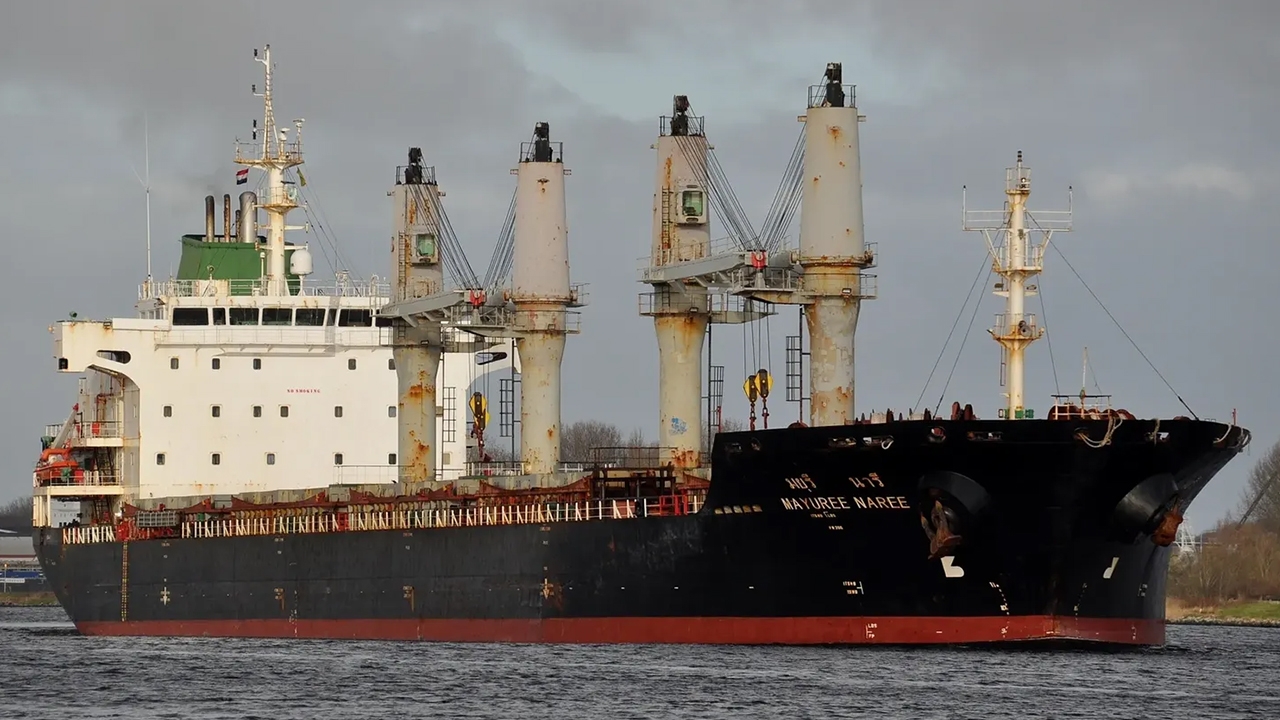
Strait of Hormuz,Who owns it? Thai ships use this route to transport important goods to Europe. The Strait of Hormuz is one of the world’s most strategic points, as it is the primary maritime route for shipping crude oil from the Persian Gulf to global markets.
Under international law (the United Nations Convention on the Law of the Sea, or UNCLOS), no single country owns the strait. However, the area is divided into:
Territorial Waters: covering areas belonging to Iran (to the north) and Oman (to the south, with the Musandam Peninsula as a strategic point).
Transit Passage Rights: although within Iranian and Omani waters, all ships—including warships—have the right to freely navigate through the strait, provided the passage is swift and continuous.
Width: At its narrowest point, the strait is about 33 kilometers (21 miles) wide.
Shipping Lanes: In the narrowest section, vessels are confined to lanes only 3.2 kilometers wide, separated into inbound and outbound lanes with a buffer zone between to prevent collisions.
Length: Approximately 167 kilometers (104 miles), connecting the Persian Gulf to the Gulf of Oman.
In conflicts involving Iran, Israel, and the United States, a variety of weapons have been used to attack ships, including:
Anti-ship Missiles: such as Iran’s Noor or Qader series, developed from Chinese technology, capable of being launched from shore or fast boats.
Suicide/Kamikaze Drones: like the Shahed-136, popular nowadays due to their low cost, difficulty to detect, and hard-to-trace origins. Frequently used in attacks on commercial vessels linked to Israel.
Limpet Mines: magnetic mines attached underwater to ship hulls, often used in sabotage operations to cause damage without immediately sinking the ship (e.g., incidents in 2019).
Fast Attack Crafts: utilized by the IRGC (Iranian Revolutionary Guard Corps) to encircle, pressure, or harass with machine guns and small rockets.

Tanker War (1980s): more than 500 ships were targeted with mines and missiles.
Crisis from 2019 to present: drone attacks on the Mercer Street (linked to Israel) and Iranian seizures of oil tankers in retaliation for U.S. sanctions.
Most of these weapons aim to "damage and disrupt" rather than directly "sink ships," since sinking a large vessel in the strait would also harm Iran’s own economy.

This route is crucial to Thailand’s energy security, with Thai vessels using it extensively.
Imports: Mainly crude oil and liquefied natural gas (LNG) from Middle Eastern countries like Saudi Arabia, the UAE, and Qatar. Thailand imports 50-70% of its oil from this region.

Exports: Thai products shipped through the strait to Gulf countries include:
Rice and processed foods: important agricultural exports.
Automobiles and automotive parts: exported to Middle Eastern markets.
Air conditioners and electrical appliances.