

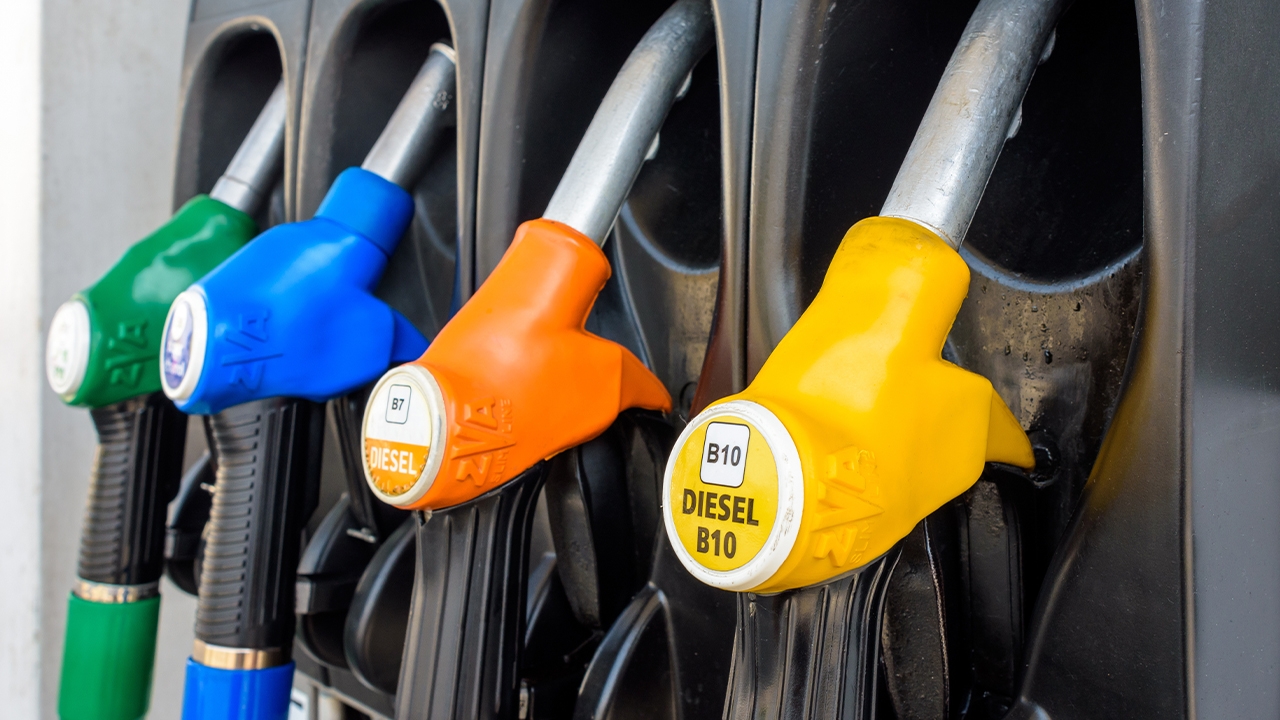
Thailand's latest 2026 policy restructures energy to help palm oil farmers and address the global energy crisis by reintroducing B10 and B20 fuels as key alternatives, with B20 especially aimed at large-scale users.
In-depth information to help you understand the composition, usage, and engine impact.
A deep dive into B10 and B20 diesel fuels: alternative energy for transportation and industry sectors.
The Thai government has announced a new energy direction focusing on increasing domestic biodiesel use to stabilize palm oil prices and reduce crude oil imports.
Both fuels are based on petroleum-refined diesel blended with pure biodiesel (B100) made from domestic crude palm oil:
B10 diesel: contains 90% standard diesel and 10% biodiesel (B100). *Status: The government aims for this to become the standard diesel for most vehicles in the future, replacing B7 at times.
B20 diesel: contains 80% standard diesel and 20% biodiesel (B100).
Status: Focused on wholesale distribution to fleet operators in trucking, industry, agriculture, and construction sectors. It will not be sold at regular gas stations to avoid confusion and fueling disputes.

Usage should primarily consider manufacturers' approvals.
B10 is suitable for most new pickup trucks and SUVs.
B20 is designed for large trucks, buses, and heavy machinery. Pickup trucks can use it only if the manufacturer confirms compatibility.
Using it in "unsupported" or too old vehicles may lead to issues such as:
Fuel filter clogging: Biodiesel acts as a good solvent, washing dirt from the fuel tank that can clog the fuel filter, requiring more frequent filter changes initially.
Problems in cold weather: B20 is more prone to gelling at temperatures below 16-20°C than regular diesel.
Corrosion: Rubber parts (O-rings) or fuel lines in older vehicles may swell or deteriorate.
Advice: For continuous B20 use, consult service centers to replace fuel lines and filters with parts resistant to high biodiesel blends.

Given the fuel fund's burden and government price adjustments reflecting global markets:
Standard diesel (B7): Currently controlled at about 29.94 - 30.44 baht/liter.
B10: Expected to be 0.50 - 1.00 baht/liter cheaper than B7.
B20: As it is sold wholesale to industry and contains a high agricultural blend, it is expected to be 2.00 - 3.00 baht/liter cheaper than regular diesel (around 27.xx baht/liter), incentivizing the transport sector to lower costs.