

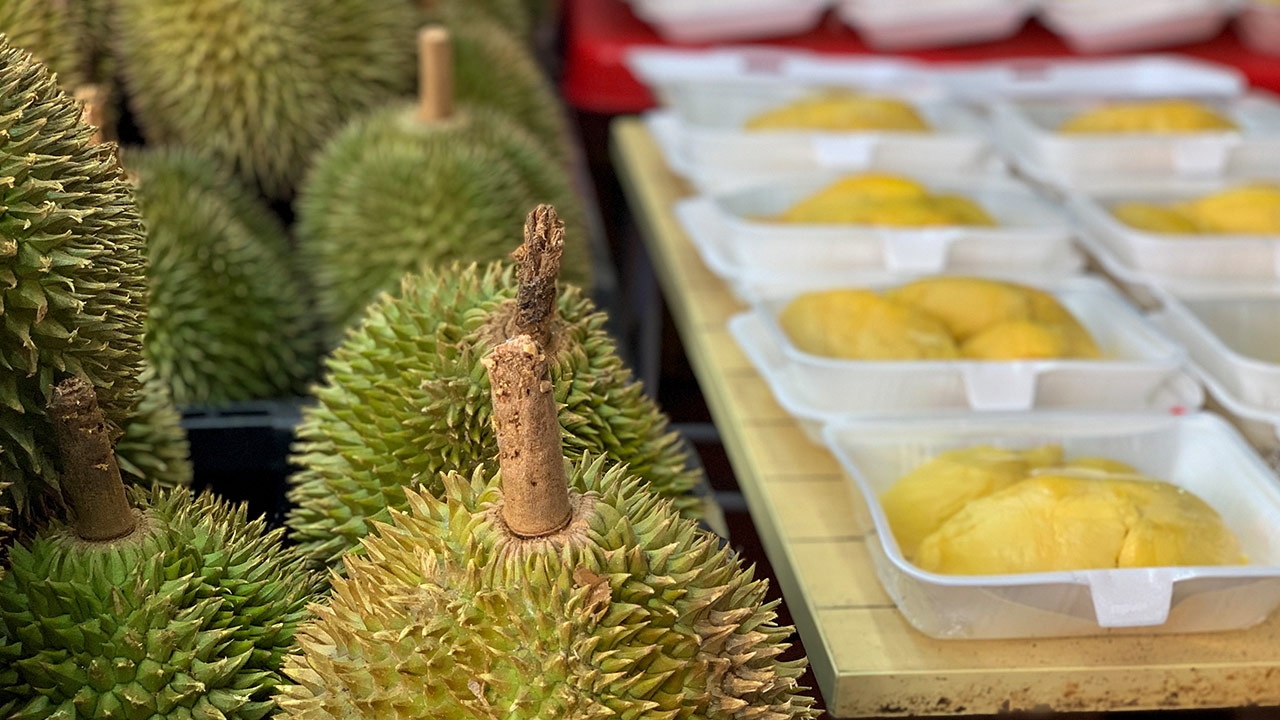
The current durian market situation can truly be called a "fruit king war." The latest data for 2026 indicates that the throne of Thai durian is being heavily challenged by Vietnam.
In 2025-2026Vietnamhas rapidly captured market share from Thailand in China. Some statistics show Vietnam's export volume has even overtaken Thailand at times, driven mainly by three factors:
Geographical advantage (Logistics): Vietnam shares a border with China, allowing land transport in just 1-3 days, whereas Thailand takes 5-7 days. This keeps Vietnamese durians fresher and lowers transportation costs compared to Thailand.
Longer production season: Vietnam can produce durian almost year-round (off-season), while Thailand has only a few peak months. This makes Vietnam the main choice for China when Thai durians are out of season.
Lower price: The average export price of Vietnamese durian is about 15% lower than Thailand’s, making it more accessible to a wider Chinese consumer base.

Characteristics | Thai Durian (Monthong) | Vietnamese Durian (Ri6 / native varieties) | Musang King (Malaysia) |
Flavor | Sweet, rich, smooth, with mild aroma; flesh is dry, not soggy. | Sharp sweet taste, smooth flesh but may have higher moisture than Thai durian. | Intense sweetness with a bitter finish (complex flavor), very strong aroma. |
Texture | Thick, fine flesh, a distinctive texture familiar to Chinese consumers. | Soft flesh, bright golden yellow, very fresh due to quick transport. | Creamy, fine texture with deep yellow color. |
Export price | High (about 4,000-4,500 USD/ton) | Medium (about 15% lower than Thai durian) | Very high (considered a super-premium product) |
Status in China | The established champion trusted for quality and standards. | A rising star focusing on freshness and value for money. | A luxury product often given as a gift. |
Demand in China remains very high, but consumer behavior is shifting:
Full competition: Not only Thailand and Vietnam, but Malaysia has also been allowed to export fresh durians (not just frozen) to China, squeezing Thailand’s premium market share.
Stricter quality controls: China has increased inspections for residues (e.g., cadmium) and overall durian quality. If Thailand fails to maintain standards, competitors will seize the opportunity immediately.
2026 outlook: The Chinese durian market may face oversupply at times, causing export prices to decline for the second consecutive year.

Good news for consumersThai peoplebut a difficult challenge for farmers:
Retail prices in Thailand: Market forecasts for 2026 suggest domestic durian prices are likely to decrease.