

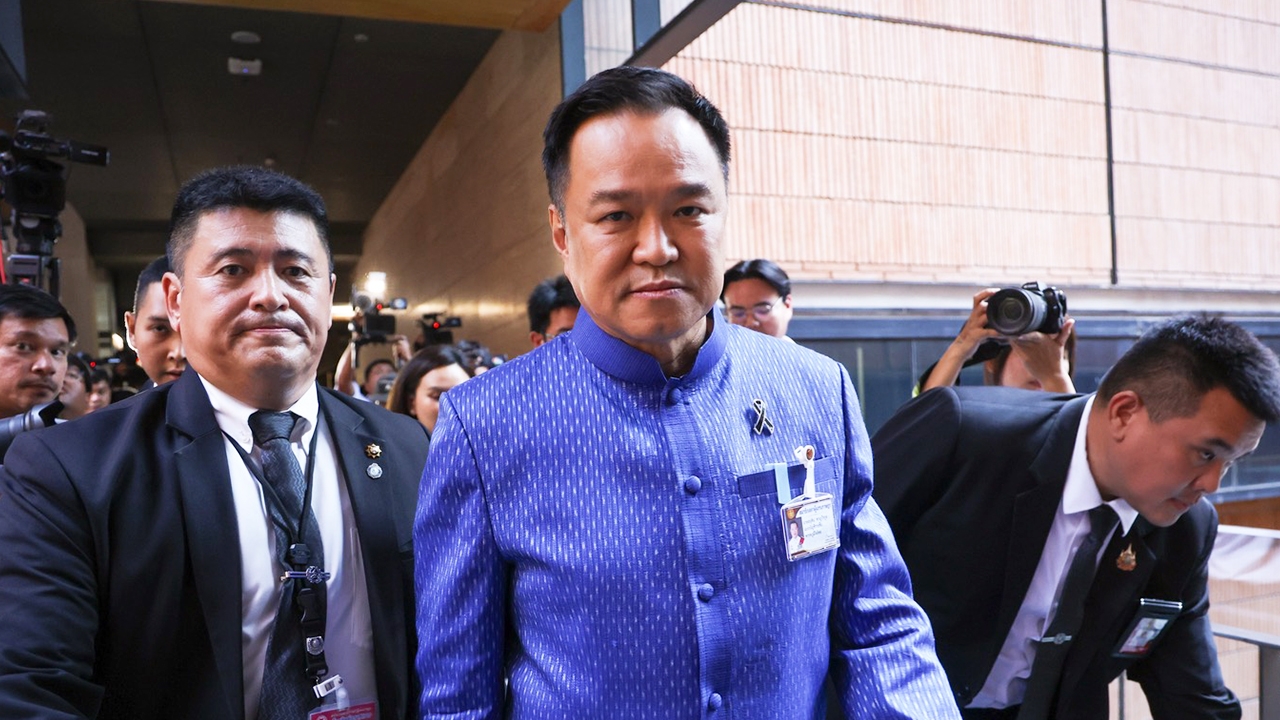
Bhumjaithai Party is set to advance the draft "Hometown Act," a flagship policy that unlocks local leaders' age and term limits. The draft "Hometown Act" aims to enable localities to generate revenue through hometown taxes and adjust age and term restrictions for local leaders.
The policy focuses on decentralizing power to local governments, with the following details.
It is a bill promoted by the Bhumjaithai Party to "return power to the people" by changing citizens' roles to actively participate in budget decisions and local oversight, not just during elections. The goal is to complete it within one year.
This policy helps localities increase their development budgets via a "selectable tax" mechanism.
Decision rights: Taxpayers (individuals and legal entities) can specify on their tax returns that 30% of their tax should be allocated to their hometown or any area they wish to develop.
Budget figures: It is estimated that 30% of corporate tax alone could amount to 195 billion baht, which would be distributed directly to localities nationwide according to citizens' preferences.

Regulations have been amended to increase flexibility and attract younger candidates:
Age: The minimum age for local executive candidates is lowered from 35 to 25 years.
Term limits: The previous two-term (8 years) cap is removed, allowing unlimited terms so capable leaders can continue if re-elected by the people.
Advantages
Issue | Details |
Decentralization | Tax money is sent directly to localities without passing through complex central processes. |
Continuity | Unlimited terms enable long-term development projects to proceed without disruption when leadership changes. |
Younger generation | Lowering the age to 25 allows new ideas and young people to return and develop their hometowns. |
Oversight | There is a strong citizen mechanism (claimed to be stronger than the National Anti-Corruption Commission) that makes misuse of funds more difficult. |
Disadvantages / Cautions
Issue | Details |
Inequality between areas | Industrial or major urban areas may receive more tax revenue than remote areas lacking legal entities. |
Concentration of power | Unlimited terms may lead to "local strongmen" systems or entrenchment of established political families' influence. |
Maturity | Lowering the age to 25 may raise concerns about experience in managing budgets and personnel. |