

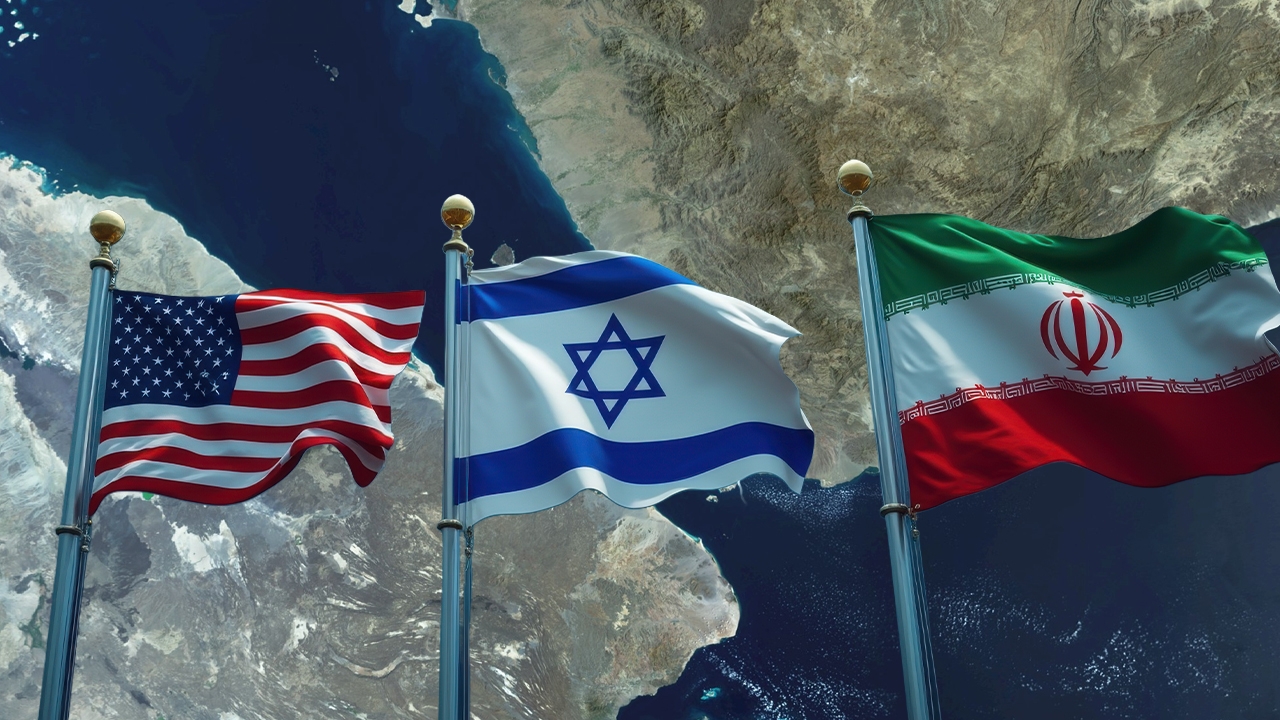
From “Hormuz” to “Bab el-Mandeb”: An in-depth exploration of the geopolitics surrounding key maritime routes as critical variables in ending the Iran war, following the Houthi rebels' participation signaling the potential closure of another vital global strait.
It marks one month since the latest wave of unrest erupted in the Middle East after the United States and Israel launched attacks against Iran, leading to military clashes affecting the Strait of Hormuz, a critical bottleneck in the global oil supply chain. Over 20% of the world's oil passes through this strait, causing severe volatility in global oil prices and giving Iran a powerful bargaining tool through threats to blockade and collect "tolls."
Recently, another strait has drawn attention as a potential new flashpoint: the Bab el-Mandeb Strait, also known as the “Gate of Tears,” narrowing to just 30 kilometers between Yemen in the Middle East and Djibouti in Africa. It connects the Indian Ocean to the Red Sea and leads into Egypt's Suez Canal, which opens to the Mediterranean Sea in Europe. This is the fastest shipping route linking Europe and Asia for transporting oil and goods.

On Djibouti's side, it hosts the world’s largest concentration of "great power military bases," as several major countries including the U.S., China, and France have leased land for bases to protect their interests. Meanwhile, Yemen's side is controlled by the Houthi rebels,
an armed group allied with Iran. According to data from the U.S. Energy Information Administration (EIA), during the Iran war, about 12% of the world’s oil was transported through the Bab el-Mandeb Strait. Over the past month, the Houthis mostly issued threats, but last weekend they launched missile attacks on Israel, prompting new U.S. warnings about maritime risks. If cargo ships cannot pass through this route, they must detour around
the Cape of Good Hope, the southern tip of Africa, significantly increasing travel time and costs, which would greatly impact global supply chain expenses. So far, attacks have been limited to military targets, but Iran has signaled it might
"choke off" this maritime route if the U.S. escalates to ground operations, potentially causing the war to expand further. Is the “maritime route” a key variable in ending the Iran war?

Dr. Sarawut Aree, Director of the Muslim Studies Center at the Institute of Asian Studies, Chulalongkorn University. Due to its geography, the Middle East lies at the crossroads of Asia, Europe, and Africa, serving as a global hub for air and maritime travel. It is considered a “strategic waterway” of the world. Two key routes stand out:
the Strait of Hormuz, which connects the Persian Gulf, home to over one-third of the world's oil, to the open sea; and the Bab el-Mandeb Strait, linking Asia and Europe. Although less oil passes through Bab el-Mandeb compared to Hormuz, it is crucial for other goods, with one in four of the world's shipping containers traversing this route. Iran wields influence over the Strait of Hormuz but has never before attempted to close or block it until recently, using this leverage after U.S. and Israeli attacks sparked a global oil crisis.
Interestingly, another global power in the Middle East,
Saudi Arabia, the region's largest oil producer, has long recognized the risk of relying solely on Hormuz. It has constructed pipelines transporting over 7 million barrels per day from oil fields to the Red Sea, enabling shipments to Europe via the Suez Canal or Asia through Bab el-Mandeb. Disruption or closure of Bab el-Mandeb would worsen the global oil supply crisis. Recently, the Houthi rebels declared their readiness to join Iran and its allies in fighting the U.S. and Israel, including operations in the Red Sea. They previously carried out such actions two years ago during the Gaza war, causing more than half of Red Sea cargo ships to disappear, severely damaging the economy.

However, Dr. Sarawut believes
the Houthis likely have an understanding with Saudi Arabia not to conduct operations in the Red Sea unless Saudi Arabia joins the U.S. and Israel as an ally in the conflict. During the past month of war, the Houthis have not actively participated, but recent developments show a shift. The U.S. appears readying a ground invasion, Israel is deploying forces to Lebanon, and the UAE may join military operations to support them. “The rising tensions have forced the Houthis to respond with missile attacks on Israeli territory, but notably no maritime operations have occurred. This suggests a prior agreement between Saudi Arabia and the Houthis,”
he explained.

Due to the vulnerabilities of these two straits, Israel has considered constructing a “Ben Gurion Canal,” to bypass the Suez Canal, which Egypt fully controls. If Egypt were to close the Suez Canal, Israel would be severely affected. This canal would cut through central Israel, linking the Gulf of Aqaba (Red Sea) directly to the Mediterranean Sea.
Meanwhile, Western allies including the U.S., Israel, and India have proposed the “IMEC (India-Middle East-Europe Economic Corridor)” project, an economic corridor initiative promoted by the U.S. to compete directly with China’s BRI (Belt and Road Initiative), which also connects to the Suez Canal.
“The U.S. and Israel see the need for a new route to rival the BRI. They are pushing to build IMEC connecting India to the Middle East and out through Israel. While China’s BRI is already underway, IMEC remains conceptual but has a high possibility of development. Current conflicts like the Gaza war and Middle East tensions may be linked to this competition between global powers,”
he said.

Outlook on the end of the Iran war
On prospects for ending the war, Dr. Sarawut noted that the U.S. currently appears eager to find a clear resolution due to political time constraints and massive public protests opposing the Iran war, which has worsened the U.S. economy. President Trump faces pressure managing this discontent ahead of midterm elections. However, two major obstacles prevent U.S. withdrawal: first, controlling Israel,
which still wants to continue fighting, seeing this as the best moment to topple Iran’s weakened regime amid economic decline and domestic dissatisfaction. Iran’s key allied militias like Hezbollah have been heavily damaged by the Gaza war, and Iraqi allies hesitate to act out of respect for their government still reliant on the U.S. Second is the Strait of Hormuz,
which Iran claims to control. The U.S. risks losing superpower status if it does not secure this strait.
“When the U.S. and Iran reach an agreement on control of the Strait of Hormuz, it will likely signal the war’s end. Another sign would be the U.S. exerting control over Israel, as in last year’s 12-day war, when Israel initiated attacks on Iran but the U.S. intervened, bombing nuclear facilities and declaring the war over, forcing Israeli warplanes to stand down,” he said. Furthermore, major Middle Eastern powers such as Turkey, Saudi Arabia, Egypt, and Pakistan are seriously pushing for negotiations. Pakistan’s good relations with both sides add weight to talks. Together, these four countries have significant influence in negotiating with U.S. President Trump. It is believed that without a U.S. ground invasion, the war will not drag on. But if U.S. forces enter Iranian territory, it could mark a turning point leading to prolonged conflict similar to wars in Afghanistan and Iraq.