

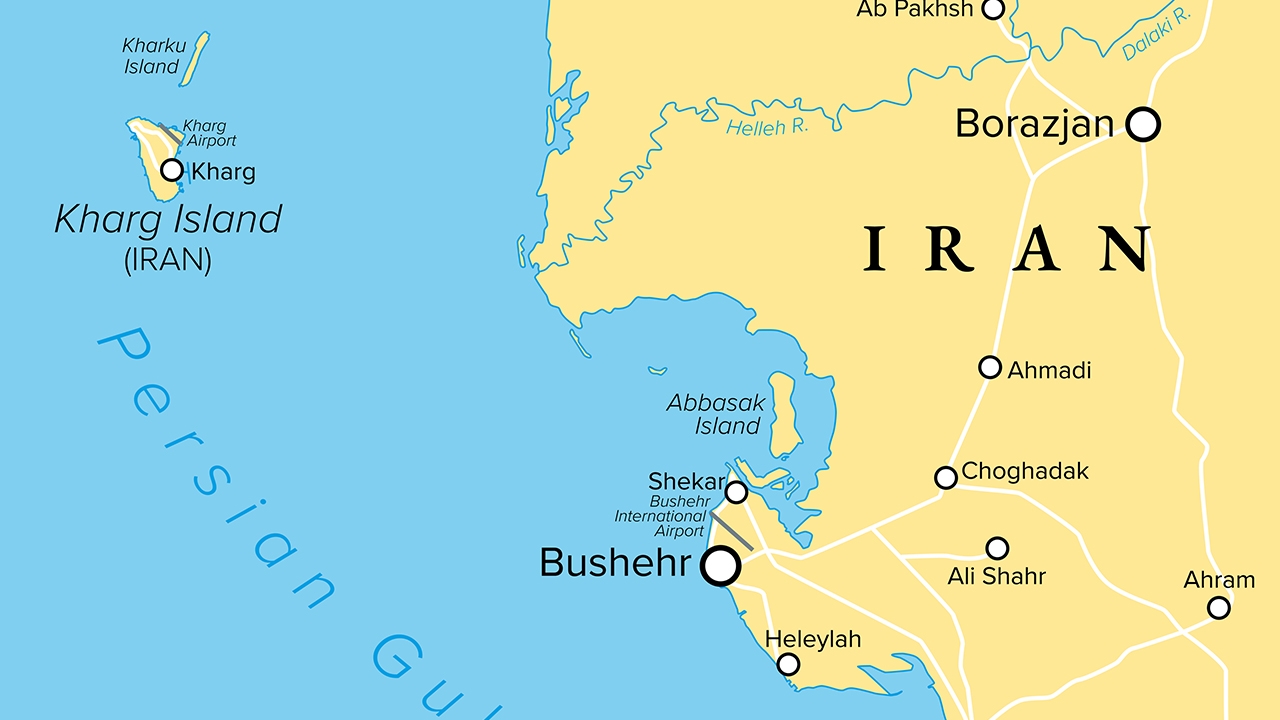
Kharg Island is considered the "main artery" and economic heart of Iran. At present, this island has become the most tense strategic point in the conflict between Iran and the United States.
This small island in the Persian Gulf, about 20 square kilometers in area, hosts the country's largest oil export terminal:
Oil transit 90-95%: Nearly all the crude oil Iran produces and exports to global markets, especially China, must be transported via an undersea pipeline to this island to be loaded onto oil tankers.
Main source of revenue: Income from oil sales passing through Kharg Island forms the primary budget that the Iranian government uses to run the country, pay salaries of the IRGC, and support various proxy groups in the region.
Oil storage facility: It has massive oil storage tanks and complex infrastructure that Iran has spent decades building and reinforcing.

For the U.S., under Donald Trump's leadership in 2026, Kharg Island is the "center of leverage."
Cutting financial lifelines: Destroying or blockading this island would immediately paralyze Iran's economy because no revenue would flow into the country.
Maximum pressure tactic: The U.S. views targeting military objectives on the island and threatening to destroy oil infrastructure as a way to force Tehran to negotiate or halt movements in the Strait of Hormuz.
Supply route disruption: Without oil revenue, Iran's ability to sustain a prolonged war would greatly diminish.

Analysts see attacking or capturing Kharg Island as a "double-edged sword" and possibly not the definitive answer to winning the war outright:
Economically, the U.S. wins: Iran would be technically bankrupt and lose its oil export capacity for many years.
Strategically, high risk: Iran consistently threatens that if Kharg Island is destroyed, they will "close the Strait of Hormuz," causing a historic spike in global oil prices, impacting the world economy and the U.S. itself.
Severe retaliation: Iran might shift from conventional warfare to full asymmetric warfare, using drones and missiles to attack U.S. allies' oil facilities in the Persian Gulf, such as Saudi Arabia or the UAE, to bring destruction to them as well.
Post-war impact: Destroying the oil terminal would make it very difficult for Iran to recover in the future (even with a government change), potentially causing long-term instability in the region.