

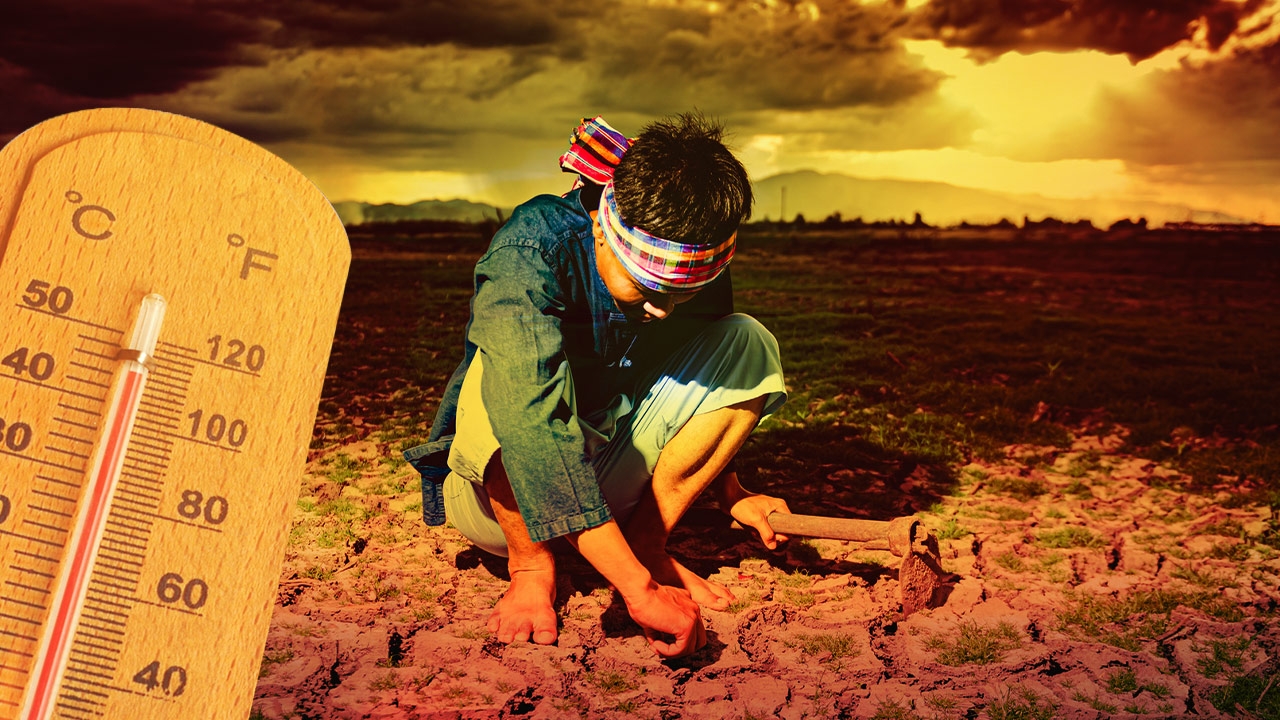
Year 2026 is experiencing prolonged extreme heat with drought signs severely affecting farmers. The hottest day of the year is expected before 20 Apr 2026 GMT+7. Heatstroke warnings have been issued, and creating indoor water fountains is recommended to reduce heat without needing air conditioning.
Assoc. Prof. Dr. Seri Supharatikit, Director of the Climate Change and Disaster Center at Rangsit University, analyzed that this year’s heat has not yet surpassed the 2024 record. The hottest days will occur before 20 April, possibly breaking records observed in the past week, despite public perceptions of extreme heat.
The main cause is the El Niño phenomenon, which has not yet fully developed but is currently in a transitional phase. The real concern is the latter half of this year extending to April next year, when El Niño will be fully established in Thailand, causing hotter weather that may set new heat records.

Regarding temperature and duration, forecasted maximum temperatures in April are not expected to exceed 43°C (currently around 41-42°C). Historically, Thailand recorded up to 44.6°C during the "Super El Niño" period.
The concern this year is the extended duration of heat compared to last year. As El Niño fully develops mid-year, heat will continue consistently. Although temperatures in other months may not reach April’s highs, they will be noticeably above their historical averages.
The drought crisis and water shortages remain. Current water reserves from last year are sufficient for irrigation areas during the dry season ending in May, but the major problem will arise in 2027. Due to El Niño’s effect reducing average rainfall mid-year, water reserves for the following year will be insufficient, directly affecting dry-season farming in 2027.

The current issue of "water supply interruptions" stems from two factors: 1. adequacy of water reserves, and 2. frequent water pipe breaks caused by extreme heat affecting underground pipes.
Additionally, warnings indicate that poor rainfall overall may lead to more severe droughts, although there remains a risk of localized flooding if heavy rain falls within short periods.
Recommendations for the public, especially outdoor workers at risk of heatstroke, note that precautions should begin when temperatures exceed 35°C. At 40°C combined with high humidity, sweat evaporation is impaired, severely impacting health, especially for the elderly, children, and pregnant women. Frequent hydration and seeking shade are advised.

Long-term adaptation includes planting trees and creating wetlands around homes, such as indoor water fountains, which can immediately lower temperatures by up to 2°C. This is preferable to relying solely on air conditioning, which consumes energy and contributes to global warming, perpetuating an unsustainable cycle.