

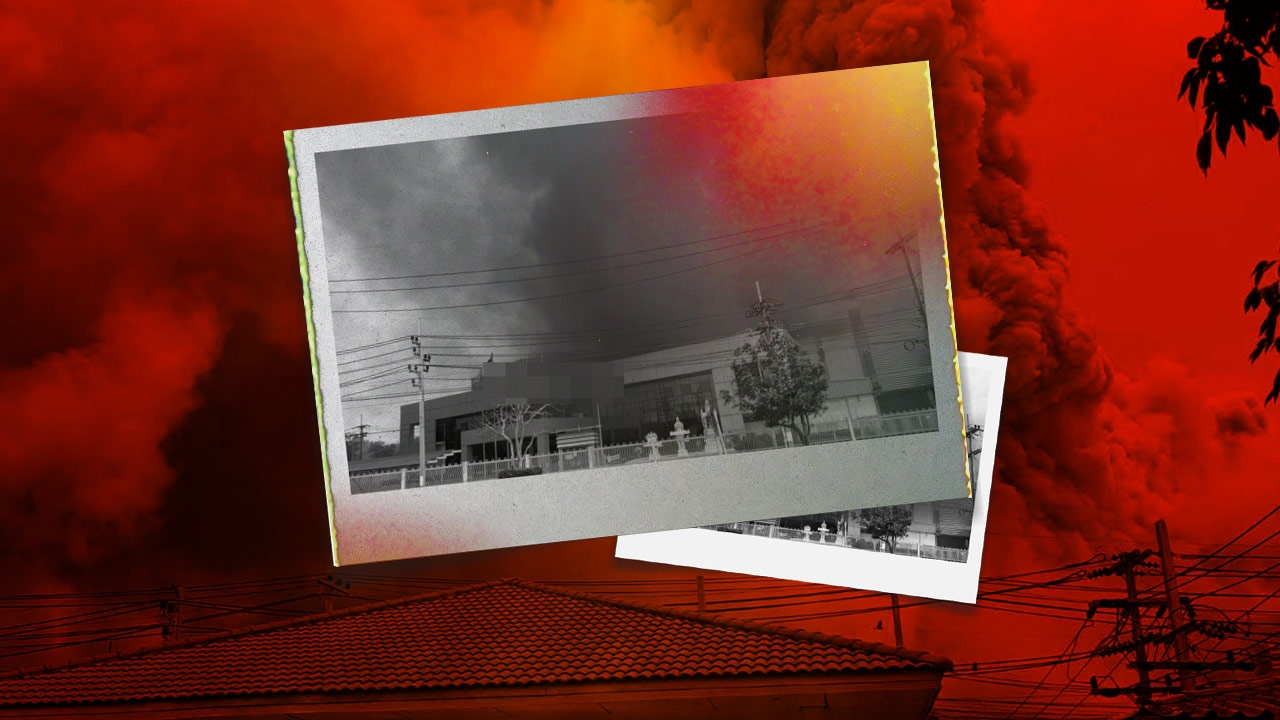
Extreme heat is the main cause of fires, occurring frequently in factory areas more than last year. Experts advise observing the color of smoke plumes to preliminarily assess fire suppression before the fire spreads further.
Recently, fires have been happening almost daily, especially in industrial factories, where each fire takes longer than usual to extinguish. Meanwhile, local residents around these areas still lack knowledge to properly assess the situation to protect their property correctly.
Thairath's special news team interviewed Chatchai Thaikla, Director of the Advanced Firefighting and Rescue Training Institute (TAFTA), who said that hot weather causes materials and chemicals that act as fuel to ignite and spread sparks more easily. This risk is particularly high in factories handling flammable chemicals.
In hot conditions, especially in factories with enclosed structures, some materials that already contain moisture may catch fire more easily. For materials containing conductive elements, such as gasoline or electric vehicles, accumulated heat can cause certain parts to spark and ignite. If these fires are not properly controlled, they can cause extensive damage as they spread further.

Another factor causing fires is the chemicals present in factories. Normally, these chemicals are stable at 35 degrees Celsius, but current temperatures have reached 40 degrees. Additionally, heat can be intensified by factors such as the interior temperature of cars parked in the sun: while the outside temperature is 40 degrees, inside a parked car it can reach 60 degrees, causing some materials to evaporate and ignite.
An example fire source is oil-soaked cloth or cotton pads placed on concrete floors. After use, these might be left in work areas or stored together. On hot days without workers or air conditioning, heat can accumulate, causing sparks on the oil-soaked fabric. The solution involves educating employees and ensuring buildings have proper ventilation.

To assess combustion from smoke plumes: black smoke indicates burning of paint or oil. From a distance, if gray smoke appears mixed with black smoke intermittently, it suggests water is being sprayed to extinguish the fire.
If the fire involves chemicals, the smoke may be green, yellow, purple, or orange. Such cases require expert evaluation to assess the chemical fire accurately.
The best prevention is training employees and local people to recognize materials that could cause fires and teaching them the most appropriate and correct methods to extinguish fires.