

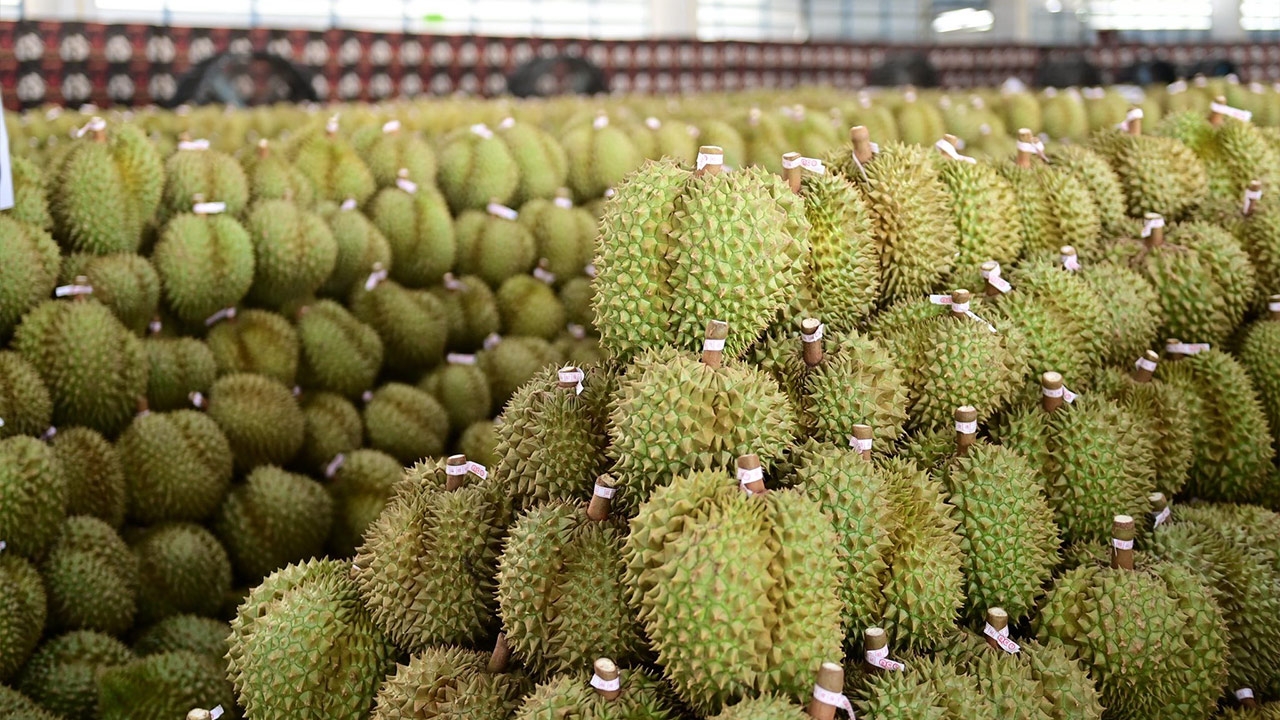
Live streaming durian sales show farmers stating an average cost of 70-80 baht per kilogram. They request not to push prices down to clear domestic production, warning this risks breaking the durian price cycle. This year’s production has increased by 20-30%. Attention is on next month when the market may be oversupplied, raising concerns over price drops.
Durian production in the Eastern region has just begun this season. It is forecasted that this year’s durian output will exceed last year’s and may flood the market, potentially causing prices to fall. To stimulate domestic sales, Deputy Prime Minister and Minister of Commerce Supachai Suthempun recently met with prominent influencers like Pimrypie to promote “Thai durians” via live streams directly from production sites. The aim is to enhance farmers’ market opportunities and quickly deliver quality durians to consumers.

However, a controversy arose after promotion claimed that on 28 April, one million durians would be sold at 100 baht each. Deputy Prime Minister and Minister of Commerce Supachai Suthempun, together with influencer Pimrypie, led this campaign. Later, the Ministry of Commerce clarified that the 100-baht durians were a promotional offer for lower-grade fruit, not export-grade, with current prices averaging 140-150 baht per kilogram.
The push to boost domestic durian sales has sparked mixed reactions. Thairath Online’s special news team consulted Panusak Saipanich, president of the Thai Durian Association, who analyzed that selling durians at 100 baht each risks destroying the domestic pricing system. He stressed that the market is still in the early Eastern durian season, and actual costs reach 70-80 baht per kilogram.

The durian production and market outlook for 2026 anticipates a 20-30% increase in output compared to last year, despite some losses from hot weather and water issues.
The critical period to watch is May, when the market will receive the highest volume of durians—several times more than in April. There is a risk of price drops if supply is not cleared quickly. While Thai durians have been exported to Cambodia and neighboring countries, recent tensions with Cambodia have halted these exports. Additionally, the domestic economic slowdown has reduced purchasing power.

Panusak also noted that durian exports to China are performing better than last year. Customs checks and other measures are relatively smooth. Export prices in the early season, from March to April, have remained steady at around 130-200+ baht per kilogram, depending on grade and timing.
For managing the domestic and export durian markets, focus should be on selling “off-size” durians—those with less attractive skins, black spots, or curled spikes—that still taste good but cannot be exported. Domestic sale prices for these should not fall below 60 baht per kilogram to ensure farmers can survive.
Traditional marketing activities like “durian buffets” and “orchard tours” remain popular and help add value.
For foreign markets such as China, influencer live streaming should be supported, but with emphasis on presenting the “premium” quality.
It was suggested that the government assist in producing media promoting the meticulous production processes to highlight the value of Thai durians, rather than competing on price alone.

Panusak emphasized that quality control is crucial, especially strict enforcement against “immature durians” during the early season when prices are high. Allowing poor-quality durians to slip through would damage consumer trust and cause prices to fall nationwide.
He urged the Ministry of Agriculture and the Ministry of Commerce to work together integrally—ensuring quality at the source and effective marketing and distribution at the endpoint.

Regarding logistics for shipping Thai durians to China, preparations must be made for the busy May period, when daily shipments are expected to exceed 1,000 containers.
Thai durians look vibrant this year with promising prospects, but “quality” is the key to price stability. Maintaining consistent deliciousness will encourage repeat buyers and help sustain the durian economy.