

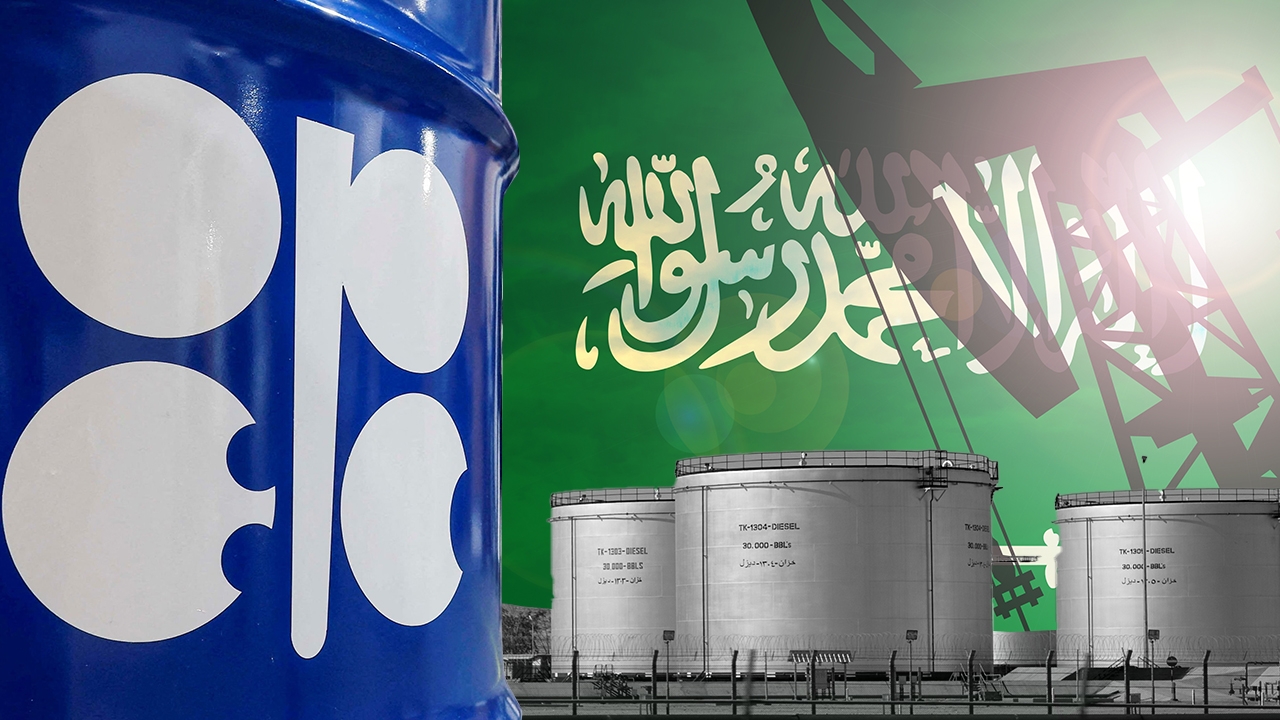
Analyzing the fractures and next steps for OPEC after the UAE's exit, experts see Saudi Arabia, the dominant member, as cornered. It's time for a major policy review that may involve courting the U.S. or bringing Russia in to support the leadership.
Regarding the case of the United Arab Emirates (UAE) announcing its withdrawal from the Organization of the Petroleum Exporting Countries (OPEC) a key global oil-exporting group, and the OPEC+ alliance, which includes Russia, with the official effect from today (1 May 2026). This comes amid unrest in the Middle East caused by conflicts involving the U.S., Israel, and Iran, marking a significant disruption to the already fragile global oil supply chain.
Although the UAE is not the first country to leave OPEC, its departure causes substantial impact since it ranks among the top five oil producers in the group. The exit occurs during a global energy crisis triggered by the Iran conflict, leading to speculation that this could be the "beginning of the end" for OPEC—if more members follow suit, potentially leading to the organization's collapse.

Thairath Online's special news team discussed this issue with Dr. Sarawut Aree, Director of the Muslim Studies Center at the Institute of Asian Studies, Chulalongkorn University. He revealed that the UAE's withdrawal is not new; there have been continuous efforts to leave OPEC. The primary reason is the production quota system limiting the UAE to about 3 million barrels per day, preventing them from producing at their 5 million barrel per day capacity, despite significant investments.
Secondly, the global energy trend is shifting towards cleaner and alternative energy, reducing oil's future role and value. The UAE recognizes this trend and wants to increase production while prices remain high, especially amid the current war-driven price surge.
Additionally, damage from Iranian attacks has compelled the UAE to raise funds to repair infrastructure and advance UAE Vision 2031, a national strategic plan aiming to reduce oil dependence and establish the UAE as a global hub for economy, technology, and sustainability.
Currently, the Strait of Hormuz, the main oil transit route, has been blocked due to the Iran conflict, and the UAE cannot fully use the pipeline system through Fujairah, which bypasses the Strait of Hormuz to the Gulf of Oman. However, the UAE views this as a short-term issue, expecting the strait to reopen eventually. Leaving OPEC prepares them to boost production and expand pipeline capacity or manage risks if the strait closes again.

Although the UAE's desire to leave OPEC has existed for years, Saudi Arabia, the group's leading member, had negotiated to keep them. However, relations between the two have deteriorated significantly over regional influence expansion disputes.
Dr. Sarawut explained that the UAE wants to become a major Middle Eastern power but, due to its small size, pursues influence through various networks similar to Iran, especially in politically unstable countries classified as "weak states" or "failed states," providing financial or military support.
This stance has caused a rift with Saudi Arabia, which aims to keep Middle Eastern countries strong and undivided to maintain regional stability, ultimately benefiting Saudi Arabia.
A clear conflict exists in Yemen, where both countries cooperate as Arab allies against the Iran-backed Houthi rebels, but the UAE supports the separatist group Southern Transitional Council (STC), while Saudi Arabia backs the internationally recognized Yemeni government. Before the Iran conflict, Saudi Arabia attacked weapons supplied by the UAE to the southern separatists and explicitly forbade the UAE from such actions.
Moreover, the UAE and Saudi Arabia compete economically, both trying to diversify and drive post-oil economies. The UAE started first by attracting foreign investors; later, Saudi Arabia also sought to lure investors away from the UAE.

Another aspect is the UAE's close relationships with the United States and Israel. Previously, U.S. President Donald Trump criticized OPEC for exploiting the global community and the U.S.
The UAE's withdrawal is seen by many as a move to appease the U.S. and Israel. Some sources reveal an agreement among the three nations for the UAE to receive protection from Iranian threats. Recently, Israel supplied additional air defense systems to the UAE.
"I believe there is collusion among the U.S., UAE, and Israel to push the UAE out of OPEC, creating difficulties for Saudi Arabia as the leader. If Saudi Arabia cannot control oil prices, its bargaining power will decline significantly. Should more members leave, OPEC will lose its influence over global energy," said Dr. Sarawut.
Dr. Sarawut believes whether the UAE's exit leads to OPEC's collapse depends on how much benefit or success the UAE gains, which will influence other members' decisions to stay or leave.
OPEC's power has gradually declined from controlling over half of global production to less than 40%. If more members leave, rendering OPEC powerless, the organization may become obsolete, especially as production quotas may be seen as disadvantageous by some countries.
If OPEC loses influence, the dominant oil power would be the United States, currently the world's largest daily oil producer, controlling Venezuela's reserves and now bolstered by the UAE's exit.
"OPEC may collapse eventually, but not soon. During this transition, oil prices will likely fluctuate significantly. Over time, prices might drop as production increases."

Regarding the path for Saudi Arabia to maintain its leadership and balance power within OPEC, Dr. Sarawut suggests reviewing production quota policies to benefit members, especially those facing challenges. "OPEC's dozen-plus members face diverse problems; African nations differ from Middle Eastern or Latin American ones. Saudi Arabia must study these issues and use oil price controls to assist or resolve members' difficulties."
Another option is engaging major oil powers. On one hand,
the U.S., with longstanding relations but recent tensions due to failing to ensure Saudi security, might be courted to support OPEC's stability. If successful, this could allow OPEC's continuation.
On the other hand, Russia, a major oil producer and OPEC+ ally, might be fully integrated to consolidate influence in setting global energy policies.
As for the other major power, China, Dr. Sarawut notes that as the largest oil consumer, China may support Saudi Arabia in preserving OPEC to maintain energy market stability rather than seeking its destruction.

The UAE's exit affects Middle Eastern unity, highlighting three blocs: UAE aligned with the U.S. and Israel; Iran and its allies; and Saudi Arabia with regional partners seeking neutrality and peace.
"The UAE's withdrawal may encourage the U.S. and Israel to hope for Middle Eastern allies in their conflict, weakening the regional unity that opposes war, thus indirectly affecting the conflict," Dr. Sarawut said.
Regarding the conflict's outlook, Dr. Sarawut expects a stalemate before agreements allow the Strait of Hormuz to reopen, though underlying issues remain and may flare up again.
Regarding Iran, it likely won't concede on its nuclear program, but the blockade of the Strait of Hormuz heavily impacts its economy. Meanwhile, the U.S. faces political pressures such as Trump's popularity, inflation, midterm elections, and hosting major events like the World Cup, compelling swift decisions.
"There is concern that if the U.S. continues economic blockades on Iran, it could lead to confrontations. Iran might respond by leveraging regional assets, such as the Bab al-Mandeb Strait in the Red Sea. The duration of this conflict is uncertain but should become clearer by May," Dr. Sarawut said.
Additionally, President Trump is scheduled to meet Chinese President Xi Jinping in mid-May, a key development. It is expected both the U.S. and Iran will seek a resolution allowing both to claim victory— the U.S. reopening the Strait of Hormuz and Iran surviving a confrontation—so close attention is warranted in the coming months.